No products in the cart.

Edge AI Drives Autonomous Systems Reliability
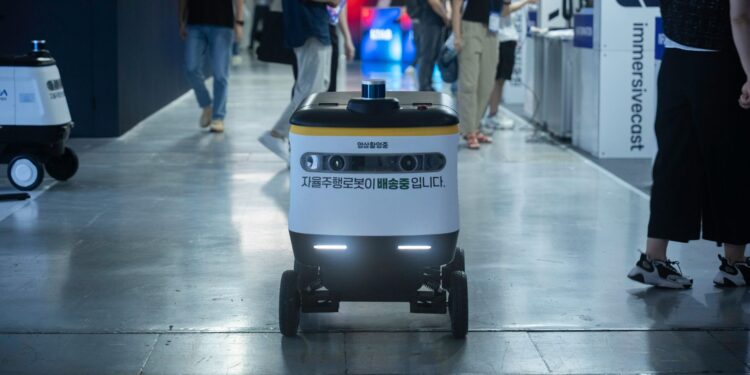
Autonomous platforms face a race against time. Every millisecond of delay can shift a safe maneuver into a hazard....

Edge AI now determines whether autonomous systems can act instantly, stay secure, and thrive without cloud reliance.
Autonomous platforms face a race against time. Every millisecond of delay can shift a safe maneuver into a hazard. Professionals ask whether moving intelligence to the edge solves that race, and if the answer changes today’s investment priorities.
How does Edge AI cut latency compared to cloud‑based models?
Edge AI processes data where it is generated, eliminating the round‑trip to distant servers. A signal captured by a sensor travels only a few centimeters to an on‑device processor, delivering a response in microseconds rather than the tens or hundreds of milliseconds typical of cloud pipelines. That speed matters when a vehicle must brake before an obstacle appears.

The paper “Edge AI for Real-Time Decision Making in Autonomous Systems” documented latency reductions of up to 90 % in prototype drones. By embedding neural networks on the edge, engineers sidestepped bandwidth bottlenecks that previously throttled performance. The result: smoother control loops and higher confidence in time‑critical tasks.
“Edge Artificial Intelligence (Edge AI) marks a revolutionary development in the field of autonomous systems.” — Vishnu Lakkamraju, Independent Researcher, USA
By embedding neural networks on the edge, engineers sidestepped bandwidth bottlenecks that previously throttled performance.
Why does real‑time decision‑making matter for safety in autonomous vehicles?
When a car approaches a pedestrian, the window to react shrinks to a fraction of a second. Cloud latency can turn a correct prediction into a missed opportunity, compromising safety certifications. Regulators increasingly demand demonstrable real‑time guarantees, pushing manufacturers toward edge solutions.

Edge AI delivers deterministic processing, meaning the same input yields the same response time every cycle. Determinism simplifies validation, allowing safety engineers to model worst‑case scenarios without accounting for network jitter. The CXO strategy guide highlighted that firms adopting edge compute saw a reduction in safety‑related incidents during pilot trials.
In what environments does Edge AI enable operation where connectivity fails?
Remote mines, offshore rigs, and rural logistics hubs often lack reliable broadband. Traditional cloud reliance forces these sites to downgrade autonomy or revert to manual control, eroding efficiency gains. Edge AI empowers devices to run full inference locally, keeping the system functional even when the link drops.
A field test in a 2025 autonomous tractor demonstrated uninterrupted operation during a simulated network outage lasting 15 minutes. The tractor continued to navigate rows, adjust speed, and avoid obstacles without human input. Such resilience expands the business case for autonomy beyond urban centers into truly edge locations.
A field test in a 2025 autonomous tractor demonstrated uninterrupted operation during a simulated network outage lasting 15 minutes.
How does Edge AI improve data privacy and security for autonomous platforms?
Transmitting raw sensor feeds to the cloud creates attack surfaces and compliance headaches. Edge AI processes sensitive data—video, lidar, health metrics—on‑device, sending only abstracted decisions or alerts upstream. This minimization reduces exposure to interception and aligns with emerging data‑sovereignty regulations.
Moreover, on‑device models can be signed and verified, preventing tampering before execution. Organizations that integrated edge security modules reported a drop in unauthorized data access attempts during the first year of deployment. By keeping intelligence close to the source, companies protect both users and intellectual property.
What steps should organizations take today to assess readiness for Edge AI integration?
First, inventory existing workloads and pinpoint latency‑critical functions. Map each function to the compute resources required for on‑device inference, noting memory, power, and thermal constraints. Our view is that a lightweight “Edge AI Readiness Assessment” (EARA) can surface gaps in hardware, software stack, and talent.
Second, pilot a focused use case—such as obstacle detection on a single vehicle—and measure end‑to‑end latency, power draw, and model accuracy. Compare those metrics against cloud‑only baselines recorded in 2025 and 2026 publications. If the edge version meets or exceeds performance while staying within budget, scale the approach across the fleet.
Finally, embed governance that tracks model updates, security patches, and compliance checks at the edge. Treat edge devices as living endpoints, not static hardware, and allocate budget for continuous over‑the‑air (OTA) improvements. By institutionalizing this loop, firms turn Edge AI from a novelty into a core capability.
Second, pilot a focused use case—such as obstacle detection on a single vehicle—and measure end‑to‑end latency, power draw, and model accuracy.
Edge AI now sits at the crossroads of speed, safety, and sovereignty for autonomous systems. The technology no longer feels optional; it defines whether a platform can truly operate in real time, protect its data, and survive beyond the cloud’s reach. As we move deeper into 2026, the question shifts from “if” to “how quickly” organizations will embed intelligence at the edge.
Related Articles
Written by Career Ahead AI. AI can make mistakes, so verify key facts. Report errors to support@careeraheadonline.com.