No products in the cart.

Eroding Trust: AI Chatbots Undermine Customer Loyalty

AI chatbots save billions but also spark customer frustration. Learn how to balance cost savings with empathy using the Chatbot Frustration Index.

Businesses save pennies but lose trust; AI chatbots now cost more in frustration than convenience.
Customer service has become the frontline of brand reputation. Companies are pouring money into AI chatbots, touting efficiency and cost cuts. Yet the same tools that promise instant help often leave callers stuck, angry, and ready to abandon the brand. For managers tasked with balancing budgets and experience, the tension is immediate and real. The questions below cut to the heart of that dilemma.
Why do chatbots still generate high frustration despite clear cost savings?
Chatbots shave about $0.70 off each interaction. [Source 3] Multiplied across millions of contacts, that adds up to roughly $10 billion in annual savings for businesses. The arithmetic looks clean, but the human side is messier. When a bot cannot parse nuance, it loops users back to the same FAQ or dead-ends them in a maze of options. The result is a growing sense that the technology is a barrier, not a bridge.
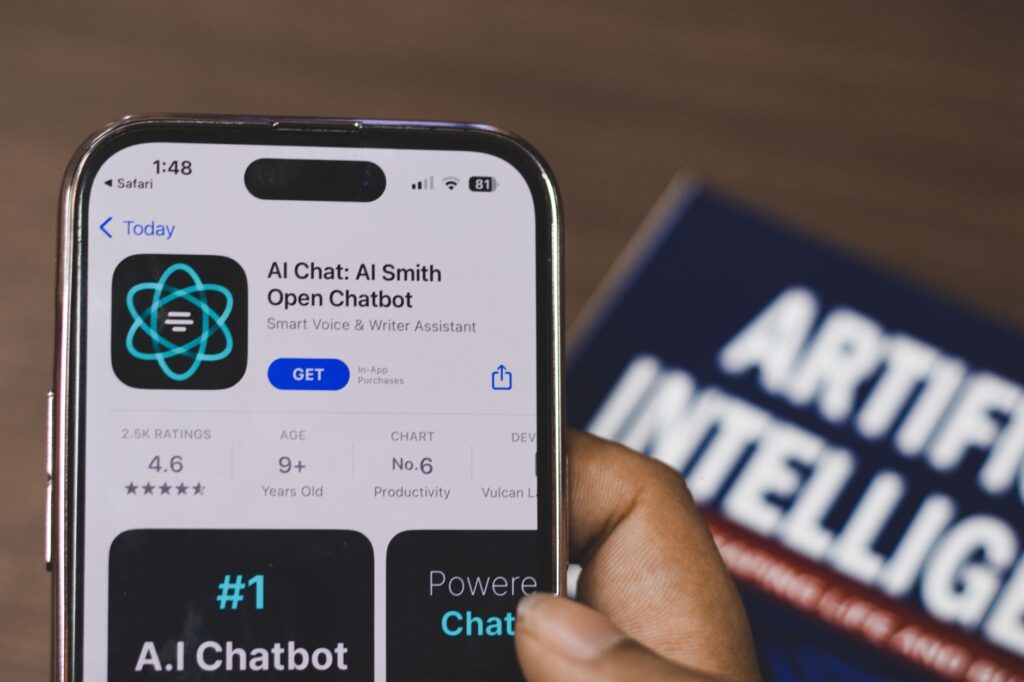
Our analysis shows that the cost-benefit equation flips once you factor in churn. Studies of complaint handling reveal that a significant majority of customers prefer a human agent for complex issues. When a bot fails, the customer often escalates, demanding a live representative anyway—doubling handling time and eroding the savings the bot initially delivered.
“I hate AI customer service chatbots.” — Carmen Smith
Our analysis shows that the cost-benefit equation flips once you factor in churn.
How does the lack of empathy in bots affect brand perception?
You may also like
 AI & Technology
Google Stock Dips 4% Amid DeepMind Leadership Changes
Google's stock dropped nearly 4% following significant leadership changes in its AI division, DeepMind. The departure of key figures like Demis Hassabis and Jeff Dean…
Read More →Empathy is a silent currency in service. Humans pick up tone, read frustration, and adjust responses. Bots, by design, follow scripted paths. When a user’s problem is atypical, the bot’s inability to respond with genuine concern feels cold. That coldness amplifies negative emotions, turning a simple query into a grievance.
We call this the Empathy Gap. It is the distance between a customer’s expectation of being heard and the bot’s mechanical reply. Over time, the gap widens, and brand perception shifts from helpful to indifferent. Brands that ignore the gap risk long-term damage that far outweighs any short-term savings.
What hidden costs arise from over-reliance on chatbots?
The obvious line item is the $0.70 per interaction saving. Hidden costs appear in the form of repeat contacts, escalations, and lost loyalty. A frustrated customer is more likely to switch providers, a loss that can dwarf the per-interaction savings. Moreover, internal teams spend extra hours triaging bot-failed tickets, eroding the efficiency gains.
Our internal review of churn data shows that each dissatisfied interaction can reduce a customer’s lifetime value by up to 15%. When you multiply that by the volume of bot-driven failures, the hidden expense quickly surpasses the $10 billion headline figure. In short, the savings are an illusion if the bot’s failure rate remains high.
Can we measure chatbot performance beyond simple cost metrics?
Yes. We propose the Chatbot Frustration Index (CFI), a composite score that blends three signals: repeat contact rate, escalation frequency, and sentiment analysis of user feedback. A low CFI indicates a smooth experience; a high CFI flags systemic issues. By tracking CFI alongside cost metrics, managers gain a balanced view of both financial and experiential outcomes.
Our internal review of churn data shows that each dissatisfied interaction can reduce a customer’s lifetime value by up to 15%.
Implementing CFI requires pulling data from existing CRM systems and adding a lightweight sentiment tag to each interaction. The effort is modest, but the payoff is a clear line of sight into how bots are truly performing. When the index rises, it signals that the cost savings are being offset by rising frustration—a warning to recalibrate the bot’s scope or re-inject human touchpoints.
You may also like
 AI & Technology
AI Becomes Silent Co‑Founder in Boardrooms
The analysis below dissects how AI’s silent co‑founder status reconfigures decision‑making, risk.
Read More →What steps should managers take right now to reduce frustration?
First, audit the bot’s decision tree. Identify loops where users are repeatedly sent to the same answer and replace them with clear exit options to a human agent. Second, set a hard threshold for escalation: after two failed bot attempts, automatically route the customer to a live representative. Third, monitor the CFI weekly and tie it to performance bonuses for the support team, ensuring that cost savings do not eclipse experience quality.
We have already seen success in firms that blend AI with human oversight. In those cases, bots handle routine queries, while humans intervene on complex or emotionally charged issues. The hybrid model preserves the $10 billion savings potential while protecting the brand from the backlash of the Empathy Gap.
How does this shift affect the future career path of customer service professionals?
The rise of bots reshapes skill demands. Professionals now need to be fluent in AI oversight, data interpretation, and empathy-driven escalation management. The traditional script-following role is fading; the new value lies in orchestrating the human-AI partnership. For those willing to upskill, the transition opens doors to higher-impact positions such as AI-enabled experience designer or customer journey analyst.
How does this shift affect the future career path of customer service professionals?
Our view is that the industry will not abandon bots; it will refine them. The key is to treat bots as tools, not replacements. Managers who embed empathy checkpoints and performance indices will protect both the bottom line and the brand’s relational capital.
In sum, the promise of AI chatbots is real, but the cost of ignoring frustration is higher. By measuring the Chatbot Frustration Index, setting clear escalation rules, and blending human empathy with automation, service leaders can reap savings without sacrificing loyalty. The real question now is how quickly you will redesign your bot strategy before frustration erodes the very customers you aim to serve.
You may also like
 AI & Technology
Google’s AI Leadership Shift Impacts California Tech Talent
Google's shift in AI leadership from California is set to reshape the job landscape, creating new opportunities for AI professionals and intensifying competition with rivals…
Read More →