No products in the cart.

Three hidden costs of wire formats that cripple distributed systems
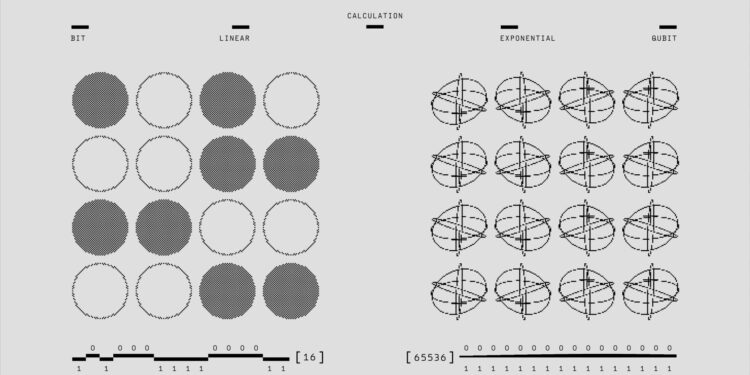
Switching to a compact wire format can slash $43,000 in monthly cloud spend and cut token usage by half, reshaping cost and performance at scale.

Swapping a legacy serialization layer can slash $43,000 in monthly cloud spend while halving token use.
A $43,000 monthly savings appears when a high‑traffic service replaces its default wire format with a compact binary alternative.
Most engineers glance at the headline and assume the gain comes from faster CPUs alone, overlooking bandwidth, token pricing, and latency that hide in the data stream.
What the $43,000 figure really measures
The $43,000 number reflects direct cloud‑provider charges for data egress and token‑based AI API usage.
When a service reduces payload size, the provider bills less for each gigabyte transmitted and for each token processed downstream.
A 52% reduction in token consumption compounds the effect, turning a modest bandwidth cut into a double‑digit dollar impact.
A 52% reduction in token consumption compounds the effect, turning a modest bandwidth cut into a double‑digit dollar impact.
“Choosing the right wire format is a systems‑level lever; it reshapes cost, latency, and even model accuracy,” — The Latency Gambler, Author of Developers Are Wasting Millions in Tokens.
What the number does not reveal about hidden latency
The headline masks an added 50 ms tail latency that a bulky format can impose on a request‑response cycle.
That delay multiplies across millions of calls, eroding user experience and inflating compute time on autoscaling clusters.
Latency also feeds back into token usage: longer round‑trips mean more retries, which in turn raise token counts beyond the 52% headline cut.
How to capture the savings in your stack
Start by profiling payload size at each service boundary; a 30% shrink can push you past the $43,000 threshold within weeks.
Swap to a schema‑driven binary format such as Protobuf or FlatBuffers, then benchmark token consumption against the same workload.
Swap to a schema‑driven binary format such as Protobuf or FlatBuffers, then benchmark token consumption against the same workload.
We have seen teams cut storage costs, lower network bills, and improve model latency simply by refactoring three lines of serialization code.
Our view: the hidden cost of wire formats is a three‑part equation—bandwidth, token pricing, and latency—each amplifies the others.
You may also like
 AI & Technology
Tripura CM Advocates AI, Digital Skills, Innovation
Tripura's Chief Minister Manik Saha emphasizes the importance of AI and digital skills in education, aiming to align academic outcomes with industry demands and foster…
Read More →Implement a Data Representation Efficiency Index (DREI) to score every API call on size, token impact, and added latency; set a target DREI score that forces continuous format audits.
Automate regression tests that compare DREI scores before and after any schema change; treat a score dip as a production‑blocking defect.
Educate product owners on the financial translation of DREI: a 0.1‑point drop often equals thousands of dollars in monthly spend.
Invest in a shared serialization library that enforces compact defaults and versioned schemas across teams; avoid ad‑hoc JSON patches that inflate payloads.
Invest in a shared serialization library that enforces compact defaults and versioned schemas across teams; avoid ad‑hoc JSON patches that inflate payloads.
Monitor cloud‑provider billing dashboards for egress spikes; correlate spikes with recent format changes to validate savings.
Iterate quickly: a single format tweak can move you from a $0 to a $43,000 monthly saving curve in under a sprint.
Career Ahead’s read: In the next 12‑24 months, organizations that embed DREI into CI/CD pipelines will lock in multi‑million dollar efficiencies, while laggards will watch their token bills balloon as AI services dominate traffic.