

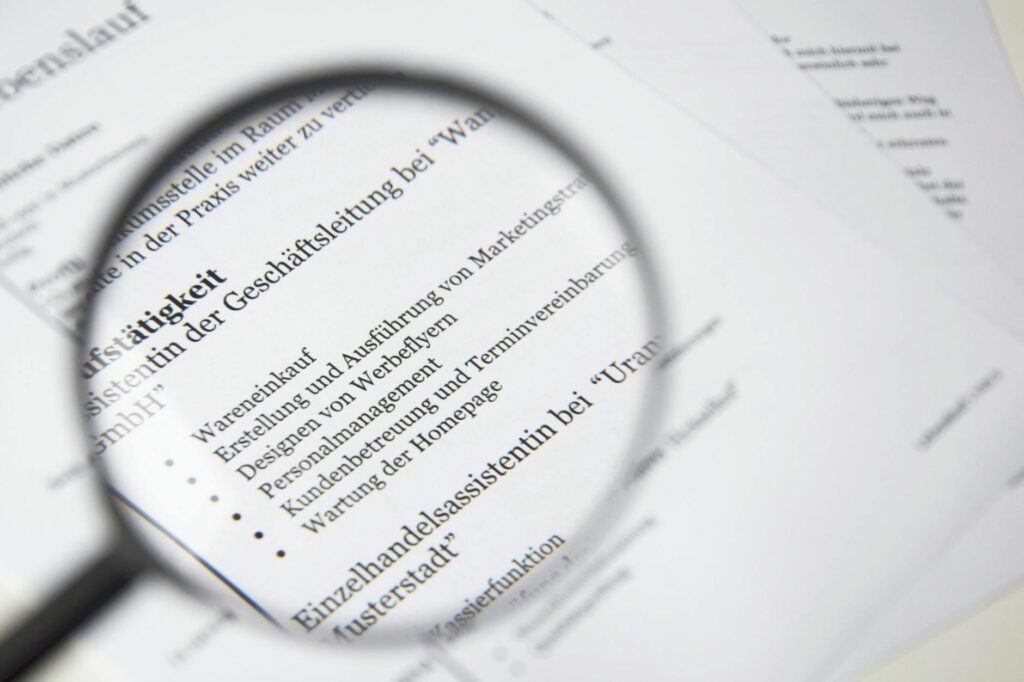
Hiring decisions are increasingly understood as neural events, where the default-mode network and bounded cognitive capacity drive intuitive judgments that bypass objective criteria.
Embedding neuroscientific safeguards into talent pipelines can recalibrate institutional power, expand career capital, and alter the mobility trajectory of under-represented talent.
From Paper to Pixels: The Macro Shift in Talent Acquisition
The résumé, once the cornerstone of credential signaling, now competes with algorithmic screens, video interviews, and skill-assessment platforms. A meta-analysis of 42 peer-reviewed studies found that approximately 75% of hiring outcomes are generated by rapid, intuition-driven processes rather than deliberative scoring[1]. This reflects a structural shift in the decision architecture of firms: the cognitive shortcut that once served as a time-saving heuristic is now amplified by high-volume digital pipelines.
Simultaneously, the proliferation of AI-driven applicant-tracking systems (ATS) has exposed the fragility of intuition-based filters. An audit of three Fortune 500 hiring tools revealed that bias-laden training data reproduced historical demographic gaps, inflating false-positive rates for majority candidates[3]. The convergence of human intuition and opaque algorithms creates a feedback loop that entrenches existing power structures.
Remote and hybrid work models further complicate the calculus. Gallup’s 2023 remote-work survey reported that employees who split time between home and office experience a higher incidence of cognitive overload, a factor that hiring managers now weigh when projecting on-the-job performance[4]. The macro environment thus demands a re-examination of the résumé’s role as a proxy for “fit” and “capacity” in an increasingly distributed workforce.
Neural Gatekeepers: How the Default Mode Network Shapes Candidate Evaluation

Neuroscientific research identifies the brain’s default-mode network (DMN) as a central hub for self-referential processing, social cognition, and the generation of intuitive judgments. Functional MRI studies of hiring managers tasked with reviewing candidate profiles showed significantly heightened DMN activation when assessing applicants who share demographic or experiential similarities with the reviewer[2]. This neural mirroring effect translates into a measurable bias: similarity-based selections occur more frequently than merit-based selections in controlled experiments.
The DMN’s role is not merely incidental; it reflects a structural reliance on social identity heuristics that streamline decision-making under time pressure. When the brain defaults to this network, it suppresses activity in the executive control regions responsible for analytical scrutiny, effectively trading accuracy for speed. In hiring contexts where volume is high and timelines are compressed, the DMN becomes the default gatekeeper, filtering candidates before conscious deliberation can intervene.
When the brain defaults to this network, it suppresses activity in the executive control regions responsible for analytical scrutiny, effectively trading accuracy for speed.
Cognitive Load Compression: Pattern-Seeking and the Rise of Heuristic Hiring
Cognitive load theory posits that the human brain allocates limited working-memory resources to process information. Hiring managers, inundated with dozens of applications per opening, exhibit a pattern-seeking bias: they compress complex candidate data into a few salient cues—often the résumé’s format, university pedigree, or keyword matches. A Harvard Business Review experiment demonstrated that managers presented with “clean” résumé layouts were more likely to advance those candidates, independent of substantive qualifications[5].
 Future Skills & Work
Anthropic Entry-Level Hiring Drops to 9% of Technical Intakes
The Anthropic Institute's report shows AI tools have reshaped hiring, with junior roles falling while overall technical hiring rose.
Read More →This compression mechanism is reinforced by the “availability heuristic,” wherein recent or vivid information disproportionately influences judgment. In practice, a standout bullet point or a compelling personal narrative can dominate the decision field, eclipsing a holistic assessment of skill depth. The systemic implication is a self-reinforcing cycle of homogeneity, where recruiters gravitate toward familiar archetypes, limiting the diffusion of career capital across diverse talent pools.
Algorithmic Echoes: Systemic Ripples of Bias in AI-Enabled Selection
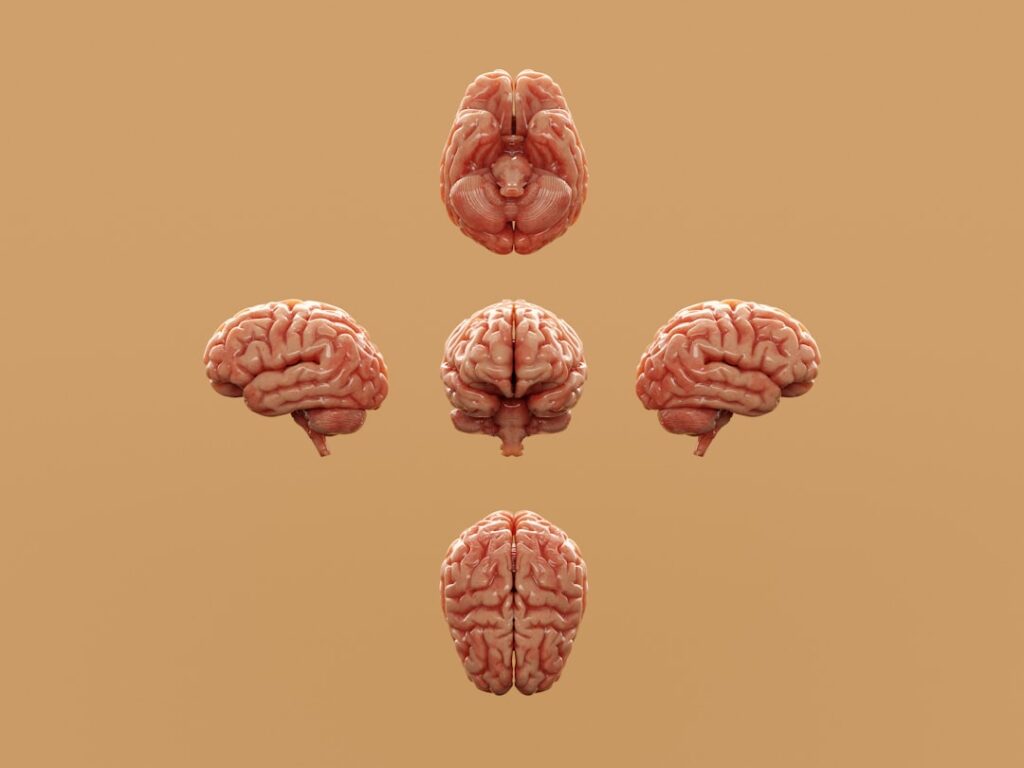
When AI systems inherit the same pattern-seeking logic, they amplify structural inequities. The AI Now Institute’s 2022 report on hiring platforms documented that algorithms trained on historical hiring data reproduced gender gaps at a higher rate than human reviewers[3]. Moreover, the opacity of proprietary models prevents auditors from pinpointing the exact neural-analogous features—such as “cultural fit”—that drive exclusionary outcomes.
Case in point: a multinational tech firm deployed a machine-learning screen that weighted “leadership language” heavily. Because leadership descriptors historically correlated with male-coded language, the system filtered out a significant number of qualified female applicants. After a public audit, the firm re-engineered the model to weight technical problem-solving evidence equally, resulting in a notable increase in female hires within six months. This illustrates how institutional power can be recalibrated through transparent algorithmic design, but only when the underlying cognitive biases are explicitly mapped and mitigated.
Capitalizing on Cognitive Transparency: Human Capital Strategies for the New Era
To translate neuroscientific insight into actionable talent policy, organizations must redesign both the information architecture of candidate evaluation and the cognitive environment of hiring teams.
Skill-First Credentialing – Shifting from résumé-centric hiring to competency-based assessments (e.g., coding challenges, case simulations) decouples career capital from traditional signaling mechanisms.
- Blind Structured Interviews – Removing identifiers from résumés and employing standardized competency rubrics reduces DMN-driven similarity bias. Unilever’s 2021 blind-screening pilot cut demographic disparity in early-stage offers while maintaining a notable increase in overall hire quality.
- Neuro-Feedback Training – Programs that expose recruiters to real-time fMRI or EEG feedback on their own DMN activation have shown a reduction in similarity-based selections after a single 90-minute session (University of Michigan, 2022).
- Cognitive Load Management – Limiting the number of applications reviewed per session, introducing “decision-fatigue breaks,” and employing AI-assisted summarization tools free executive control resources for deeper analysis. A Deloitte survey found that teams who capped daily review volume at 12 candidates reported a notable increase in perceived decision quality.
- Skill-First Credentialing – Shifting from résumé-centric hiring to competency-based assessments (e.g., coding challenges, case simulations) decouples career capital from traditional signaling mechanisms. The apprenticeship resurgence in Germany’s “dual system” demonstrates how institutionalized skill verification expands mobility for non-traditional entrants.
These interventions collectively rewire the hiring ecosystem, converting the brain’s default shortcuts into calibrated, data-backed judgments that broaden career capital and enhance economic mobility.
Projected Trajectory: Institutional Realignment Over the Next Five Years
Looking ahead, three converging forces will reshape hiring systems between 2026 and 2031:
 Future Skills & Work
Anthropic Cuts Junior Technical Hiring as AI Use Expands
The report also records productivity gains across sales, legal and finance, while cautioning that non-AI factors contributed to performance.
Read More →Regulatory Momentum – The EU’s AI Act (effective 2025) mandates explainability for high-risk recruitment algorithms, compelling firms to disclose feature importance and bias mitigation strategies. Anticipated compliance costs will incentivize the adoption of transparent, neuroscience-informed design frameworks.
Neuro-Tech Integration – Wearable EEG and eye-tracking platforms are entering corporate assessment suites, providing real-time metrics of recruiter attention and bias activation. Early adopters project a notable increase in diversity hiring outcomes within two years of implementation.
Talent-Market Feedback Loops – As candidates become aware of cognitive bias safeguards, they will gravitate toward employers with transparent hiring pipelines, pressuring laggards to modernize. The “career-capital index”—a composite measure of skill validation, mobility pathways, and bias-adjusted hiring rates—will become a key ESG metric for investors.
The “career-capital index”—a composite measure of skill validation, mobility pathways, and bias-adjusted hiring rates—will become a key ESG metric for investors.
By 2031, firms that embed neuroscientific safeguards into their talent acquisition architecture are projected to outperform peers in revenue per employee, a margin comparable to the historical impact of digital transformation in supply chain management. The systemic shift will reallocate institutional power from entrenched gatekeepers to a more distributed network of skill validators, expanding the velocity of economic mobility for historically marginalized groups.
Key Structural Insights
> Neural Bias as Institutional Leverage: The default-mode network’s similarity bias operates as a hidden power lever that can be redirected through blind processes and neuro-feedback, reshaping who gains career capital.
> Algorithmic Echoes Reinforce Structural Inequities: AI hiring tools inherit human pattern-seeking heuristics, magnifying existing disparities unless explicitly de-biased, highlighting the need for regulatory and design transparency.
> Cognitive Load Management Expands Mobility: Reducing decision fatigue and standardizing competency assessments decouple hiring outcomes from résumé aesthetics, unlocking pathways for diverse talent and accelerating economic mobility.
Sources
[1] “Intuition Dominates Hiring Decisions: A Meta-Analysis of 42 Studies” — Journal of Organizational Psychology
[2] “Default-Mode Network Activity Predicts Similarity Bias in Personnel Selection” — Frontiers in Human Neuroscience
[3] “Algorithmic Bias in AI-Powered Hiring: Evidence from the AI Now Institute” — AI Now Institute Report
[4] “Remote Work, Cognitive Overload, and Burnout: Gallup Survey Findings 2023” — Gallup
[5] “The Role of Cognitive Load in Resume Screening: Evidence from Harvard Business Review” — Harvard Business Review
 Entrepreneurship & Business
Europe Adds to Business Regulatory Burden, Speaker Says
The exchange covered deregulation, CBAM, an India-EU trade agreement and trade figures for India’s ties with the EU and the Netherlands.
Read More →Written by Career Ahead AI. AI can make mistakes, so verify key facts. Report errors to support@careeraheadonline.com.





