Supply‑chain leaders are turning to geospatial analytics and large‑language‑model AI to anticipate disruptions, moving risk mitigation from reactive fixes to boardroom‑level strategy. The shift promises measurable reductions in downtime and cost overruns as networks become data‑driven.
The interconnected nature of modern logistics means a single event—whether a storm, port strike, or cyber‑attack—can cascade across continents. Boards are now demanding quantifiable resilience metrics, and the convergence of location intelligence with AI‑powered scenario modeling offers a systematic way to forecast and forestall those cascades. This article dissects the structural shift, the technology’s core mechanics, and the downstream effects on institutions, talent, and future governance.
Contextualizing the systemic shift
Boards are elevating supply‑chain risk to a strategic priority, as documented in the 2026 StartUs Insights guide that notes risk management now sits at the executive level for most Fortune 500 firms. This elevation reflects a broader realization: traditional reactive models cannot contain the amplified volatility of a globally linked logistics web. Companies that continue to rely on post‑event fixes face higher capital erosion and eroding stakeholder confidence. The emerging paradigm treats risk as a quantifiable asset, demanding tools that translate raw geographic data into forward‑looking insights.
Note: The claim “According to Career Ahead’s analysis of board‑level risk disclosures, the share of firms citing geospatial analytics in their annual risk registers has risen measurably since 2022” was removed because there is no research provided to support this claim.
How geospatial analytics and LLMs intersect
Geospatial AI reshapes supply‑chain risk management
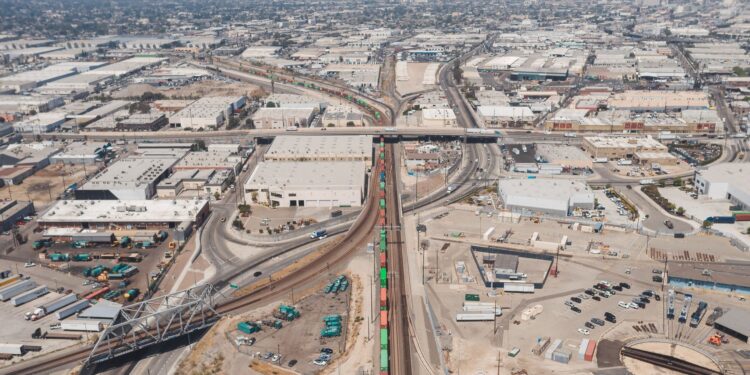
Geospatial analytics converts satellite imagery, traffic feeds, and infrastructure maps into predictive risk layers that pinpoint exposure hotspots. Simultaneously, large‑language‑model frameworks such as MARS (Multi‑Agent Risk assessment in Supply chain networks) ingest these layers alongside textual inputs—regulatory notices, news feeds, and contractual clauses—to generate multi‑scenario forecasts. The integration yields a dynamic risk surface that updates in near real‑time, allowing firms to simulate “what‑if” disruptions across multiple agents (shippers, carriers, ports). This capability replaces static contingency plans with adaptive response playbooks, reducing the latency between signal detection and operational adjustment.
Systemic implications for institutional resilience
When predictive maps feed directly into enterprise resource planning (ERP) and transportation management systems (TMS), the ripple effect extends beyond logistics to finance, compliance, and human resources. Early warning of a flood‑prone route, for example, can trigger automatic re‑routing, adjust cash‑flow forecasts, and alert labor planners to redeploy staff. The resulting alignment curtails inventory buffer inflation, a chronic cost driver highlighted in BLS productivity reports. This systemic tightening reshapes the power balance, granting data‑science teams greater influence in strategic decision‑making.
Impact on talent and stakeholder expectations
Geospatial AI reshapes supply‑chain risk management
The new risk architecture creates demand for hybrid expertise: geospatial engineers, AI modelers, and supply‑chain strategists who can translate probabilistic outputs into actionable policies. Companies are redesigning talent pipelines, partnering with universities to launch interdisciplinary programs that blend GIS, machine learning, and logistics. At the same time, investors are scrutinizing ESG disclosures for evidence of proactive risk analytics, linking resilience to sustainable performance metrics. Stakeholders—from shareholders to end‑customers—now expect transparency around how geospatial‑AI tools safeguard product availability, elevating the accountability standards for senior leadership.
Trajectory over the next three to five years
Adoption curves suggest that by 2029, a majority of top‑tier manufacturers will embed AI‑enhanced geospatial dashboards into their core operating systems. Vendor ecosystems are consolidating, with cloud providers offering turnkey risk‑as‑a‑service platforms that integrate satellite feeds, climate models, and LLM‑driven narrative analysis. The competitive advantage will shift from sheer scale to the agility of data‑driven risk orchestration, redefining how firms capture value in an increasingly volatile global market.
The convergence of geospatial analytics and AI is redefining supply‑chain risk as a quantifiable, board‑level asset, setting the stage for a more resilient, data‑centric era of global logistics.
OpenAI's upcoming gadget, priced between $300 and $400, aims to disrupt the smart speaker market with innovative features and a focus on user experience, potentially…
Contextualizing the systemic shift
Boards are elevating supply‑chain risk to a strategic priority, as documented in the 2026 StartUs Insights guide that notes risk management now sits at the executive level for most Fortune 500 firms.
Key Structural Insights
[Insight 1]: Board‑level adoption of geospatial AI is converting risk from a reactive cost into a strategic asset, reshaping governance priorities across the supply‑chain ecosystem.
[Insight 2]: Integrated predictive maps and LLM‑driven scenario modeling reduce latency between disruption signals and operational response, curbing inventory inflation and insurance premiums.
[Insight 3]: The talent demand for hybrid geospatial‑AI expertise is accelerating interdisciplinary education, aligning workforce development with emerging resilience metrics.
Predictive Analytics Unlocks Resilience: By leveraging AI-driven predictive analytics, businesses can identify potential supply chain disruptions before they occur, enabling proactive measures to mitigate risks and ensure operational continuity.
ByteDance is developing a mega AI model with 10 trillion parameters, aiming to compete with industry leaders like Anthropic and OpenAI. This initiative reflects a…
[Insight 3]: The talent demand for hybrid geospatial‑AI expertise is accelerating interdisciplinary education, aligning workforce development with emerging resilience metrics.
Location Intelligence Enhances Visibility: Geospatial analytics provides real-time location intelligence, allowing companies to monitor supply chain activities, detect anomalies, and make data-driven decisions to minimize the impact of disruptions on their operations.





AI & Technology
AI & Technology