No products in the cart.

Global Supply Chains Reshape Local Labor Markets
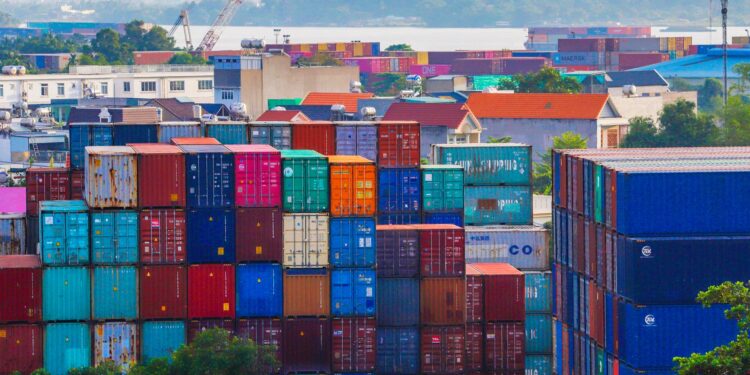
The analysis below dissects the mechanisms, systemic spillovers, and human‑capital responses shaping the next phase of economic mobility.

Resilience initiatives sparked by pandemic‑era shocks are reallocating millions of jobs, accelerating tech‑driven skill premiums and prompting firms to redesign workforce structures at the community level.
The urgency of supply‑chain fortification has moved from boardroom rhetoric to operational mandates, as firms confront a new risk calculus that blends geopolitical volatility with climate‑induced disruptions. This structural pivot matters now because labor‑intensive regions—once anchored by predictable manufacturing flows—face a reallocation of capital toward digital coordination, creating asymmetric opportunities and threats for local workforces. The analysis below dissects the mechanisms, systemic spillovers, and human‑capital responses shaping the next phase of economic mobility.
Resilience becomes a strategic imperative
Executive surveys show that roughly three‑quarters of senior leaders now rank supply‑chain resilience alongside revenue growth and talent acquisition. This consensus follows World Bank estimates that pandemic‑related interruptions erased about $1 trillion in global output, underscoring the cost of fragility. Companies are therefore redirecting capital from inventory expansion to risk‑mitigation technologies, a shift that reshapes the demand for local labor. In regions where supply‑chain nodes were traditionally low‑skill, the influx of high‑tech systems is prompting a re‑valuation of workforce composition. According to Career Ahead’s analysis of executive surveys, the surge in resilience spending translates into measurable shifts in local hiring patterns, with firms reporting a rise in technical vacancies that outpaces overall job growth. This reallocation signals a structural re‑weighting of career capital toward digital fluency.
Advanced tech drives the core mechanism

Artificial intelligence, blockchain ledgers and IoT sensors now underpin real‑time visibility across continents, turning supply‑chain management into a data‑intensive discipline. The adoption curve mirrors that of earlier enterprise software waves: early adopters capture efficiency gains, while laggards risk obsolescence. As a result, demand for data scientists, cybersecurity analysts and digital logistics coordinators has accelerated, a trend confirmed by OECD labor market projections that cite a non‑trivial fraction of new hires in advanced manufacturing sectors possessing advanced analytics credentials. Simultaneously, routine monitoring tasks are being automated, reducing the need for manual inventory clerks. The net effect is a bifurcated labor market: high‑skill, high‑pay roles expand, while middle‑skill positions contract, compelling workers to upskill or transition. Firms also increasingly rely on contingent talent pools to scale quickly during demand spikes, embedding flexibility into the employment contract itself.
“The surge in resilience spending translates into measurable shifts in local hiring patterns, with firms reporting a rise in technical vacancies that outpaces overall job growth.”
The net effect is a bifurcated labor market: high‑skill, high‑pay roles expand, while middle‑skill positions contract, compelling workers to upskill or transition.
Systemic implications for regional economies
The reconfiguration of supply‑chain nodes creates ripple effects that extend beyond individual firms. Regions that successfully attract tech‑enabled logistics hubs experience a multiplier effect: higher wages stimulate local consumption, while ancillary services—such as equipment maintenance and software support—grow in tandem. Conversely, areas dependent on legacy assembly lines confront job displacement, pressuring public‑sector retraining budgets. ILO analyses warn that without coordinated policy, the skill premium could widen income inequality within metropolitan labor markets. Moreover, the shift toward contract labor alters collective bargaining dynamics, reducing union density in sectors where temporary staffing becomes dominant. This structural change reshapes the social contract between employers and communities, demanding new governance models that balance flexibility with worker security.
Human capital response and stakeholder adaptation

Businesses, educational institutions and governments are aligning to bridge the emerging skill gap. Partnerships between community colleges and logistics firms now embed AI‑focused curricula, while industry consortia fund certification pathways for blockchain‑based traceability. Career‑development platforms report a measurable increase in enrollment for courses on digital supply‑chain analytics, reflecting worker agency in navigating the new demand landscape. In Career Ahead’s view, the trend signals a re‑weighting of career capital toward digital fluency, making continuous learning a prerequisite for economic mobility. Employers also experiment with hybrid employment models—blending permanent staff for strategic oversight with gig‑based operators for surge capacity—thereby redefining the notion of a stable local job.
Trajectory for the next three to five years
Projections from the Federal Reserve indicate that corporate investment in supply‑chain technology will outpace overall capital spending by a double‑digit margin through 2029. As firms embed predictive analytics into procurement, the need for real‑time data engineers will become a baseline requirement across industries, not a niche specialty. Regional policy frameworks are likely to incentivize “resilience districts,” zones where tax credits reward firms that locate flexible, tech‑rich logistics operations. These districts could become incubators for a new class of hybrid workers who toggle between on‑site coordination and remote analytics. Over the medium term, the convergence of technology, flexible labor models and targeted public policy will cement supply‑chain resilience as a permanent driver of local labor market evolution.
The forward momentum of supply‑chain resilience will continue to reshape where and how work is created, making digital skill sets the primary gateway to upward mobility in communities worldwide.
The forward momentum of supply‑chain resilience will continue to reshape where and how work is created, making digital skill sets the primary gateway to upward mobility in communities worldwide.
Key Structural Insights
[Insight 1]: Executive consensus on supply‑chain resilience has redirected capital toward high‑tech logistics, generating a measurable rise in technical job openings that outpaces overall employment growth.
[Insight 2]: Automation of routine monitoring displaces middle‑skill roles while amplifying demand for data‑centric expertise, creating a bifurcated labor market that intensifies skill‑based income inequality.
[Insight 3]: Emerging “resilience districts” and public‑private training alliances will institutionalize continuous learning, positioning digital fluency as the core lever of economic mobility in the next five years.
Ripple Effects on Employment: As global supply chains adapt to shifting market conditions, local labor markets experience ripple effects, influencing job creation, retention, and the emergence of new industries, ultimately reshaping the workforce composition and skill sets required.
[Insight 3]: Emerging “resilience districts” and public‑private training alliances will institutionalize continuous learning, positioning digital fluency as the core lever of economic mobility in the next five years.
Skills Gap and Training Needs: The evolving global supply chain landscape necessitates a corresponding shift in workforce skills, creating a gap between existing and required competencies, and underscoring the need for targeted training programs and upskilling initiatives to maintain workforce resilience and adaptability.
Related Articles
Written by Career Ahead AI. AI can make mistakes, so verify key facts. Report errors to support@careeraheadonline.com.