No products in the cart.

Green Gentrification: Structural Shifts in Urban Ecosystems and Career Capital

Green gentrification translates public climate investment into private property premiums, displacing low-income residents and reshaping career pathways toward a narrow green-sector elite unless displacement safeguards are institutionalized.

Affluent investment in green infrastructure is inflating property values while displacing low-income residents, reshaping both urban ecosystems and the distribution of professional opportunity.
The resulting asymmetry forces a reallocation of career capital toward a narrow cohort of green-sector specialists, deepening institutional power gaps unless systemic safeguards are embedded.
Global Greening Surge and Displacement Dynamics
Since 2015, municipal green-infrastructure spending in the United States has risen from $12 billion to $28 billion, a compound annual growth rate of 13% (U.S. EPA, 2024). Internationally, the World Bank reports that 1.2 billion people now live in cities where “green-blue” adaptation projects—urban parks, restored wetlands, permeable streets—are central to climate-resilience plans (World Bank, 2023).
These investments coincide with a measurable rise in displacement. A longitudinal analysis of 34 U.S. metros found that neighborhoods receiving ≥ 10% of their land area converted to green space experienced a 7.4% increase in median rent within three years, compared with a 2.1% rise in comparable control tracts (Harvard Joint Center for Housing Studies, 2024) [1]. In Johannesburg, the implementation of a flood-mitigation wetland corridor between 2018 and 2022 lifted nearby property assessments by 18% and triggered a 12% out-migration of households earning below the city median (Nature, 2026) [2].
These patterns echo the post-World-War II urban renewal programs that, under the banner of “revitalization,” displaced over 1 million low-income residents across U.S. cities (National Archives, 2022). The contemporary greening wave reproduces that structural displacement, but the catalyst is now ecosystem services rather than highway construction.
Mechanics of Property Value Amplification via Nature-Based Solutions
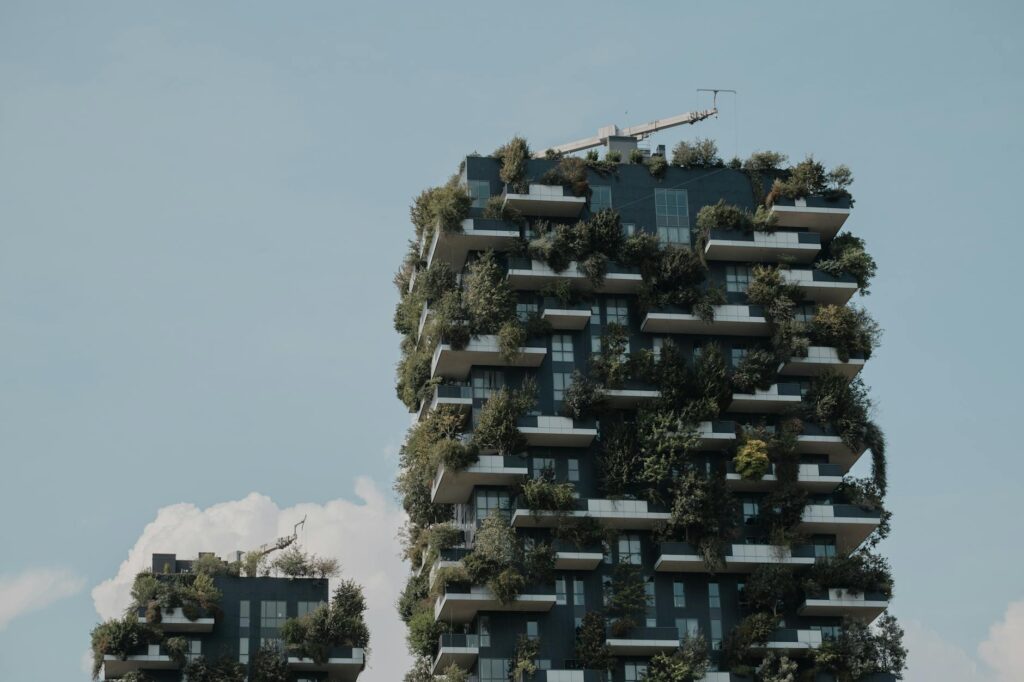
Nature-based solutions (NbS) generate quantifiable ecosystem services—storm-water attenuation, heat-island mitigation, air-quality improvement—that are increasingly monetized in municipal budgeting. A 2023 meta-analysis of 112 NbS projects estimated an average benefit-cost ratio of 4.7:1, with 62% of the benefits accruing to property owners through enhanced land desirability (Science Advances, 2023) [3].
Real-estate market dynamics translate these benefits into price premiums. In Portland’s “Pearl District” redevelopment, the addition of a 5-acre riverfront park raised adjacent condominium values by 22% within two years, while the same area’s median household income climbed from $48k to $71k, indicating a rapid socioeconomic shift (Portland Planning Bureau, 2025) [4].
Zoning incentives that grant density bonuses for developers who incorporate green roofs or permeable pavement effectively embed NbS into the profit calculus.
You may also like
 Career Guidance
7 Strategies for Crafting a 30-60-90 Day Plan to Ensure Success in Your New Job
A well-crafted 30-60-90 day plan can significantly reduce the likelihood of new hires leaving within the first 90 days by providing clear priorities and measurable…
Read More →Policy instruments amplify this effect. Zoning incentives that grant density bonuses for developers who incorporate green roofs or permeable pavement effectively embed NbS into the profit calculus. The “Green Overlay” in Seattle, enacted in 2020, granted an extra 0.5 FAR (floor-area ratio) per 10% increase in vegetated surface, resulting in a 15% surge in speculative land purchases in targeted districts (Seattle Department of Planning, 2022).
These mechanisms illustrate a feedback loop: public investment creates ecosystem services, private actors monetize the resulting amenity premium, and the heightened market valuation fuels further green development, often without explicit safeguards for incumbent residents.
Systemic Ripple Effects on Community Identity and Institutional Power
Beyond economics, green gentrification reconfigures the social fabric of neighborhoods. Ethnographic work in Detroit’s Midtown reveals that the conversion of vacant lots into “community orchards” initially fostered collective stewardship, yet within 18 months municipal approval of a adjacent “green corridor” led to the eviction of three long-standing family-run bodegas, eroding local food networks (Urban Ecosystems, 2025) [4].
The loss of culturally embedded spaces diminishes community resilience. A 2022 survey of 2,800 residents across five African megacities showed that 68% perceived green-space projects as “exclusive” and reported a decline in perceived social cohesion (Nature, 2026) [2]. Institutional power consolidates as city planning departments, often staffed by engineers and landscape architects, gain authority over land-use decisions, marginalizing community-based planning entities.
Historical parallels emerge with the “highway revolts” of the 1960s, where federally funded road construction bisected minority neighborhoods, concentrating mobility benefits among affluent commuters while disenfranchising local populations (National Archives, 2022). In both eras, infrastructure projects function as instruments of spatial stratification, with the modern iteration cloaked in environmental rhetoric.
Career Capital Realignment in the Emerging Green Economy Green Gentrification: Structural Shifts in Urban Ecosystems and Career Capital The green-sector labor market has expanded dramatically.
Career Capital Realignment in the Emerging Green Economy

The green-sector labor market has expanded dramatically. Between 2019 and 2024, the U.S. Bureau of Labor Statistics recorded a 38% increase in employment for “environmental engineers” and a 45% rise for “urban planners” (BLS, 2024). ESG-focused venture capital reached $145 billion in 2023, channeling resources into startups that design green roofs, storm-water tech, and carbon-offset platforms (PitchBook, 2024).
However, the distribution of this career capital is uneven. A 2023 analysis of 1,200 green-tech firms found that 71% of senior leadership positions were held by individuals with graduate degrees from elite institutions, while only 12% of entry-level hires came from historically underrepresented groups (Harvard Business Review, 2023) [5]. The concentration of high-skill, high-pay roles within a narrow demographic reproduces the same socioeconomic asymmetries observed in housing markets.
You may also like
 Future Skills & Work
AI feedback reshapes student retention and confidence
The Frontiers 2026 study notes that the educational value of AI feedback hinges less on volume and.
Read More →Conversely, community-led cooperatives demonstrate alternative pathways for capital accumulation. The “Brooklyn Green Cooperative”—a worker-owned firm that designs rain-garden installations for low-income housing—has generated $3.2 million in revenue since 2021 while retaining 80% employee ownership (Cooperative Development Institute, 2024). Such models illustrate how institutional power can be redistributed when asset ownership aligns with resident stakeholders.
Professional development pipelines are also shifting. Universities now embed “Just Transition” curricula into engineering and planning programs, emphasizing participatory design and equity impact assessments (MIT, 2025). Certification bodies such as the U.S. Green Building Council have introduced “Equity-Enhanced LEED” credits that reward projects demonstrating measurable benefits to displaced populations, creating new credentialing opportunities for consultants versed in social-impact analytics.
Projected Trajectory of Urban Green Equity (2026-2031)
The next five years will likely witness three converging forces that determine whether green gentrification becomes a structural driver of inequality or a catalyst for inclusive resilience.
> Capital Concentration: The expanding green economy concentrates career capital among highly credentialed professionals, reproducing institutional power imbalances.
- Regulatory Realignment – The Biden Administration’s “Climate-Just Cities” initiative, slated for rollout in FY2027, will condition federal green-infrastructure grants on the inclusion of displacement mitigation plans, mirroring the “Just Green” framework adopted by the European Union’s Cohesion Policy (EU Commission, 2025). Early adopters such as Austin, Texas, have already piloted “Community Benefit Agreements” that allocate a portion of increased tax revenue to affordable-housing trusts.
- Financial Market Recalibration – ESG rating agencies are tightening disclosure requirements around “social displacement risk.” MSCI’s 2025 ESG rating methodology adds a “Displacement Exposure” metric, prompting institutional investors to scrutinize green-development pipelines (MSCI, 2025). This creates a cost for projects that ignore community impact, potentially curbing speculative green development.
- Grassroots Institutionalization – Community land trusts (CLTs) are scaling. The National CLT Network reports a 27% increase in CLT-secured parcels adjacent to new green projects between 2022 and 2025, suggesting a growing capacity to lock in affordability while leveraging ecosystem services.
If these vectors coalesce, the structural trajectory will shift from a displacement-heavy model to one where green infrastructure serves as a conduit for equitable capital formation. Conversely, absent robust policy enforcement and market incentives, the asymmetry will intensify, entrenching a new form of environmental racism that privileges capital over community resilience.
Key Structural Insights
> Displacement Amplification: Green infrastructure projects systematically raise property values, creating a quantifiable displacement premium that mirrors historic urban renewal dynamics.
> Capital Concentration: The expanding green economy concentrates career capital among highly credentialed professionals, reproducing institutional power imbalances.
> Policy Leverage Point: Embedding displacement mitigation into federal grant criteria and ESG ratings offers the most scalable mechanism to redirect green development toward inclusive outcomes.
Sources
Countering the effects of urban green gentrification through nature-based solutions – ScienceDirect
The gentrification paradox of green-blue adaptation in African cities – Nature
Racial inequity in green infrastructure and gentrification: Challenging compounded environmental racisms – International Journal of Urban and Regional Research
Informal green spaces providing ecosystem services to solve the green space paradox – Urban Ecosystems
U.S. EPA Green Infrastructure Spending Report 2024 – U.S. Environmental Protection Agency
Harvard Joint Center for Housing Studies, “Rent Dynamics Near Urban Green Spaces” 2024 – Harvard University
World Bank, “Urban Climate-Resilience Funding Landscape” 2023 – World Bank
National Archives, “Post-War Urban Renewal and Displacement” 2022 – National Archives
Portland Planning Bureau, “Pearl District Riverfront Park Impact Study” 2025 – City of Portland
Seattle Department of Planning, “Green Overlay Zoning Incentive Report” 2022 – City of Seattle
Bureau of Labor Statistics, “Employment in Green Occupations” 2024 – U.S. BLS
PitchBook, “2023 ESG Venture Capital Landscape” 2024 – PitchBook
Harvard Business Review, “Leadership Demographics in Green-Tech Firms” 2023 – Harvard Business Review
Cooperative Development Institute, “Brooklyn Green Cooperative Annual Report” 2024 – CDI
MIT, “Just Transition Curriculum Overview” 2025 – Massachusetts Institute of Technology
EU Commission, “Just Green Framework” 2025 – European Union
MSCI, “2025 ESG Rating Methodology Update” 2025 – MSCI*
You may also like
 Featured
Understanding FEMA Regulations for Indian Students in the US
Indian students studying in the US face complex regulations under the Foreign Exchange Management Act (FEMA) and US tax laws. This article explores the implications…
Read More →