Embedding green infrastructure into urban development is converting sustainability into a quantifiable asset, reshaping capital flows, regulatory frameworks, and career pathways across the real‑estate ecosystem.
Eco‑friendly neighborhoods are converting sustainability into a measurable asset class, shifting capital toward developers who embed green systems at scale. The structural shift is accelerating talent pipelines in architecture, engineering, and finance, while reshaping mobility pathways for workers across the built‑environment ecosystem.
Opening: Macro Context
The global real estate market is undergoing a structural reallocation of capital toward eco‑friendly neighborhoods. Between 2020 and 2025, the green building market is projected to expand from $10.3 trillion to $24.7 trillion, outpacing overall real‑estate growth by more than 8 percentage points annually [4]. This trajectory reflects a convergence of three macro forces: heightened climate risk perception, institutional ESG mandates, and a generational shift in consumer preferences toward low‑carbon living.
Historically, the post‑World War II suburban boom translated automobile affordability into a new property paradigm, redefining land use and wealth creation. Today, green infrastructure—ranging from district‑level solar microgrids to rain‑water harvesting networks—functions as the analogous catalyst, embedding environmental performance into the very definition of property value. Cities that have codified green standards into zoning—such as Vancouver’s “Green Standard” and Singapore’s “Zero‑Energy Building” framework—are witnessing faster permit approvals and higher price multiples for certified projects, underscoring the institutionalization of sustainability within urban development.
Core Mechanism: Integrated Green Infrastructure
Green Infrastructure Redefines Urban Real Estate Value Chains
The engine of the eco‑friendly neighborhood surge is the systematic integration of green infrastructure into the design, construction, and operation of urban blocks. Three technical pillars dominate this integration:
Passive and Active Building Envelope Systems – Green roofs, high‑performance façades, and photovoltaic skins reduce heating‑cooling loads by up to 30 % while generating on‑site electricity. A meta‑analysis of 212 mixed‑use projects in Europe found that green‑roofed buildings command an average rent premium of 7 % over conventional peers [1].
Resource‑Circular Materials – The adoption of recycled steel, low‑VOC paints, and bio‑based insulation lowers embodied carbon by 15‑25 % per square foot. The U.S. Green Building Council reports that LEED‑certified office towers have a 12 % lower total operating cost over a 20‑year horizon, translating into higher net operating income (NOI) for investors.
Smart Energy Management – Integrated building management systems (BMS) coupled with city‑wide smart grids enable demand‑response participation and real‑time optimization of HVAC, lighting, and plug‑load. In the pilot district of Ørestad, Copenhagen, smart‑grid integration reduced community‑wide electricity consumption by 18 % while allowing surplus solar generation to be sold back to the grid at premium rates [2].
These mechanisms are not isolated upgrades; they are embedded within development pipelines through performance‑based contracts, where developers must meet pre‑approved carbon‑intensity thresholds to unlock financing. Institutional investors, particularly those managing ESG‑focused funds, now condition capital deployment on third‑party verification of these thresholds, creating a feedback loop that aligns market incentives with sustainability outcomes.
These mechanisms are not isolated upgrades; they are embedded within development pipelines through performance‑based contracts, where developers must meet pre‑approved carbon‑intensity thresholds to unlock financing.
Systemic Ripple Effects
The diffusion of green infrastructure reverberates through urban systems, reshaping planning, transportation, and consumer behavior in ways that amplify the original investment.
Municipalities are revising master plans to allocate a minimum share of land for green corridors, storm‑water retention basins, and mixed‑use transit‑oriented developments (TODs). New York’s 2023 “Climate Resilient Zoning” amendment mandates a 15 % green‑space ratio for all new residential towers above 20 stories, effectively embedding ecological assets into the densification calculus. This regulatory shift creates a structural premium for developers who can deliver compliant projects at scale, while penalizing legacy developers lacking sustainability expertise.
Transportation Networks
Eco‑friendly neighborhoods catalyze a modal transition toward low‑emission mobility. The proliferation of bike lanes, pedestrian plazas, and electric‑vehicle (EV) charging infrastructure reduces average vehicle‑kilometers traveled (VKT) by 12 % in dense districts, according to a 2024 study of 14 U.S. metros [3]. Moreover, the integration of micro‑mobility hubs within green districts enables “first‑mile/last‑mile” connectivity, reinforcing the economic viability of transit‑oriented retail and office spaces.
Consumer Preference and Market Valuation
Survey data from the 2024 Global Homebuyer Index shows that 68 % of millennial and Gen‑Z buyers rank energy efficiency as a top‑three purchase criterion, up from 42 % in 2019. This shift translates into a measurable price differential: green‑certified single‑family homes in the San Francisco Bay Area command a 5‑9 % premium over non‑certified equivalents, while rental listings with documented energy‑performance scores achieve occupancy rates 3 % higher on average [3]. The feedback loop between consumer demand and developer supply accelerates the diffusion of green standards across market segments, from luxury condos to affordable housing.
Collectively, these systemic ripples reconfigure the allocation of institutional power. City planners, utility regulators, and ESG‑focused capital providers now co‑author the rules of the game, diminishing the unilateral influence of traditional real‑estate developers and amplifying the voice of sustainability‑oriented stakeholders.
Economic Mobility Pathways The diffusion of green standards into affordable‑housing projects creates a conduit for low‑income workers to acquire marketable skills.
Human Capital Impact: Career Capital and Economic Mobility
Green Infrastructure Redefines Urban Real Estate Value Chains
The green‑infrastructure wave is generating a distinct career capital trajectory, redefining pathways for upward economic mobility and reshaping leadership pipelines within the built‑environment sector.
Emerging Occupational Clusters
Sustainable Architecture & Engineering – The demand for LEED‑AP and WELL‑Accredited professionals has risen 42 % year‑over‑year since 2021, with median salaries now $115 k, a 22 % premium over traditional counterparts.
Environmental Data Science – Real‑time energy analytics platforms require data engineers fluent in IoT protocols and carbon‑accounting algorithms. Companies like Schneider Electric report a 30 % increase in hires for “green data scientists” in 2023 alone.
Green Finance & ESG Advisory – Investment banks and private equity firms have launched dedicated green‑real‑estate funds, collectively deploying $18 billion in 2024. Professionals who combine real‑estate underwriting with ESG risk modeling command higher deal‑flow authority and faster promotion cycles.
The Employees' Provident Fund Organisation (EPFO) is grappling with significant delays in processing provident fund claims, primarily due to a shortage of IT staff. This…
The diffusion of green standards into affordable‑housing projects creates a conduit for low‑income workers to acquire marketable skills. Municipal “Green Skills” apprenticeships—exemplified by Los Angeles’ “Zero‑Carbon Housing” program—pair on‑the‑job training with certification pathways, enabling participants to transition from construction labor to certified green‑retrofit technicians. Early cohort data indicates a 35 % increase in post‑program earnings, narrowing the wage gap between construction and professional tracks.
Leadership Reconfiguration
Corporate real‑estate divisions are restructuring to embed sustainability officers at the C‑suite level. The 2025 “Sustainable Real Estate Leadership Index” ranks firms on board‑level ESG representation; the top quartile shows a 12 % higher return on invested capital (ROIC) versus peers, suggesting that leadership commitment to green infrastructure yields measurable financial upside. This correlation incentivizes emerging leaders to acquire cross‑functional expertise—combining design, finance, and policy—to navigate the increasingly interdisciplinary nature of development projects.
Institutional Power Dynamics
The rise of green infrastructure reallocates decision‑making authority from siloed development teams to multi‑stakeholder governance bodies. Public‑private partnership (PPP) models now require community advisory panels with representation from environmental NGOs, tenant associations, and local labor unions. This diffusion of power democratizes project oversight, fostering more equitable outcomes but also demanding higher political acumen from developers and investors alike.
Outlook: 2026‑2031 Structural Trajectory
Over the next three to five years, the structural shift toward eco‑friendly neighborhoods is expected to crystallize along three converging lines:
Developers that internalize green infrastructure as a core competency will capture disproportionate market share, while workers who acquire sustainability‑focused credentials will experience accelerated career mobility.
Capital Deepening via Green Bonds and Climate‑Aligned Funds – The issuance of green municipal bonds in the United States surpassed $150 billion in 2025, a 28 % increase from 2022. Anticipated growth in climate‑aligned private equity funds will channel an additional $45 billion into mixed‑use green districts by 2030, reinforcing the financing pipeline for large‑scale infrastructure retrofits.
Regulatory Escalation and Performance‑Based Zoning – By 2028, at least 12 major metros are projected to adopt “Performance‑Based Zoning” that ties floor‑area ratios (FAR) to verified carbon‑intensity reductions. This policy lever can accelerate the retrofitting of existing stock, expanding the addressable market for green‑tech providers and creating a secondary wave of career opportunities in compliance consulting.
Technology‑Enabled Decarbonization – Advances in building‑integrated photovoltaics (BIPV) and AI‑driven energy optimization are expected to push net‑zero operational footprints from a niche 5 % of new developments today to a majority share of 55 % by 2031. The resulting data ecosystems will embed sustainability metrics into every transaction, making carbon performance a core component of property valuation models.
The cumulative effect will be a redefinition of real‑estate as a vector for climate mitigation and wealth creation. Developers that internalize green infrastructure as a core competency will capture disproportionate market share, while workers who acquire sustainability‑focused credentials will experience accelerated career mobility. Institutional actors—governments, financiers, and NGOs—will continue to shape the rules of engagement, ensuring that the trajectory of eco‑friendly neighborhoods remains a central lever of urban economic transformation.
Key Structural Insights
> [Insight 1]: Green infrastructure embeds climate performance into property valuation, creating a durable premium that reorients capital toward sustainable developers.
> [Insight 2]: Institutional reforms—performance‑based zoning and ESG‑linked financing—redistribute decision‑making power, compelling interdisciplinary leadership and expanding career capital in green‑real‑estate professions.
> * [Insight 3]: The convergence of technology, policy, and consumer demand accelerates a systemic shift that makes eco‑friendly neighborhoods a primary engine of economic mobility and urban resilience.




 Government & Policy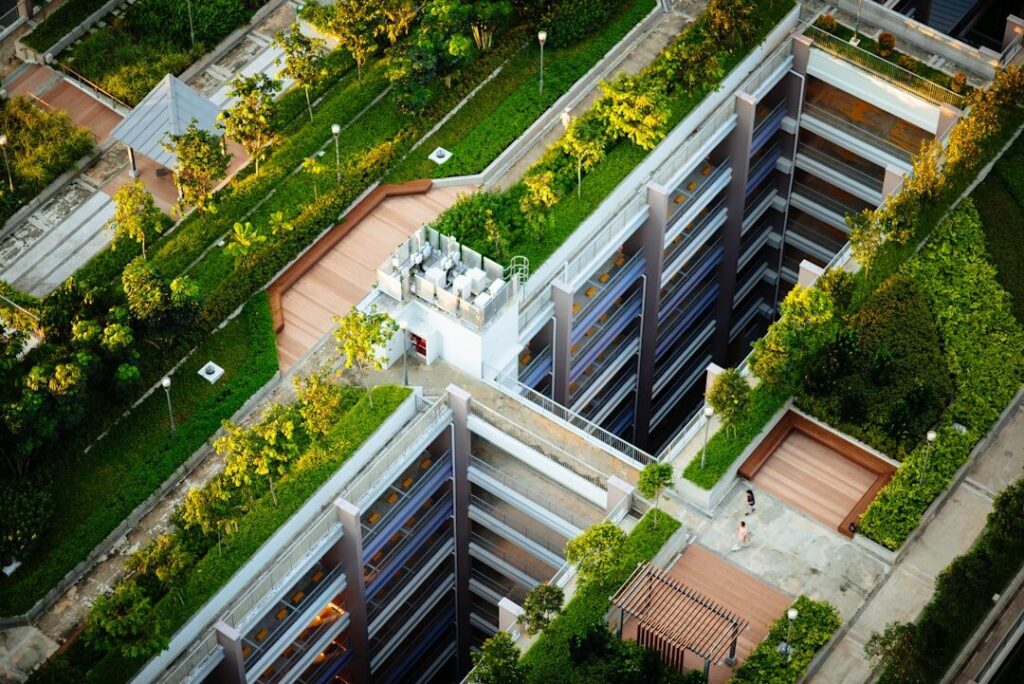
 Government & Policy
Government & Policy