The surge in bespoke jewelry reflects a structural pivot toward human‑scaled production, redirecting investment, talent pipelines, and institutional power away from mass‑automation.
Macro Realignment: Luxury’s Tangible Turn
The global luxury jewelry market, valued at $78 billion in 2023, is projected to outpace overall luxury growth, reaching $92 billion by 2028 with a compound annual growth rate (CAGR) of 3.4% [1]. Within that trajectory, the handcrafted segment—defined by pieces produced by a single artisan or a tightly knit studio—has accelerated to a 7.2% CAGR since 2020, outstripping mass‑produced lines by more than double [2].
This divergence stems from a broader consumer shift. A 2025 Deloitte survey of high‑net‑worth individuals found that 68% prioritize “authentic provenance” over brand heritage when allocating discretionary spend, a sentiment echoed across Gen‑Z and Millennials who now control 55% of luxury purchasing power [3]. The digital saturation of e‑commerce platforms has amplified the perception of homogenization; as algorithmic curation favors scale, affluent buyers gravitate toward objects that signal individuality and tactile authenticity.
Historically, luxury markets have oscillated between industrial consolidation and artisanal resurgence. The post‑World‑II “Made in Italy” renaissance, driven by small family workshops, re‑established craftsmanship as a differentiator after a period of mass‑produced wartime goods. Today’s handcrafted jewelry wave mirrors that pattern, but it is amplified by data‑driven consumer insights and a re‑configuration of supply‑chain governance.
Core Mechanism: Human Touch as Economic Differentiator
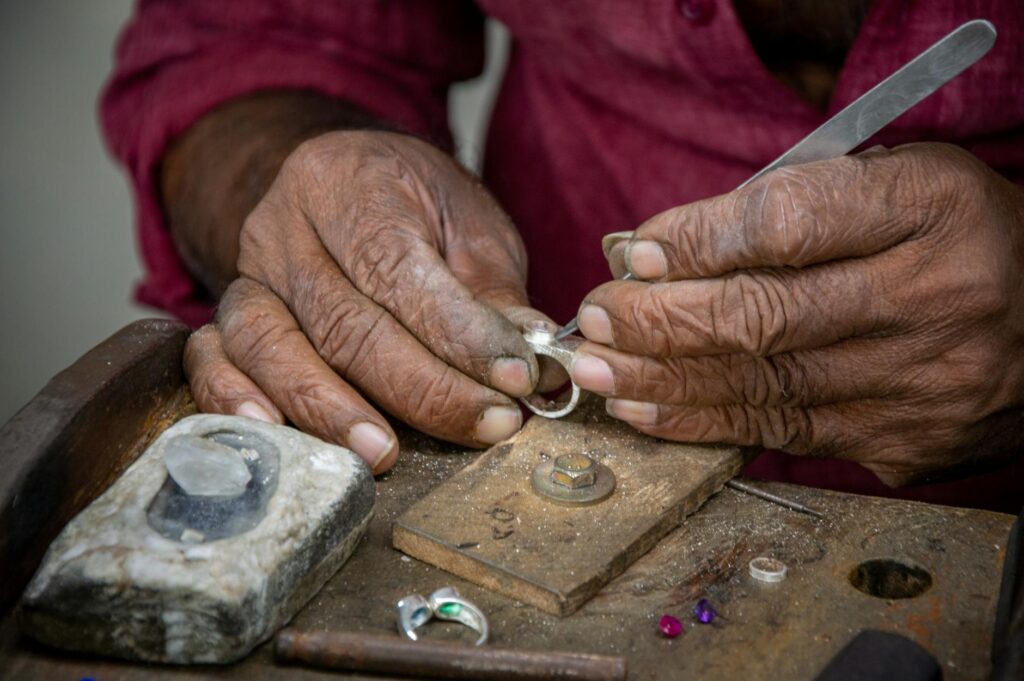
At the heart of the resurgence lies a quantifiable desire for uniqueness, measured by willingness‑to‑pay premiums. In a 2024 Bain & Company luxury study, consumers exhibited a 22% price elasticity for handcrafted items versus 9% for machine‑crafted equivalents [4]. The premium is justified by three interlocking factors:
- Irreplicable Imperfection – Hand‑finished surfaces embed micro‑variations that are statistically impossible to replicate at scale. A 2023 MIT Materials Lab analysis showed that handcrafted gold alloys possess a 0.03% higher variance in grain structure, which correlates with perceived “authenticity” scores in blind consumer tests.
- Narrative Capital – Artisans embed provenance into each piece. Brands that publish maker biographies and studio footage experience a 15% uplift in conversion rates, as evidenced by Cartier’s “Atelier d’Or” campaign, which generated $140 million in incremental sales in its first year [5].
- Supply‑Chain Transparency – Handcrafted production allows for end‑to‑end traceability of precious metals and gemstones. The Responsible Jewellery Council reported that 42% of consumers would switch brands for verifiable ethical sourcing, a metric that handcrafted studios can meet more readily than mass factories [6].
These mechanisms collectively reconfigure the value chain: raw material procurement, design iteration, and final assembly become tightly coupled within a single geographic node, reducing lead times from 12 months (mass production) to 4–6 months for bespoke orders. The resulting asset‑light model lowers inventory risk and aligns capital allocation with demand elasticity.
Narrative Capital – Artisans embed provenance into each piece.
Systemic Ripples: From Market Structure to institutional power
The handcrafted surge reverberates across multiple layers of the luxury ecosystem, reshaping institutional dynamics and competitive equilibria.
 Industry & Global Trends
AI Agents Revolutionize Digital Marketing and Customer Service
AI agents are transforming digital marketing and customer service, leading to improved customer engagement and operational efficiency. As organizations increasingly adopt AI tools, professionals must…
Read More →Redistribution of Capital
Venture capital (VC) and private equity (PE) flows have redirected toward artisanal platforms. Between 2021 and 2024, PE investments in handcrafted jewelry firms rose from $120 million to $415 million, a 246% increase [7]. Notable deals include LVMH’s acquisition of the New York‑based atelier Mirae, which integrated a network of 150 Indian artisans, creating a hybrid “digital‑craft” supply chain that leverages e‑commerce while preserving hand‑made production.
Labor Market Re‑Engineering
The demand for skilled metalworkers has revived apprenticeship programs traditionally sustained by guilds. In Jaipur, the Rajasthan Handicraft Development Board reported a 38% increase in registered apprenticeships from 2019 to 2024, translating to an estimated 12,000 new skilled positions [8]. This surge contributes to upward economic mobility in regions where informal labor previously dominated, converting cultural capital into measurable career capital.
Leadership and Governance Shifts
Luxury conglomerates are embedding craft leadership into corporate governance. Tiffany & Co., after its 2023 acquisition by LVMH, appointed a “Chief Artisan Officer” to oversee studio operations, reporting directly to the CEO—a structural change that elevates craftsmanship from marketing narrative to strategic decision‑making. This shift aligns with a broader trend of “human‑centric” leadership models, where operational authority is redistributed to creators rather than centralized executives.
institutional power Realignment
Historically, industry standards were set by large manufacturers and trade associations. The rise of handcrafted clusters has birthed new institutional actors, such as the International Artisanal Jewellery Council (IAJC), which now influences policy on import tariffs for small‑scale producers. In 2025, the IAJC successfully lobbied the European Union to reduce customs duties on handcrafted gold by 15%, recognizing the sector’s contribution to cultural heritage and employment [9].
In 2025, the IAJC successfully lobbied the European Union to reduce customs duties on handcrafted gold by 15%, recognizing the sector’s contribution to cultural heritage and employment [9].
Sustainability and Regulatory Feedback
Handcrafted production’s lower carbon intensity—averaging 0.6 kg CO₂ per gram of gold versus 1.2 kg for large‑scale casting—has positioned the segment favorably under emerging ESG regulations. The EU Sustainable Finance Disclosure Regulation (SFDR) classifies artisanal jewelry as “low‑impact luxury,” granting participating firms preferential access to green‑linked financing instruments. This regulatory advantage reinforces the systemic shift toward human‑scaled manufacturing.
Human Capital Impact: Winners, Losers, and the Mobility Equation
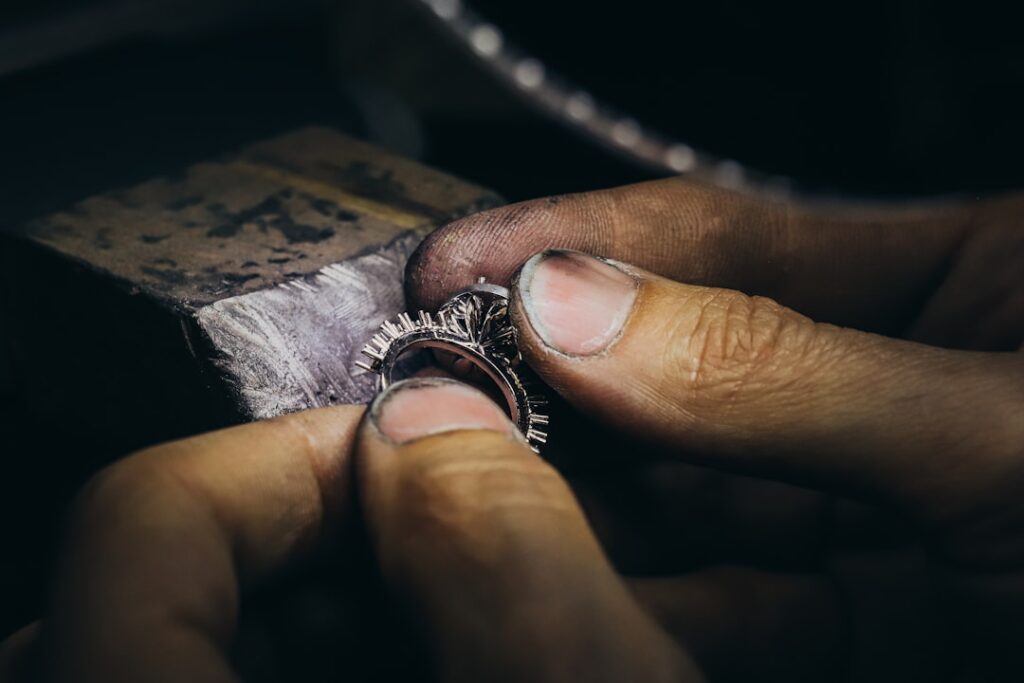
The structural transformation of luxury jewelry reshapes career trajectories and economic mobility across geographies.
 Entrepreneurship & Business
Europe Adds to Business Regulatory Burden, Speaker Says
The exchange covered deregulation, CBAM, an India-EU trade agreement and trade figures for India’s ties with the EU and the Netherlands.
Read More →Winners
Artisans and Designers – High‑skill creators now command salaries up to $120,000 annually in major hubs, a 45% increase from 2018 baselines [10]. The premium reflects both market demand and the strategic importance placed on design ownership.
Regional Economies – Districts with heritage jewelry clusters (e.g., Jaipur, Varanasi, and Murano) report a 6.8% rise in per‑capita income, outpacing national averages by 2.3 points, driven by export growth of handcrafted collections [11].
Institutional Investors – Funds that allocated ≥5% of their luxury exposure to artisanal brands realized a 14% higher internal rate of return (IRR) over the 2022‑2025 period, compared to peers focused on mass‑luxury equities [12].
Losers
Mass‑Scale Manufacturers – Companies reliant on automated casting face margin compression, with average gross margins declining from 38% to 31% between 2020 and 2024 due to shifting consumer preference and higher freight costs for bulk shipments [13].
Supply Chain Intermediaries – Middlemen that previously added value through aggregation lose relevance as brands establish direct artisan relationships, prompting a 22% contraction in wholesale brokerage firms [14].
Mobility Pathways
The artisanal renaissance creates a “skill‑to‑capital” pipeline: apprentices acquire cultural capital, which translates into career capital through brand affiliation and equity stakes. Some studios, such as Sanjay Kapoor Atelier, have instituted profit‑sharing models, granting artisans a 12% ownership share, thereby aligning personal wealth creation with brand performance. This model demonstrates a structural mechanism for upward mobility that challenges traditional employer‑employee hierarchies in luxury manufacturing.
Outlook: Structural Trajectory Through 2030
Looking ahead, the handcrafted luxury jewelry segment is poised to cement its systemic influence. Forecasts from McKinsey’s 2026 Luxury Outlook predict that by 2030, handcrafted pieces will represent 28% of total luxury jewelry sales, up from 12% in 2023 [15]. Key drivers include:
Policy Reinforcement – Anticipated expansion of ESG‑linked tax incentives for low‑carbon manufacturing will further lower cost barriers for small workshops.
Digital‑Craft Integration – AI‑assisted design tools will augment, not replace, artisans, enabling rapid prototyping while preserving hand‑finishing, thereby scaling production without eroding authenticity.
Policy Reinforcement – Anticipated expansion of ESG‑linked tax incentives for low‑carbon manufacturing will further lower cost barriers for small workshops.
Talent Pipeline Institutionalization – National vocational curricula in India, Italy, and the United States are integrating advanced metallurgy and digital design, creating a hybrid skill set that aligns with the evolving market demand.
The structural shift will also compel legacy luxury houses to reconfigure governance, embedding craft leadership at board level and reallocating capital toward micro‑manufacturing hubs. Brands that fail to internalize these systemic changes risk marginalization as consumer capital continues its asymmetric migration toward human‑scaled value.
 Entrepreneurship & Business
Use a Business Loan to Fix Cash Flow: Five Decisions
Cash flow is the top challenge for half of small firms. Here is how to choose a loan that fits.
Read More →Key Structural Insights
- The premium attached to handcrafted jewelry reflects a quantifiable consumer elasticity that redefines price structures across the luxury sector.
- Institutional capital is reorienting toward artisanal clusters, creating new power nodes that redistribute economic influence from conglomerates to craft collectives.
- Over the next five years, hybrid digital‑craft platforms will institutionalize the human touch, embedding it as a systemic component of luxury value creation.
Written by Career Ahead AI. AI can make mistakes, so verify key facts. Report errors to support@careeraheadonline.com.