

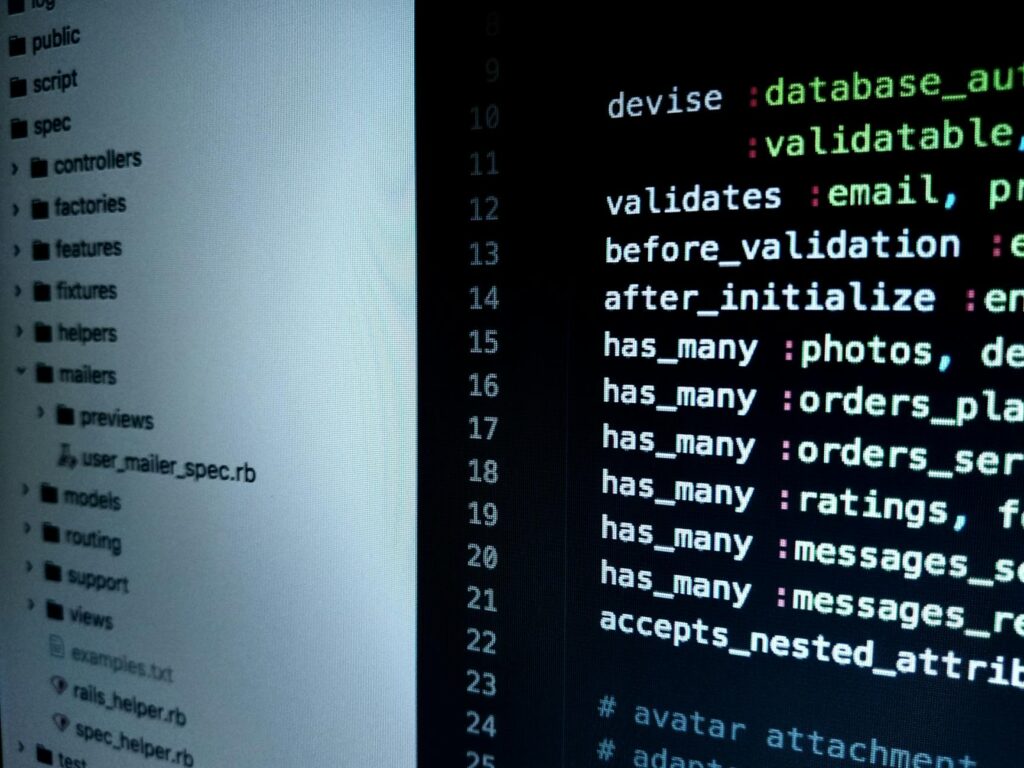
The surge in AI‑augmented development is redirecting the productivity engine from pure code output to a hybrid of algorithmic assistance and human collaboration.
Understanding this shift reveals the structural levers that will determine career mobility, institutional power, and leadership pathways over the next half‑decade.
Macro Demand and Technological Inflection
The software engineering labor market is entering a phase of asymmetric growth. Forecasts from the International Conference on Software Engineering (ICSE) project a 30 % rise in global demand for skilled engineers by 2025, driven by enterprise digital transformation initiatives and the proliferation of embedded intelligence across sectors [4]. Simultaneously, the Stanford Digital Economy Lab reports that 75 % of large organizations have already integrated AI tools into their development pipelines, a figure projected to climb to 90 % by 2027 [3].
These macro forces are not merely expanding the volume of code; they are redefining the architecture of work. The classic “code‑first” paradigm—where productivity is measured by lines of code, commit frequency, or sprint velocity—now collides with a reality in which algorithmic assistants handle routine syntactic tasks, while value creation migrates toward design thinking, cross‑functional communication, and ethical stewardship. A recent industry survey found that 60 % of software teams consider human factors—collaboration, empathy, and shared mental models—to be a critical determinant of delivery success [1].
The convergence of demand elasticity and AI diffusion creates a structural inflection point: organizations that embed human‑centric practices into their technical processes will capture disproportionate productivity gains, while those that cling to code‑centric metrics risk systemic underperformance.
From Code to Collaboration: The Core Productivity Mechanism

At the heart of this transformation lies a reallocation of cognitive labor. Empirical data from a cross‑industry study of 1,200 engineers indicate that 80 % of respondents feel compelled to develop stronger soft skills—particularly in negotiation, conflict resolution, and stakeholder storytelling—to remain effective [2]. This self‑assessment aligns with the observed adoption of AI‑driven coding assistants. GitHub Copilot, for example, now automates an estimated 40 % of routine boilerplate generation across participating firms, freeing developers to focus on architectural decisions and user‑experience refinement [3].
The mechanism can be decomposed into three interlocking layers:
Embedded Collaborative Frameworks – Agile methodologies, already pervasive (90 % of teams report usage), become the conduit through which AI‑augmented outputs are integrated, validated, and iterated.
- Automation of Routine Syntax – AI models trained on billions of code snippets generate function scaffolds, test stubs, and documentation drafts. This reduces the “transaction cost” of coding, measured by a 22 % decrease in average pull‑request cycle time in firms that have deployed such tools at scale [3].
- Elevated Human Judgment – With repetitive tasks offloaded, engineers allocate more time to problem framing, requirement synthesis, and risk assessment. A longitudinal analysis of agile teams at a Fortune‑500 retailer showed a 15 % uplift in sprint predictability after introducing AI‑assisted code reviews, attributed to engineers spending more time on backlog grooming and stakeholder alignment [2].
- Embedded Collaborative Frameworks – Agile methodologies, already pervasive (90 % of teams report usage), become the conduit through which AI‑augmented outputs are integrated, validated, and iterated. The synergy between AI tooling and agile ceremonies creates a feedback loop that amplifies both technical quality and team cohesion [4].
This triadic structure reflects a systemic shift from a “code‑only” productivity engine to a “human‑AI hybrid” engine, where the marginal value of soft skills now exceeds that of raw programming speed.
Systemic Repercussions Across the Enterprise
The rebalancing of technical and human capital reverberates through multiple institutional layers:
Human‑Centered Design Integration
Sixty percent of organizations now embed human‑centered design (HCD) principles into their software development lifecycles, moving beyond superficial UI testing to incorporate ethnographic research, persona development, and inclusive accessibility standards [1]. Companies such as IBM have institutionalized “Design Thinking Sprints” that align product roadmaps with employee and customer empathy maps, directly linking HCD metrics to quarterly performance bonuses. This institutionalization reconfigures power dynamics, elevating product managers and UX leads as strategic decision‑makers.
AI‑Driven Quality Assurance
Fifty percent of firms report deploying AI‑powered testing suites that automatically generate edge‑case scenarios and perform continuous security scanning. In the financial services sector, a leading bank reduced post‑release defect rates by 34 % after integrating AI‑based static analysis into its CI/CD pipeline, thereby shifting accountability for software reliability from individual developers to the automated governance layer [2]. This reallocation of risk mitigation authority reshapes internal control structures and demands new oversight roles.
Curriculum Evolution and Credentialing
Eighty percent of accredited software engineering programs now incorporate HCD modules and soft‑skill workshops into core curricula, a rapid curricular pivot from the 2015 baseline where only 22 % of programs offered dedicated communication courses [4]. Universities such as Carnegie Mellon have launched “Human Factors for Software Engineers” certificates, which are increasingly recognized by Fortune‑100 recruiters as a proxy for career capital. The emergence of these credentials creates a new stratification axis: engineers who acquire certified soft‑skill credentials gain asymmetrical access to leadership pipelines.
Institutional Power Realignment
The diffusion of AI tools reduces the monopoly of senior architects over code quality, democratizing contribution pathways. Conversely, the rise of HCD and AI governance introduces new gatekeeping functions—product ethicists, AI safety officers, and design leads—who command institutional authority disproportionate to their traditional engineering seniority. This reallocation of power reshapes promotion matrices and redefines the competencies required for executive ascension.
Their skill set aligns with the 40 % automation adoption rate, positioning them as “AI‑enabled engineers” whose labor command premium wages—average salary uplift of 18 % reported in the 2026 Stack Overflow Survey [3].
Career Capital in the New Productivity Regime

The reconfiguration of productivity mechanisms translates into a stratified impact on individual career trajectories:
Engineers who specialize in AI tooling (e.g., prompt engineering, model fine‑tuning) accrue high‑value technical capital that is immediately marketable across sectors. Their skill set aligns with the 40 % automation adoption rate, positioning them as “AI‑enabled engineers” whose labor command premium wages—average salary uplift of 18 % reported in the 2026 Stack Overflow Survey [3].
Design‑oriented engineers who master HCD frameworks gain “collaborative capital.” Case in point: a mid‑level engineer at a health‑tech startup leveraged a certified UX design credential to transition into a product lead role within 18 months, illustrating the career mobility enabled by soft‑skill certification.
Traditional code‑centric specialists face a relative depreciation of their core capital. Engineers whose expertise remains confined to legacy language maintenance without AI augmentation see slower promotion rates, as firms prioritize cross‑functional fluency.
Leadership pipelines now demand hybrid profiles. CEOs of tech firms such as Microsoft and Google have publicly emphasized the necessity of “technical empathy” for senior managers, a cultural shift that redefines the criteria for board‑level appointments. Consequently, career ladders are increasingly bifurcated: one path rewards deep AI fluency, the other rewards systemic design leadership.
Institutional mobility is also mediated by geography and firm size. Large enterprises with mature AI governance structures (e.g., Amazon, IBM) create internal talent markets that reward AI‑augmented productivity, whereas smaller startups often rely on versatile engineers who can toggle between coding, design, and AI prompt crafting, offering broader but less hierarchical advancement opportunities.
Institutional mobility is also mediated by geography and firm size.
Overall, the net effect is an asymmetric redistribution of career capital: those who acquire both algorithmic proficiency and human‑centric competencies will dominate the upper echelons of software engineering leadership, while single‑track engineers risk marginalization.
Projection to 2029
If current adoption curves persist, the software engineering ecosystem will experience three converging trajectories by 2029:
- Institutionalization of AI‑Human Hybrid Teams – By 2029, at least 70 % of large enterprises will formalize “AI‑augmented squads” with dedicated AI liaison roles, embedding algorithmic output directly into sprint planning. This institutional layer will become a standard governance artifact, akin to the DevOps “pipeline” introduced a decade earlier.
- Credential‑Driven Labor Market Segmentation – Soft‑skill certifications and AI tooling badges will function as de facto gatekeepers for senior roles. Recruiters will weight these credentials at a 1.5 × multiplier relative to traditional technical certifications in applicant tracking algorithms.
- Leadership Reorientation Toward Ethical Stewardship – Regulatory pressure from bodies such as the European Union’s AI Act will compel firms to appoint Chief Ethical Engineers, a role that blends technical oversight with societal impact assessment. The rise of this position signals a structural shift where institutional power aligns with systemic responsibility rather than pure output metrics.
Enterprises that proactively restructure performance incentives to reward collaborative outcomes, invest in AI‑enabled tooling, and embed HCD into governance will capture a productivity premium estimated at 12–15 % over peers that maintain legacy code‑centric models [4]. Conversely, firms that delay integration risk talent attrition, as engineers gravitate toward environments that recognize the full spectrum of their career capital.
Key Structural Insights
[Insight 1]: The productivity engine has migrated from pure code generation to a hybrid of AI automation and human collaboration, redefining the marginal value of soft skills.
[Insight 2]: Institutional power is reallocated toward design leads, AI governance officers, and ethically focused roles, creating new promotion pathways that privilege systemic stewardship.
[Insight 3]: Career capital now hinges on dual fluency in AI tooling and human‑centered design, establishing a bifurcated talent hierarchy that will shape leadership pipelines through 2029.
Written by Career Ahead AI. AI can make mistakes, so verify key facts. Report errors to support@careeraheadonline.com.





