No products in the cart.

Human Insight Trumps AI in Scientific Breakthroughs
Beyond Automation: AI as a Partner, Not a Substitute The most visible impact of artificial intelligence in the lab is its ability to crunch massive data sets in...

AI can accelerate a discovery while simultaneously obscuring the very question it solves.
Beyond Automation: AI as a Partner, Not a Substitute
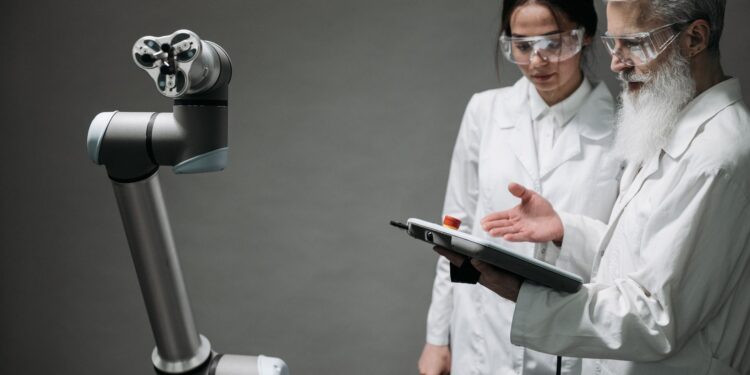
The most visible impact of artificial intelligence in the lab is its ability to crunch massive data sets in minutes, a task that once demanded weeks of human labor. Yet the moment a model proposes a novel compound or a new astrophysical pattern, the next step—deciding whether the result merits further investigation—still rests on a researcher’s intuition. The Human‑AI Collaboration Matrix captures this division: the left axis lists technical capabilities (pattern detection, simulation, hypothesis generation), while the top axis records human judgment domains (problem framing, ethical vetting, contextual relevance). Across the matrix, the highest-value cells are those where AI supplies raw insight and the scientist supplies meaning.
Speed versus Scrutiny: The Reproducibility Challenge
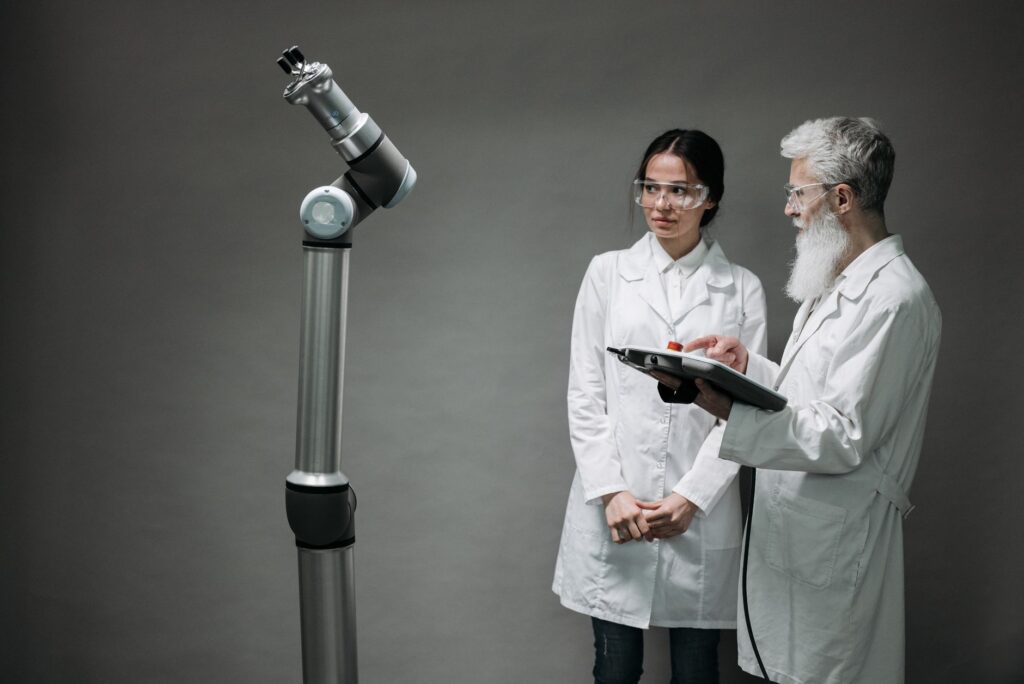
When AI shortcuts the experimental cycle, the pressure to publish accelerates. A model can generate a plausible protein structure, a climate projection, or a quantum material prediction in a single run, and the resulting manuscript can appear in a top journal within days. Does this speed compromise the rigor that underpins scientific trust? The answer hinges on transparency. Traditional methods leave a paper trail of reagents, protocols, and instrument settings; AI pipelines often conceal layers of training data, hyperparameters, and stochastic processes behind proprietary code.
The reproducibility gap is not merely technical; it reshapes the epistemic contract between researchers and the public. If a result cannot be independently verified because the underlying model is a black box, confidence erodes. The scientific community has responded with calls for “model cards” and open-source checkpoints, but adoption remains uneven. The tension between rapid insight and verifiable knowledge raises a stark question: can the community sustain a culture of trust when the primary evidence is an algorithmic output?
Moreover, the speed of AI-driven discovery amplifies the “publish or perish” incentive, encouraging incremental tweaks rather than deep validation. Researchers may feel compelled to present AI-generated findings before the community has established standards for auditing those outputs. This dynamic risks a proliferation of results that, while impressive on the surface, lack the robustness required for long-term integration into the scientific canon.
The reproducibility gap is not merely technical; it reshapes the epistemic contract between researchers and the public.
Our view is that the solution lies not in throttling AI’s pace but in embedding reproducibility checkpoints into the Human‑AI Collaboration Matrix itself. By designating specific matrix cells for validation—such as requiring independent replication of AI-derived hypotheses using alternative methods—we can preserve speed while safeguarding credibility.
Redefining the Researcher: Skills for a Human-AI Collaboration
The emergence of AI reshapes the skill set that a scientist must cultivate. Beyond domain expertise, fluency with data pipelines, prompt engineering, and model interpretability becomes essential. Researchers who can translate a scientific question into a machine-readable format and then critique the model’s rationale will thrive. The Human-AI Collaboration Matrix emphasizes this dual fluency: the intersection of “AI-augmented hypothesis generation” and “critical evaluation of algorithmic bias” is now a core competency.
We have observed, in our own analysis of emerging research teams, that those who invest in cross-training—pairing a computational specialist with a subject-matter expert—produce more durable discoveries. This synergy mirrors the matrix’s highest-value cells, where human insight refines AI output and, conversely, AI expands the horizon of what a human can contemplate.
Democratizing Discovery: How AI Levels the Playing Field
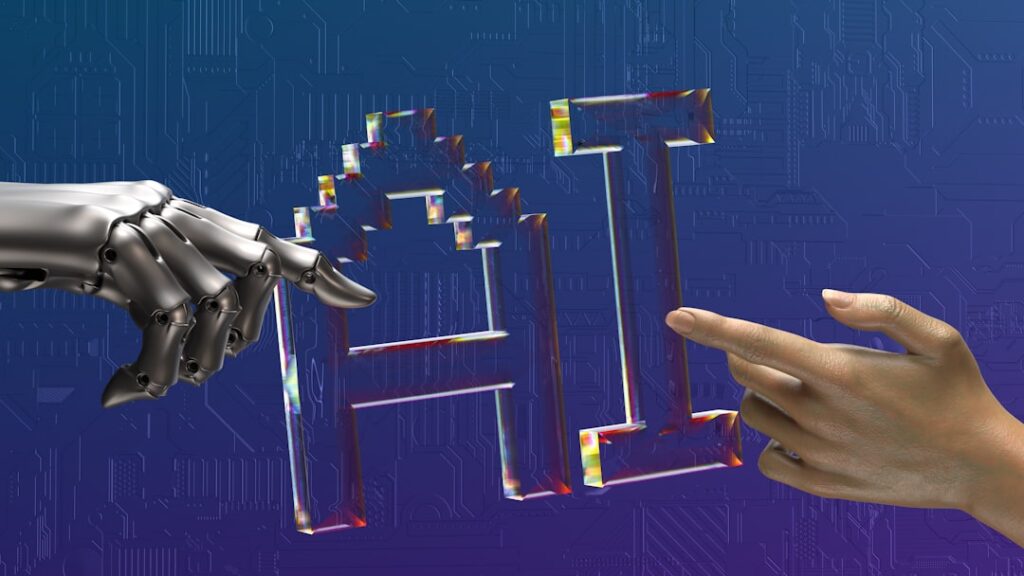
AI tools lower the barrier to entry for researchers outside elite institutions. Cloud-based platforms now offer powerful simulation engines and large language models at modest subscription rates, allowing a lab in a developing country to run climate-impact scenarios that previously required supercomputing access. This democratization expands the pool of perspectives that can pose novel questions, enriching the scientific dialogue.
The answer cannot be deferred to the algorithm; accountability must be codified within research governance.
Yet access alone does not guarantee equitable outcomes. Without proper training, under-resourced teams may misuse AI, producing results that reinforce existing biases. The Human-AI Collaboration Matrix therefore includes a “capacity-building” quadrant, urging institutions to pair tool provision with mentorship programs that teach responsible AI use. Initiatives that combine open resources with community-driven curricula yield the most inclusive advances.
Ethical Guardrails: Accountability in AI-Generated Knowledge
When an AI model suggests a drug target that later proves harmful, who bears responsibility? The answer cannot be deferred to the algorithm; accountability must be codified within research governance. Ethical review boards are beginning to require AI impact assessments, mirroring the environmental impact statements used in engineering projects. These assessments evaluate data provenance, potential bias, and downstream societal effects before an AI-derived hypothesis proceeds to experimental validation.
Embedding such safeguards into the Human-AI Collaboration Matrix creates a systematic checkpoint: every AI-generated insight must pass an ethical review before entering the “experimental testing” cell. This institutionalizes responsibility and ensures that the speed afforded by AI does not outpace the moral deliberation essential to scientific progress.
The path forward is not a binary choice between AI dominance and human exclusivity. It is a calibrated partnership, where the matrix guides the allocation of tasks, the reinforcement of reproducibility, and the cultivation of new competencies. By treating AI as an augmenting force rather than a replacement, the scientific enterprise can harness unprecedented acceleration without sacrificing its foundational principles.
In sum, AI reshapes how we ask questions, process data, and share findings, but it does not dissolve the need for human judgment. The future of inquiry will be defined by how deftly we navigate the matrix of collaboration, ensuring that speed amplifies, rather than erodes, the credibility of science.
The future of inquiry will be defined by how deftly we navigate the matrix of collaboration, ensuring that speed amplifies, rather than erodes, the credibility of science.
Key Structural Insights
- AI accelerates discovery while obscuring the question it solves.
- The Human-AI Collaboration Matrix captures the division between technical capabilities and human judgment domains.
- Reproducibility checkpoints are essential to preserve speed while safeguarding credibility.
- Researchers must cultivate skills in data pipelines, prompt engineering, and model interpretability.
- AI tools democratize discovery, but access alone does not guarantee equitable outcomes.
- Ethical review boards require AI impact assessments to evaluate data provenance, potential bias, and downstream societal effects.
- The Human-AI Collaboration Matrix guides the allocation of tasks, the reinforcement of reproducibility, and the cultivation of new competencies.
Written by Career Ahead AI. AI can make mistakes, so verify key facts. Report errors to support@careeraheadonline.com.