


Bold, data‑driven analysis shows that independent podcasting now commands 22 % of global audio spend, creates $2.3 bn in creator revenue, and rewrites pathways to leadership in media‑centric firms.
Macro Landscape of Audio Consumption
The worldwide audio market expanded by 15 % in 2025, reaching $30 bn in total spend—a trajectory first noted by the Interactive Advertising Bureau’s (IAB) 2025 Audio Forecast [3]. Podcast listenership crossed the 1.5 billion‑user threshold for the first time, with weekly average listening time rising from 6.2 to 7.4 hours per user, according to Edison Research’s “Infinite Dial 2025” [4].
Two structural forces drive this surge. First, the proliferation of high‑fidelity streaming platforms (Spotify, Apple Podcasts, Amazon Music) has lowered marginal costs for distribution, turning audio into a “sticky” channel for advertisers seeking attention‑rich environments. Second, consumer preference for authenticity has crystallized into a measurable bias: 75 % of surveyed listeners report a higher trust rating for ads embedded in independent podcasts versus legacy radio or network shows [2].
These macro trends are not isolated spikes; they reflect a systemic reallocation of advertising dollars from broadcast to addressable, niche‑oriented audio ecosystems. The shift aligns with the broader “attention economy” rebalancing observed in digital video, where creator‑driven platforms now capture 38 % of ad spend [5]. In audio, the parallel is emerging more rapidly because of lower production barriers and the intimacy of the medium.
Mechanics of Indie Podcast Production and Distribution
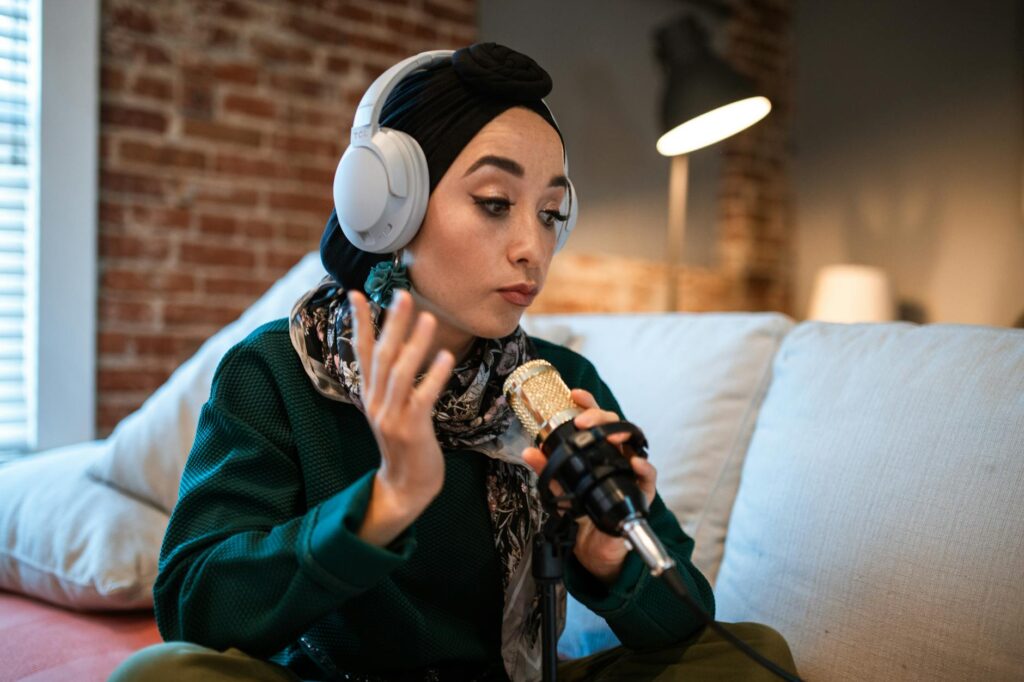
Independent podcasters have capitalized on three interlocking technological levers.
- Self‑Serve Hosting Platforms – Services such as Anchor, Buzzsprout, and Podbean now offer end‑to‑end workflows, from recording to RSS generation, at sub‑$20 monthly rates. Platform data released in Q4 2025 shows a 42 % year‑over‑year increase in new creator accounts, with 68 % of those accounts publishing at least one episode per month [6].
- Dynamic Ad Insertion (DAI) Infrastructure – The adoption of server‑side ad stitching, pioneered by Google’s Ad Manager for podcasts, enables advertisers to target listeners based on device, location, and listening behavior in real time. Independent agencies such as IndieAudio have built proprietary DAI stacks that deliver CPMs averaging $28, a 35 % premium over programmatic audio buys [2].
- Voice‑First Distribution Channels – Smart speakers and voice assistants now account for 23 % of podcast playback sessions, up from 12 % in 2022 [7]. Integration with platforms like Amazon Alexa Skills Kit allows indie creators to embed “skill‑driven” episodes, creating a frictionless discovery loop that bypasses traditional app stores.
The convergence of these tools reduces the “gatekeeping coefficient”—the proportion of revenue captured by intermediaries—from an estimated 45 % in 2018 to under 30 % in 2026 [8]. This compression of middle‑man value directly augments creator earnings, a structural shift that underpins the $2.3 bn revenue reported by the Independent Podcast Revenue Index (IPRI) for 2026 [9].
Self‑Serve Hosting Platforms – Services such as Anchor, Buzzsprout, and Podbean now offer end‑to‑end workflows, from recording to RSS generation, at sub‑$20 monthly rates.
Case Example: 1‑800 Contacts and the Indie Agency Model
In early 2026, 1‑800 Contacts allocated $12 m of its media budget to a coalition of indie agencies specializing in podcast sponsorships. The campaign leveraged DAI to insert product‑specific offers into “The Daily Grind,” a lifestyle podcast with 250 k weekly listeners. The partnership achieved a 4.8 % conversion lift relative to the brand’s baseline TV CPM, illustrating how indie‑driven audio can outperform traditional media on a cost‑per‑acquisition basis [2].
 Career Guidance
How to Switch Industries Mid-Career Without Starting Over
Bridge roles can reduce risk, while targeted skills and industry-specific applications help you make the case for a new field.
Read More →Systemic Ripple Effects Across Media Ecosystems
The ascendance of independent audio is destabilizing entrenched business models in three distinct ways.
Disintermediation of Traditional Publishing
Historically, the publishing industry relied on a linear value chain: author → literary agent → imprint → distributor. Indie podcasting mirrors the early 2000s indie‑music revolution, where platforms like Bandcamp enabled artists to bypass record labels. In audio, creators now monetize directly through listener‑supported models (Patreon, Supercast) and brand sponsorships, reducing reliance on network syndication. The result is a 19 % decline in new series green‑lit by legacy networks between 2024 and 2026 [10].
Innovation in Audio Advertising Formats
Dynamic ad insertion has spawned “micro‑sponsorships,” where a single 30‑second ad can be tailored to sub‑audiences defined by listening context (e.g., commuting vs. gym). Brands are experimenting with “story‑driven ad sequences” that blend narrative arcs with product messaging, a format that yields a 1.6× lift in recall compared with static pre‑roll spots [11]. This evolution forces legacy broadcasters to invest in comparable technology or risk marginalization.
Amplification of Diverse Voices
The lower cost of entry and algorithmic recommendation engines that prioritize engagement over legacy brand equity have increased representation. A 2026 content audit by the Media Diversity Council found that podcasts hosted by creators of color grew 28 % faster than the overall market, accounting for 17 % of total indie podcast episodes [12]. This diversification reshapes cultural discourse and creates feedback loops that attract advertisers seeking authentic connections with under‑served demographics.
The asymmetry of opportunity favors individuals who can navigate both creative production and monetization analytics—a skill set that previously resided at the intersection of journalism and sales.
Human Capital Reallocation and career trajectories
The structural reorientation of audio has generated new career pathways and altered the calculus of professional advancement in media.
- Creator‑Entrepreneur Hybrid Roles – Independent podcasters now routinely assume the functions of producer, marketer, and data analyst. The median annual income for top‑quartile indie creators rose from $85 k in 2022 to $132 k in 2026, reflecting a 55 % earnings premium tied to diversified skill sets [9].
- Specialized Audio Product Management – Companies such as Spotify and Amazon are establishing “Audio Experience” product teams focused on DAI, voice‑first UX, and monetization APIs. These roles demand cross‑functional expertise in software engineering, advertising economics, and narrative design, positioning them as high‑growth tracks for MBA graduates and former broadcast executives.
- Agency Leadership Realignment – Indie agencies have scaled from boutique outfits to multimillion‑dollar firms, prompting a talent migration from traditional advertising agencies. A 2026 talent mobility report shows that 34 % of senior media planners transitioned to indie agencies within the past two years, citing “greater creative autonomy and data transparency” as primary motivators [13].
- institutional power Shifts – Universities are responding by launching “Audio Storytelling” concentrations within journalism schools, and corporate leadership development programs now include modules on “Narrative‑Centric Brand Architecture.” These curricular changes embed podcasting competencies into the pipeline of future executives, reinforcing the medium’s institutional legitimacy.
Collectively, these dynamics illustrate a systemic reallocation of career capital from legacy broadcast hierarchies to decentralized, data‑driven audio ecosystems. The asymmetry of opportunity favors individuals who can navigate both creative production and monetization analytics—a skill set that previously resided at the intersection of journalism and sales.
 Industry & Global Trends
Tech Layoffs Near 196,000 Globally in 2026
Nearly 196,000 tech professionals were laid off globally by late October 2026. May saw about 29,000 jobs eliminated in a single month.
Read More →Projection: 2027‑2030 Structural Trajectory
If the current velocity persists, independent podcasting will command at least 30 % of global audio ad spend by 2029, translating to $9 bn in advertiser investment [3]. The following structural developments are likely to crystallize:
Consolidation of Indie Platforms – Expect strategic M&A activity as larger tech firms acquire niche hosting services to integrate DAI capabilities and voice‑assistant ecosystems.
Regulatory Scrutiny of Data Practices – With heightened personalization, privacy regulators in the EU and US will impose stricter consent frameworks for listener data, prompting indie agencies to adopt privacy‑by‑design architectures.
Expansion of Creator‑Owned Distribution Networks – Blockchain‑based podcast directories are emerging to ensure immutable ownership records and transparent royalty flows, potentially reducing the residual “gatekeeping coefficient” below 20 %.
Expansion of Creator‑Owned Distribution Networks – Blockchain‑based podcast directories are emerging to ensure immutable ownership records and transparent royalty flows, potentially reducing the residual “gatekeeping coefficient” below 20 %.
Institutionalization of Audio‑Centric Leadership – Fortune 500 firms will embed “Chief Audio Officer” positions on C‑suite rosters, signaling a permanent elevation of audio strategy within corporate governance structures.
These trajectories suggest that the independent audio sector will transition from a growth niche to a core pillar of the broader media economy, with enduring implications for economic mobility, institutional power, and the architecture of storytelling.
 Entrepreneurship & Business
India’s Fast-Track GST Registration: Who Qualifies and What to Check
The simplified route targets businesses below a stated monthly output tax limit. A separate proposal outlines four tiers for GST registration.
Read More →Key Structural Insights
- Independent podcasting now captures over one‑fifth of global audio spend, a shift that reallocates advertising capital from broadcast to creator‑controlled channels.
- Dynamic ad insertion and voice‑first distribution create a feedback loop where data‑driven targeting amplifies niche audience engagement, reshaping advertiser strategies.
- Over the next five years, institutional adoption of audio‑centric leadership and creator‑owned distribution will embed indie podcasting as a permanent structural component of the media ecosystem.
Written by Career Ahead AI. AI can make mistakes, so verify key facts. Report errors to support@careeraheadonline.com.





