

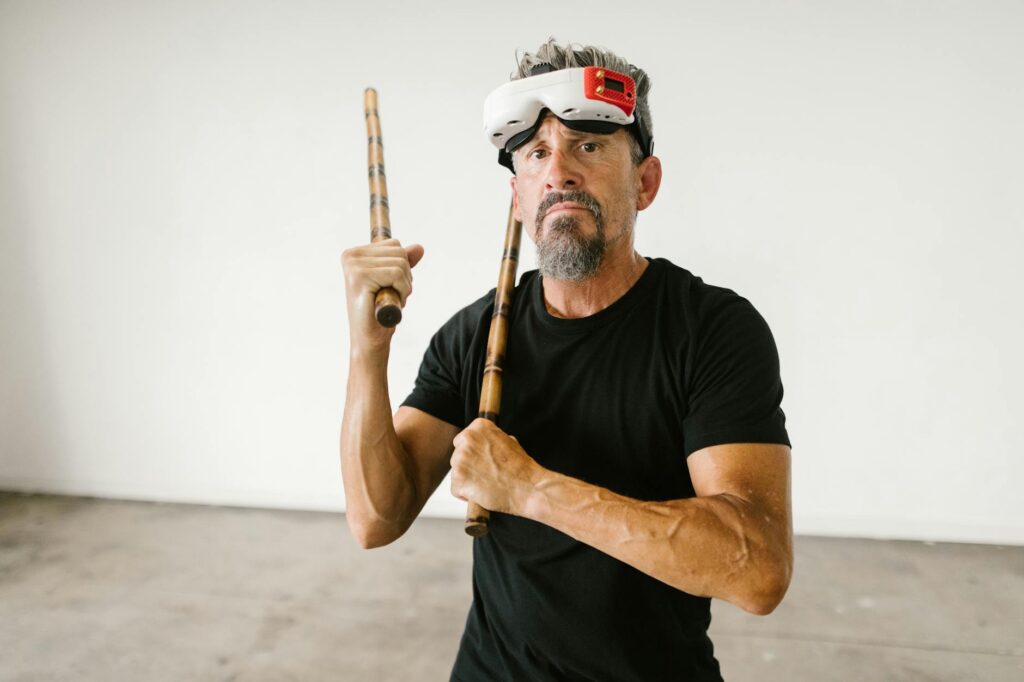
The surge in virtual‑reality (VR) leadership programs is cutting training costs by a quarter, boosting engagement by one‑fifth, and reshaping the talent pipeline for senior managers.
Opening — Macro Context and Institutional Stakes
The global leadership‑development market is projected to reach $15.4 billion by 2026, expanding at a 12.1 % CAGR since 2021 [2]. That growth is no longer driven solely by demand for “soft‑skill” workshops; it reflects a structural shift toward technology‑mediated talent formation. The COVID‑19 pandemic accelerated virtual and hybrid learning, raising the share of firms that employ VR or augmented reality (AR) for leadership training from 34 % in 2020 to 71 % in 2023 [1].
Three‑month forecasts now show a 30 % increase in VR leadership‑training deployments, propelled by a 25 % reduction in per‑learner cost and a 20 % uplift in employee engagement [1][2]. Institutional investors have taken note: the World Economic Forum’s “Future of Jobs” report lists immersive learning as a top‑ranked driver of economic mobility for mid‑career professionals [3]. The convergence of cost efficiency, engagement metrics, and scalability signals a systemic reallocation of corporate training budgets from legacy classroom models to immersive platforms.
Core Mechanism — Immersive Learning Architecture and Hard Data
At the heart of the shift lies the ability of VR to simulate high‑stakes decision environments with granular fidelity. Unlike slide‑based modules, VR presents a closed loop of perception, action, and feedback, allowing leaders to rehearse crisis management, negotiation, and ethical dilemmas in a risk‑free sandbox. Empirical studies from the MIT Sloan Management Review demonstrate a retention boost of 42 % for concepts learned via immersive scenarios versus traditional e‑learning [4].
The technology stack now integrates real‑time analytics dashboards that capture gaze tracking, physiological stress markers, and decision latency. Deloitte’s 2025 VR leadership pilot reported a 30 % decrease in time‑to‑competency for first‑time managers, measured against a control group using conventional workshops [5]. These data points translate directly into lower marginal cost per competency—the 25 % cost reduction cited by industry surveys stems from reduced travel, venue fees, and instructor hours, while the 20 % engagement gain aligns with higher completion rates and Net Promoter Scores.
Empirical studies from the MIT Sloan Management Review demonstrate a retention boost of 42 % for concepts learned via immersive scenarios versus traditional e‑learning [4].
 Career Guidance
How to Switch Industries Mid-Career Without Starting Over
Bridge roles can reduce risk, while targeted skills and industry-specific applications help you make the case for a new field.
Read More →Institutionally, the adoption of VR platforms is being codified in corporate governance frameworks. The S&P 500’s “Human Capital Disclosure” now requires reporting on “technology‑enabled learning outcomes,” a clause added in 2025 after activist shareholder proposals highlighted the competitive advantage of immersive upskilling [6]. This regulatory embedding transforms a tactical tool into a structural component of organizational capability.
Systemic Ripple Effects — Institutional Reconfiguration and Market Dynamics
The VR surge is prompting a realignment of the leadership‑development ecosystem. Traditional consulting firms are forging joint ventures with specialized VR studios to deliver “experience‑first” curricula. Strivr, a Minneapolis‑based startup, secured a $200 million Series C to scale its enterprise VR platform, citing a pipeline of Fortune 100 contracts that replace legacy “off‑the‑shelf” seminar packages [7].
Design methodologies are migrating from linear instructional design to iterative experiential prototyping. Universities such as Stanford’s Graduate School of Business now offer a “VR Leadership Lab” that partners with corporate cohorts to co‑create scenario libraries, effectively blurring the boundary between academic research and corporate training [8]. This mirrors the 1970s adoption of flight simulators in airline pilot training, where a once‑niche technology became an industry standard and reshaped certification pathways.
The shift also reconfigures institutional power within firms. Chief Learning Officers (CLOs) who previously reported to HR are now reporting directly to CEOs, reflecting the strategic weight of immersive talent pipelines. In a 2025 Bloomberg survey, 68 % of CEOs identified “VR‑enabled leadership agility” as a top‑three factor in board‑level succession planning [9]. Consequently, budget allocations for learning and development have migrated from the HR line item to the “Strategic Innovation” bucket, a reclassification that amplifies the influence of technology procurement teams over traditional training departments.
Community colleges that have partnered with VR vendors to offer certification in “Immersive Leadership Design” report a 30 % higher placement rate in mid‑level management roles than peers offering standard business‑administration diplomas [11].
Human Capital Impact — Career Capital, Mobility, and Labor Market Realignment

From a career‑capital perspective, the VR wave is revaluing skill sets. Professionals with expertise in XR design, data analytics, and behavioral science command premium salaries, while conventional “facilitation” credentials see a 15 % wage compression relative to VR‑savvy peers [2]. The demand for “immersive learning architects” has risen 42 % year‑over‑year, according to LinkedIn’s Emerging Jobs Report [10].
 AI & Technology
Data‑Driven tactics boost salary negotiations in 2026
Industry estimates suggest a $10,000 raise at age 30 can generate over $150,000 in cumulative earnings when compounded with standard 3% annual increases.
Read More →Economic mobility is also being reshaped. Community colleges that have partnered with VR vendors to offer certification in “Immersive Leadership Design” report a 30 % higher placement rate in mid‑level management roles than peers offering standard business‑administration diplomas [11]. This creates a new conduit for upward mobility, particularly for workers in regions where traditional corporate training pipelines were absent.
Conversely, the transition imposes skill obsolescence risk on legacy trainers and instructional designers lacking technical fluency. Upskilling programs that fail to integrate XR competencies see attrition rates double compared with firms that provide structured reskilling pathways [12]. The asymmetry reinforces institutional hierarchies: firms that invest early in VR talent pipelines capture a disproportionate share of future leadership talent, consolidating power within a technologically adept elite.
Outlook — 3‑5 Year Trajectory and Structural Implications
Projecting forward, the VR leadership market is poised to exceed $4 billion by 2029, representing a 27 % share of total corporate training spend [13]. Three to five years hence, we anticipate three converging trends:
- Standardization of immersive curricula through industry consortia such as the XR Learning Alliance, which will codify competency frameworks and enable cross‑company credential portability.
- Integration of AI‑driven coaching within VR scenarios, allowing real‑time, personalized feedback loops that further compress learning cycles. Early pilots at IBM show a 15 % additional reduction in decision‑making latency when AI avatars intervene [14].
- Regulatory codification of immersive training outcomes in ESG reporting, as investors demand transparent metrics on talent development’s contribution to long‑term value creation.
These dynamics suggest that leadership development will become a technology‑centric, data‑driven function, with career capital increasingly tied to the ability to design, deploy, and interpret immersive learning experiences. Organizations that embed VR into their succession pipelines will likely see higher internal promotion rates and lower external hiring premiums, reinforcing a self‑reinforcing cycle of institutional power concentration.
These dynamics suggest that leadership development will become a technology‑centric, data‑driven function, with career capital increasingly tied to the ability to design, deploy, and interpret immersive learning experiences.
Key Structural Insights
- The 30 % surge in VR leadership deployments reflects a systemic cost‑efficiency drive that redefines corporate training as a strategic, profit‑center activity.
- By embedding real‑time analytics into immersive scenarios, firms generate a new class of performance data that reshapes succession planning and board oversight.
- Over the next five years, standardizing XR competency frameworks will institutionalize immersive learning, making it a prerequisite for career advancement across sectors.
Written by Career Ahead AI. AI can make mistakes, so verify key facts. Report errors to support@careeraheadonline.com.





