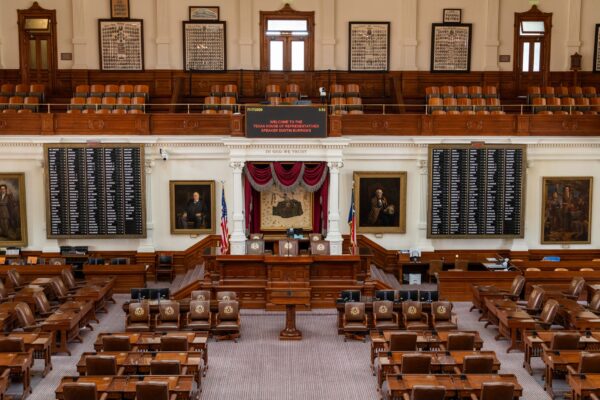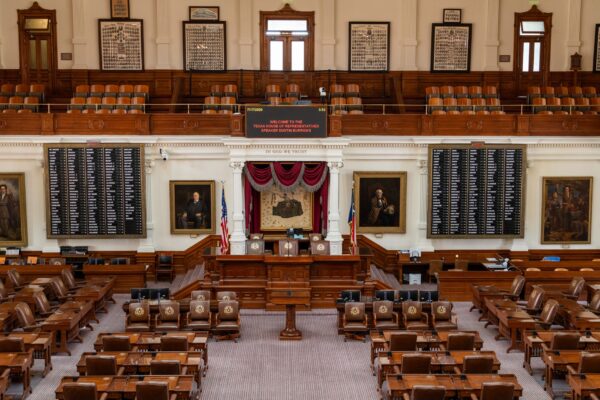
Five years ago, Karnataka’s legislature passed what supporters billed as India’s first pan-sector regulatory sandbox: a law allowing private companies to test emerging technologies without the full weight of regulation. The Karnataka Innovation Authority (KIA) Act, enacted in 2020 under the previous BJP government, has remained on paper ever since. This January, IT and BT Minister Priyank Kharge chaired a review of the sandbox framework and said the state would amend the law, keeping AI in mind, to finally operationalize it.
The revival attempt lands alongside something bigger: the rollout of the state’s Startup Policy 2025-30, an allocation of Rs 570.675 crore, and a deliberate attempt to turn regional cities, budgets, and even government departments into startup feeders. For founders and job seekers outside Bengaluru, the details matter more than the slogans.
The sandbox that stalled
Karnataka’s sandbox idea predates the current AI boom. When the KIA Act passed in 2020, the state positioned itself as the first in India to create a standing legal channel for experimenting with untested technology across sectors. The Reserve Bank had already demonstrated the appeal of sandboxes with its fintech cohorts, and the telecom sector followed with its own regulatory sandbox rules notified in 2026.
In practice, the KIA has yet to enable a notable experiment visible to the public. Deccan Herald reported in January 2026 that five years on, the regulatory sandbox under the KIA “has not taken off,” and that Kharge’s meeting covered the framework’s operational workflow, implementation mechanism, legal aspects, and global benchmarks, ahead of “some crucial amendments” to the Act. A separate Economic Times report the same month noted that the amendments are designed to enable the sandbox for emerging technologies. The governance record is, in that sense, a caution about how hard it is to turn sandbox legislation into sandbox practice.
The sandbox that stalled Karnataka’s sandbox idea predates the current AI boom.
The policy doing the heavy lifting
 AI & Technology
Neurotech Is Leaving the Clinic. Your Brain Data Comes With It
UNESCO has set the first global neurotech standard as brain wearables reach consumers and employers, and US states are already protecting neural data.
Read More →While the sandbox idled, the startup side of the agenda accelerated. The state cabinet cleared a Startup Policy for 2025-2030 in November 2025, targeting 25,000 new startups over five years, with at least 10,000 expected from clusters beyond Bengaluru, according to coverage in The Indian Express, The Economic Times, and Hindustan Times. At the rollout in January 2026, the government put the outlay at Rs 570.675 crore and launched a Rs 75 crore Beyond Bengaluru Cluster Seed Fund to back startups in emerging non-metro clusters, beginning with Mysuru, Mangaluru, and Hubballi-Dharwad. Of the fund’s initial commitments, Rs 20 crore came from the state, with the rest to be mobilized from institutional and private investors.
The policy’s stated priority sectors, artificial intelligence, blockchain, quantum computing, biotechnology, and sustainability-linked technologies, read like a list of what career-conscious students are already chasing. The same rollout added the Rs 150 crore ELEVATE NxT program for AI and emerging-tech startups, which selected 146 winners in its first edition.
The state as first customer
The most consequential idea in the package may be the least glamorous: procurement. Karnataka’s IT-BT Secretary Dr. N Manjula told Moneycontrol in September 2026 that the government plans to become the first customer for startups, with pilot projects worth up to Rs 25 lakh. A committee including participants from the venture capital community, including the Indian Venture Capital Association, is being constituted to frame the rules for a Rs 200 crore fund of funds.

That detail reframes the governance story. Rather than startups rewriting state machinery through lobby muscle, the visible channel is the oldest one available: government contracts. For early-stage founders who could never crack enterprise sales, a Rs 25 lakh pilot inside a government department is an anchored first revenue reference. For the state, it is a cheaper way to absorb new technology than full-scale procurement.
The same September interview outlined a committee-drafted responsible AI framework awaiting formal launch, a proposed AI university focused on postgraduate and postdoctoral research, and an online skilling program called Nipuna Edge that runs over six months to a year with one-on-one mentorship and industry capstone projects. Karnataka has also proposed opening government datasets to AI companies, a plan that surfaced during a delegation from Anthropic that met the chief minister and led to working groups and Claude-based skilling certifications.
Why the rest of India is watching
 Featured
AI Hiring Filters and the Mid-Career Squeeze: What the Evidence Shows
Nearly all Fortune 500 companies screen applications with software, and new research shows AI can invent its own bias. Illinois now requires notice.
Read More →Karnataka’s sequencing shows where Indian statecraft is likely heading. Other capitals are watching whether the Beyond Bengaluru strategy works. The state says the Global Technology Centre in Mysuru is already occupied, with Mangaluru, Hubballi-Dharwad-Belagavi, and Kalaburagi next in line, and it plans to lay the foundation stone of its INNOVERSE innovation campus at Byappanahalli in Bengaluru. If the government-first pilot model spreads, students and founders outside the metros gain a state budget as a first market, not just a hiring pool.
Karnataka has also proposed opening government datasets to AI companies, a plan that surfaced during a delegation from Anthropic that met the chief minister and led to working groups and Claude-based skilling certifications.
The honest counterweight is execution risk. Karnataka has a documented pattern of announcing programs and funds that arrive late or exist mostly on paper: the KIA’s five dormant years is one example, and the Beyond Bengaluru Seed Fund still needs to crowd in Rs 55 crore beyond the state’s Rs 20 crore to reach its Rs 75 crore target. Layer on the state’s parallel ambition to test AI deployment, share public data with foreign model builders, and stand up an AI university, and the scale of coordination required becomes obvious.
What to watch: the amendments to the KIA Act once tabled, the fund of funds rules the new committee is drafting, and whether the first government pilots, worth up to Rs 25 lakh each, actually convert into departments changing how they buy. That is how the sandbox argument will finally be tested, not in statute, but in the state’s own purchase orders.