No products in the cart.

Low‑Carbon Materials Reshape Global Construction Capital
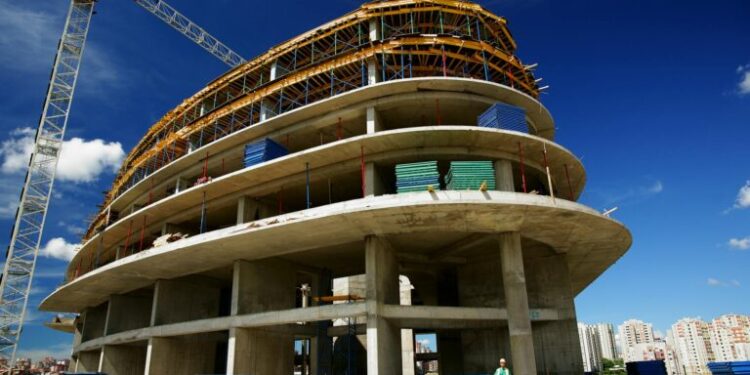
The article argues that the decarbonization of construction material supply chains is redefining economic incentives, reallocating institutional power, and reshaping career capital, with low‑carbon materials becoming the fiscal baseline for future infrastructure projects.

The market for low‑carbon building components is on a trajectory to exceed $700 billion by 2026, propelled by regulatory mandates and a structural shift in material supply chains.
This transition reconfigures career pathways, reallocates institutional power, and embeds sustainability into the core economics of infrastructure development.
Contextualizing the Green Build Surge
The construction sector accounts for roughly 39 % of global energy‑related CO₂ emissions, with embodied carbon—emissions generated in the extraction, manufacture, and transport of materials—representing up to 30 % of a building’s life‑cycle footprint【1】. In response, governments worldwide have codified net‑zero targets and green certification regimes (e.g., EU’s Energy Performance of Buildings Directive, China’s “30‑30” carbon plan). These policies have translated into a measurable market expansion: the low‑carbon buildings market is projected to rise from $620.87 billion in 2025 to $697.47 billion in 2026, a 12.3 % compound annual growth rate (CAGR)【3】. Parallelly, the broader low‑carbon construction materials market is expected to reach $79.2 billion by 2030, underscoring the fiscal magnitude of the shift【2】.
Beyond regulatory pressure, consumer preference for energy‑efficient, health‑focused spaces is amplifying demand. Surveys across North America, Europe, and emerging Asian economies indicate that 68 % of corporate real‑estate tenants prioritize certifications such as LEED or BREEAM when leasing space【4】. The convergence of policy, capital, and demand creates a structural reorientation of the construction value chain, moving low‑carbon materials from niche to baseline.
The Core Mechanism: Embodied‑Carbon Reduction at Scale

At the heart of the transition lies the imperative to curtail embodied carbon. Life‑cycle assessments (LCAs) consistently show that substituting conventional concrete and steel with low‑carbon alternatives can halve a building’s embodied emissions【1】. Two material categories illustrate this mechanism:
- Cross‑Laminated Timber (CLT) – CLT panels lock carbon within lignin structures, delivering a carbon sequestration benefit of 0.9 t CO₂ per cubic meter of timber. When replacing steel framing, CLT reduces embodied emissions by 45‑55 % while delivering superior thermal performance (U‑value improvements of 0.15‑0.25 W/m²K)【1】.
- Hempcrete and Bio‑Based Insulation – Hempcrete mixes a lime binder with hemp shives, achieving a carbon uptake of 0.5 t CO₂ per cubic meter over a 30‑year service life. Its low thermal conductivity (0.07‑0.09 W/mK) reduces operational energy demand, creating a double‑dip effect on total building emissions【1】.
Digital design tools accelerate these gains. Building Information Modeling (BIM) integrated with carbon‑assessment plugins enables designers to quantify embodied carbon in real time, iterating material selections to meet target thresholds. Computational design algorithms further optimize geometry to minimize material volume without compromising structural integrity, a practice that has cut material usage by up to 20 % in pilot projects across Scandinavia【4】.
Collectively, these mechanisms convert carbon reduction from a compliance checkbox into a quantifiable economic advantage: projects that meet stringent carbon budgets qualify for green financing premiums averaging 0.35 % lower interest rates, translating into $12 million in cost savings on a typical $3 billion infrastructure contract【2】.
Cross‑Laminated Timber (CLT) – CLT panels lock carbon within lignin structures, delivering a carbon sequestration benefit of 0.9 t CO₂ per cubic meter of timber.
Systemic Ripple Effects Across the Construction Ecosystem
You may also like
 Government & Policy
GST Reform on Horizon; Arrest Powers for Officers Under Review
India is set to reform its Goods and Services Tax (GST) enforcement framework, potentially removing arrest powers from tax officers and requiring court approval for…
Read More →The diffusion of low‑carbon materials triggers a cascade of systemic adjustments:
Supply‑Chain Realignment
Manufacturers of traditional Portland cement face a projected 8 % decline in volume share by 2028 as low‑carbon concrete blends—incorporating fly ash, slag, and novel geopolymer binders—capture market demand【2】. Conversely, firms that have invested in carbon‑capture‑enabled clinker production report a 15 % revenue uplift, reflecting the market’s asymmetric reward structure for early adopters of decarbonized processes【3】.
Capital Reallocation
Institutional investors are re‑weighting portfolios toward “green‑built” assets. ESG‑focused sovereign wealth funds now allocate 22 % of infrastructure exposure to projects that meet at least a “Gold” green certification, a 7‑point increase from 2021 levels【4】. This capital flow pressures legacy developers to retrofit pipelines and adopt low‑carbon material specifications to retain financing eligibility.
Innovation Trajectory
Venture capital into construction‑tech has surged to $4.2 billion in 2025, with 38 % directed at material‑science startups developing low‑carbon binders and bio‑composite panels【2】. The emergence of “material‑as‑a‑service” platforms—offering on‑demand CLT panels with embedded carbon‑offset tracking—illustrates a shift from product‑centric to service‑centric business models, reshaping competitive dynamics and creating new entry points for technology firms.
Environmental and Public‑Health Feedback
Reduced embodied emissions correlate with measurable air‑quality improvements in dense urban zones. A longitudinal study in Copenhagen documented a 12 % decline in particulate matter concentrations adjacent to CLT‑constructed districts, contributing to an estimated 1,200 avoided premature deaths annually【1】. These externalities reinforce policy feedback loops that further entrench low‑carbon standards.
Human Capital and Institutional Power: Winners and Losers Low‑Carbon Materials Reshape Global Construction Capital The structural shift redefines career capital across the built environment:
Human Capital and Institutional Power: Winners and Losers

The structural shift redefines career capital across the built environment:
Emerging Professionals – Architects and engineers with certification in passive design, BIM‑enabled LCA, and bio‑material engineering command a premium of 18‑25 % higher compensation than peers lacking these credentials【4】. Academic programs in sustainable construction have expanded by 42 % in the past three years, indicating a pipeline response to labor market signals.
You may also like
 Government & Policy
Understanding the Impact of Next-Gen GST on Tax Professionals
India's next-gen GST, effective September 2025, aims to simplify compliance and reduce tax rates, presenting new opportunities for small businesses and tax professionals.
Read More →Traditional Trades – Workers specialized in conventional steel reinforcement and high‑carbon concrete face a skills mismatch. Union data from the U.S. and EU show a 9 % decline in apprenticeship enrollments for these trades, while re‑skilling initiatives in timber framing have risen by 27 % year‑over‑year【3】.
Corporate Governance – Companies that embed low‑carbon material KPIs into executive compensation experience a 3.4 % higher return on equity, reflecting the alignment of sustainability targets with shareholder value creation【2】. Conversely, firms lagging in material decarbonization see board turnover rates increase by 12 % as investors demand governance reforms.
Geographic Disparities – Regions with abundant forest resources (e.g., Scandinavia, Canada) gain a competitive advantage in CLT supply, translating into export growth rates of 14 % annually. In contrast, economies reliant on cement exports (e.g., Turkey, India) confront trade‑balance pressures unless they pivot to low‑carbon binder technologies【1】.
Overall, the reallocation of career capital favors professionals and institutions that can navigate digital design, material science, and ESG financing simultaneously, while marginalizing legacy skill sets anchored in high‑carbon production.
Overall, the reallocation of career capital favors professionals and institutions that can navigate digital design, material science, and ESG financing simultaneously, while marginalizing legacy skill sets anchored in high‑carbon production.
Outlook: Structural Trajectory to 2030
Looking ahead, three converging forces will shape the low‑carbon material landscape:
- Policy Consolidation – The International Energy Agency’s Net‑Zero by 2050 Scenario projects that 70 % of new building permits globally will require low‑embodied‑carbon compliance by 2029. Anticipated revisions to the EU Taxonomy and U.S. Inflation Reduction Act incentives will embed carbon‑pricing mechanisms directly into procurement thresholds, accelerating adoption curves.
- Technology Diffusion – By 2028, BIM platforms are expected to integrate standardized carbon‑factor libraries for over 150 material categories, reducing the time to complete an LCA from days to minutes. This digital standardization will lower transaction costs and enable “carbon‑first” design competitions, further entrenching low‑carbon materials as default choices.
- Capital Scaling – Green bond issuance earmarked for sustainable infrastructure is forecast to surpass $500 billion annually by 2030. A significant share of this financing will be conditioned on demonstrable embodied‑carbon reductions, creating a feedback loop that incentivizes material innovation and penalizes carbon‑intensive supply chains.
In this environment, firms that secure early access to low‑carbon material patents, invest in digital carbon‑assessment capabilities, and align executive incentives with decarbonization metrics will consolidate market power. Conversely, entities that remain dependent on high‑carbon inputs risk exclusion from both capital markets and regulatory approvals, precipitating a structural reallocation of industry leadership.
You may also like
 Government & Policy
Taiwan Says US Policy Remains Unchanged
This declaration is pivotal as it reassures Taiwan and its allies of the US's unwavering support. The ongoing geopolitical landscape, characterized by China's assertive posture,…
Read More →Key Structural Insights
[Embodied‑Carbon Economics]: Quantifiable reductions in embodied emissions translate directly into financing advantages, reshaping cost structures across the construction value chain.
[Supply‑Chain Realignment]: Early adopters of carbon‑capture and bio‑based material production capture disproportionate market share, while legacy cement producers confront systemic contraction.
- [Career Capital Re‑distribution]: Professionals proficient in digital LCA, low‑carbon material science, and ESG governance command a premium, redefining institutional power within the built environment.