No products in the cart.

New York City Public Universities Confront Employment and Affordability Challenges Amid 2026 Budget Outlook

The city’s newly released 2026 Economic & Budget Outlook cites fiscal constraints that limit funding for higher‑education affordability programs.

Graduates of the City University of New York (CUNY) system and other municipal colleges are reporting lower job placement rates for the class of 2026. The city’s newly released 2026 Economic & Budget Outlook cites fiscal constraints that limit funding for higher‑education affordability programs.
The core issue surfaced in early June 2026 when CUNY’s Office of Institutional Research released employment statistics showing that only 58 percent of the 2026 graduating cohort secured full‑time, post‑secondary employment within six months of graduation, down from 68 percent in 2024 [1]. The same period saw the Center for New York City Affairs publish its 2026 Economic & Budget Outlook, outlining a projected $3.2 billion shortfall in the city’s operating budget and highlighting “affordability as a central policy challenge” for public institutions [3].
The situation involves students and recent graduates of New York City’s public universities, the municipal government’s budget office, the Center for New York City Affairs, and teenage job seekers seeking summer work. The challenges stem from a combination of reduced municipal funding for tuition assistance, a tightening labor market that limits entry‑level positions, and a broader citywide economic slowdown that depresses hiring across sectors [1][2][3].
Fiscal Constraints Detailed in the 2026 Economic & Budget Outlook
The Center for New York City Affairs report released on June 5 2026 projects a 4.5 percent decline in city revenue growth for the fiscal year, driven by lower corporate tax receipts and reduced tourism activity [3]. The outlook calls the fiscal environment “constrained” and recommends a shift of resources toward “affordability initiatives” for low‑ and middle‑income residents, including tuition subsidies for public college students [3].
According to the report, the city’s higher‑education budget is slated to decrease by $150 million compared with the 2025 allocation, representing a 6 percent cut in direct funding to CUNY and the State University of New York (SUNY) campuses located within city limits [3]. The budget shortfall is expected to affect financial aid programs, campus maintenance, and support services that traditionally aid student retention and career readiness [3].
The fiscal constraints have prompted the mayor’s Office of Education to issue a memorandum in early July 2026 urging public colleges to “enhance cost‑effectiveness” and explore partnerships with private employers for apprenticeship pathways, though no new funding streams have been announced [3].
The budget shortfall is expected to affect financial aid programs, campus maintenance, and support services that traditionally aid student retention and career readiness [3].
Employment Outcomes for the Class of 2026
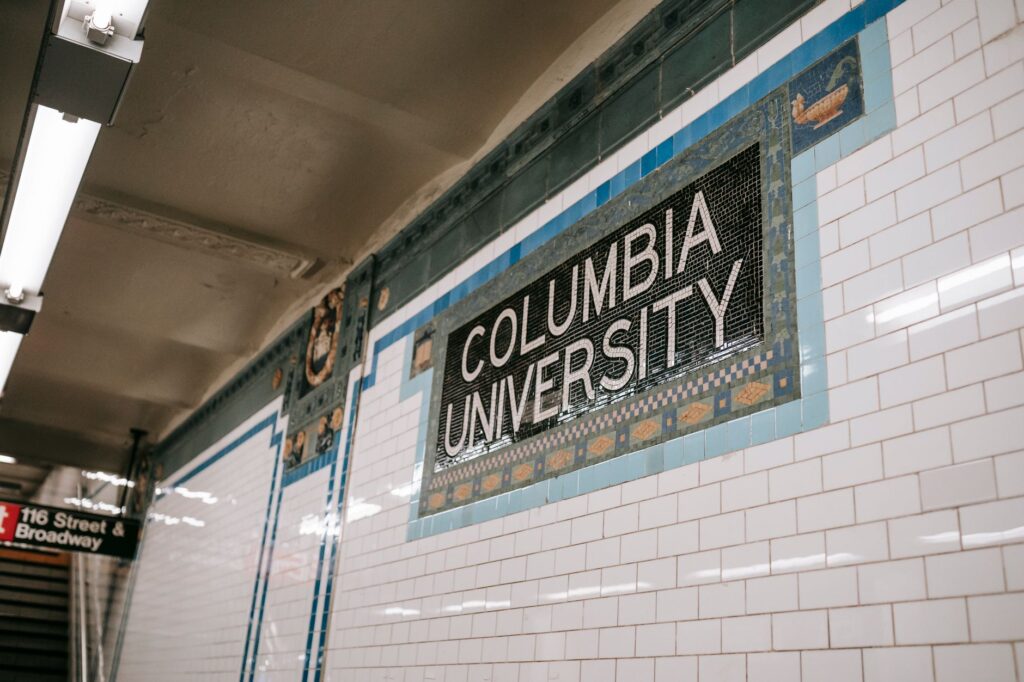
CUNY’s Office of Institutional Research reported that 58 percent of the 2026 graduates held full‑time positions in fields related to their majors within six months of earning their degrees, a decline of 10 percentage points from the 2024 cohort [1]. The report attributes the drop to “a competitive labor market and reduced hiring in traditional entry‑level roles such as retail, hospitality, and administrative support” [1].
You may also like
 News
NewsBloomberg This Weekend Highlights Unusual Network Activity Alerts
The recent Bloomberg report on unusual network activity alerts underscores a critical issue for digital marketing professionals. With increasing cybersecurity threats, teams must enhance their…
Read More →The New York Times article on social mobility notes that the national job market for recent college graduates has softened, with the unemployment rate for individuals holding a bachelor’s degree rising to 6.2 percent in May 2026, compared with 5.1 percent in 2023 [1]. The article highlights that graduates from public universities in high‑cost urban areas, such as New York City, face “greater financial pressure to secure employment quickly” [1].
In addition to lower placement rates, the average starting salary for 2026 graduates in the city fell to $48,200, down $2,300 from the previous year, according to the same CUNY data set [1]. The decline aligns with broader trends in the metropolitan labor market, where employers report “tight budgets and cautious hiring” amid lingering pandemic‑related economic effects [1].
Summer Job Market Challenges for Teens
A fact‑check report from the National Desk dated May 30 2026 documented that teens aged 16‑19 in New York City experienced a 22 percent drop in summer job postings compared with the 2019 pre‑pandemic baseline [2]. The report cites data from the city’s Department of Youth and Community Development, which recorded only 12,400 confirmed summer positions for teenagers in 2025, versus 15,900 in 2019 [2].
The same analysis indicates that many of the available positions were in low‑wage sectors such as food service and retail, where wages have stagnated at an average of $12.75 per hour, barely above the city’s minimum wage of $12.50 [2]. The report also notes that “competition from older workers and reduced employer confidence” contributed to the scarcity of teen jobs [2].
The report cites data from the city’s Department of Youth and Community Development, which recorded only 12,400 confirmed summer positions for teenagers in 2025, versus 15,900 in 2019 [2].
These findings are consistent with the broader economic outlook, which identifies “reduced discretionary spending and tighter labor markets” as factors limiting seasonal employment opportunities for young workers [3]. The Center for New York City Affairs emphasizes that the lack of summer income can affect students’ ability to fund tuition and living expenses for the upcoming academic year [3].
Immediate Impact on Students, Educators, and Institutions

Current and prospective students at CUNY and other city public colleges face heightened financial uncertainty, as reduced municipal aid may increase out‑of‑pocket tuition costs by an estimated 4 percent for the 2026‑27 academic year [3]. The lower employment rates and starting salaries reported for recent graduates mean that many graduates will need to rely longer on student loans, potentially extending debt repayment periods [1].
You may also like
 News
NewsU.S. Stocks Climb as Weak Jobs Data Lowers Rate Hike Expectations
U.S. stocks rose following a weak jobs report that tempered expectations for Federal Reserve interest rate hikes. This shift in market sentiment is crucial for…
Read More →University administrators are responding by expanding career‑services staffing and launching targeted employer outreach programs aimed at sectors with projected growth, such as health‑care support and renewable‑energy installation [3]. However, the budget cuts limit the ability to scale these initiatives, according to a statement from the CUNY Chancellor’s Office released on July 2 2026 [3].
For high‑school seniors and teens seeking summer work, the reduced availability of seasonal jobs may delay the accumulation of work experience and earnings needed for college enrollment, according to the Department of Youth and Community Development’s 2026 summer‑job report [2]. The combined effect of tighter budgets, lower graduate employment, and scarce teen jobs creates a feedback loop that could exacerbate enrollment declines at public institutions if affordability barriers rise [3].
Key Facts
What: New York City public universities report lower graduate employment and face budget cuts that limit affordability programs.
The combined effect of tighter budgets, lower graduate employment, and scarce teen jobs creates a feedback loop that could exacerbate enrollment declines at public institutions if affordability barriers rise [3].
When: Data released June–July 2026; budget outlook published June 5 2026.
Impact: Students confront reduced financial aid, lower starting salaries, and fewer summer job opportunities, affecting immediate financial stability and longer‑term career prospects.
You may also like
 News
NewsTokyo Inflation Surge Signals BOJ’s Monetary Policy Shift
Inflation in Tokyo has surged to 3.4%, prompting the Bank of Japan to reassess its monetary policy. This article explores the implications for economic growth,…
Read More →Sources
- Can America’s Best Engine of Social Mobility Weather a Bad Job Market? – The New York Times
- Fact Check Team: Where are the summer jobs? Teens face challenges in tough job market – National Desk
- New York City’s 2026 Economic & Budget Outlook: Making Affordability a Reality Amidst Inequality and Fiscal Constraints – Center for New York City Affairs