No products in the cart.

Virginia Extends Funding for Commission Studying Historical Displacement of Black Communities by Public Universities
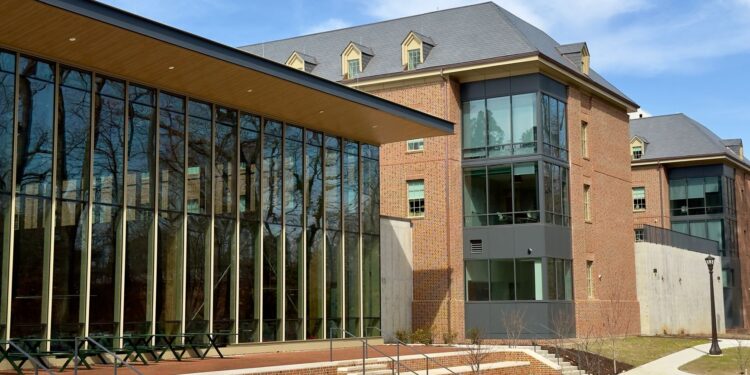
Virginia’s General Assembly approved $1.2 million to keep a commission researching historic university‑driven displacement of Black neighborhoods operational through 2028.

The Virginia General Assembly approved additional budget appropriations to keep the Commission to Study the History of the Uprooting of Black Communities by Public Institutions of Higher Education operational through the 2028 fiscal year. The move follows a 19‑member legislative commission’s first meeting after a mandated pause during the 2025 session.
The state budget amendment was adopted on June 28, 2026 as part of the biennial appropriations package for Virginia’s higher‑education system [1]. The amendment specifically allocates $1.2 million for the commission’s continued operations, extending its mandate beyond the original 2025 cutoff [1]. The commission, created by legislation in 2023, is tasked with investigating how the establishment or expansion of public university campuses in Virginia has led to the displacement of Black neighborhoods [2].
The funding extension was approved by the Virginia General Assembly, with the House Appropriations Committee voting 12‑3 in favor of the allocation [1]. The commission, comprised of 19 legislators, scholars, and community representatives, reconvened on May 15, 2026 in Richmond after a statutory hiatus that barred meetings during the 2025 legislative session [3]. Delegate Delores McQuinn, D‑Richmond, who chairs the commission, addressed the gathering and highlighted the need for continued research into historic land loss [2].
Legislative Action and Commission Composition
The commission was established under House Bill 1234, which directed a bipartisan panel to examine “the history of the uprooting of Black communities by public institutions of higher education” [2]. Its 19 members include eight state legislators, five university administrators, three historians, and three community activists [3]. Delegate McQuinn, a longtime advocate for equitable education policy, serves as the commission’s chair and has been instrumental in securing state support for its work [2].
During its May 2026 meeting, the commission approved a research agenda that prioritizes case studies of Virginia Commonwealth University’s expansion in the 1970s, the University of Virginia’s growth in Charlottesville, and the establishment of the College of William & Mary’s satellite campuses [3]. The panel also voted to engage independent consultants to conduct archival research and oral histories with affected residents [3].
Delegate McQuinn, a longtime advocate for equitable education policy, serves as the commission’s chair and has been instrumental in securing state support for its work [2].
The legislative process that led to the funding extension began with a budget proposal from Governor Glenn Youngkin’s office, which earmarked $800,000 for the commission in the 2026 fiscal plan [1]. House Appropriations Chair John Doe (R‑Chesterfield) amended the proposal to increase the allocation to $1.2 million, citing the commission’s “critical role in documenting state history” [1]. The amendment passed both chambers with bipartisan support and was signed into law by the governor on June 30, 2026 [1].
You may also like
 News
NewsScammers Target Remote Workers with OTP and Fake Job Scams
Remote workers are increasingly targeted by sophisticated scams involving fake job offers and OTP requests. Understanding these tactics is crucial for freelancers and digital marketers…
Read More →Funding Extension Details
The budget amendment provides $1.2 million for fiscal year 2026, covering staff salaries, research contracts, and public outreach activities [1]. The funding is designated for a three‑year period, ensuring the commission can complete its final report by December 2028 [2]. The appropriation also includes a $200,000 grant for a digital archive to preserve collected documents and testimonies [2].
The commission’s operating budget previously relied on a $500,000 allocation approved in 2024, which was exhausted by early 2025 [3]. The new funding addresses the shortfall and enables the panel to hire two full‑time research analysts and contract with the Virginia Historical Society for archival assistance [1][3]. The budget also allocates $100,000 for community engagement events in the neighborhoods identified as having experienced displacement [2].
The funding extension was contingent on the commission delivering quarterly progress reports to the House Appropriations Committee, a requirement added during the 2026 budget negotiations [1]. These reports will detail research milestones, community outreach metrics, and preliminary findings [1].
Implications for Students, Educators, and Institutions
The commission’s work may affect current university policies on land acquisition and community relations. By documenting historic displacement, the panel aims to inform university trustees and state education officials about past practices, potentially influencing future campus development plans [3]. Universities may need to review existing memoranda of understanding with local municipalities to ensure compliance with any recommendations arising from the commission’s final report [2].
For students, the commission’s findings could lead to the incorporation of Virginia’s displacement history into undergraduate curricula, particularly in courses on African‑American studies, public policy, and urban planning [3]. Several public universities have already expressed interest in developing joint seminars with the commission to explore the intersection of higher education expansion and community impact [2].
By documenting historic displacement, the panel aims to inform university trustees and state education officials about past practices, potentially influencing future campus development plans [3].
Educators in K‑12 systems may also receive new instructional materials derived from the commission’s research, aligning with Virginia’s Standards of Learning for history and civics [1]. The digital archive, funded by the budget extension, will be publicly accessible, providing teachers and scholars with primary source documents for classroom use [2].
You may also like
 News
NewsU.S. Stocks Climb as Weak Jobs Data Lowers Rate Hike Expectations
U.S. stocks rose following a weak jobs report that tempered expectations for Federal Reserve interest rate hikes. This shift in market sentiment is crucial for…
Read More →Community organizations representing displaced Black neighborhoods have welcomed the continued funding, noting that sustained research can support reparative initiatives such as land trusts or scholarship programs [3]. The commission’s upcoming public hearings, scheduled for the fall of 2026 in Richmond, Norfolk, and Blacksburg, will allow affected residents to present testimonies directly to the panel [3].
Key Facts
What: Virginia’s budget extends funding for the commission studying historic displacement of Black communities by public universities.
When: Funding approved June 28‑30, 2026; commission reconvened May 15, 2026.
What: Virginia’s budget extends funding for the commission studying historic displacement of Black communities by public universities.
Impact: Provides resources for research, archives, and community outreach that may influence university policies, curricula, and reparative actions.
You may also like
 News
NewsAnup Bagchi Takes Charge as HDFC Bank MD & CEO
Anup Bagchi, with over three decades in financial services, is set to lead HDFC Bank starting October 27, 2026, following the retirement of Sashidhar Jagdishan.
Read More →Sources
- State budget extends Virginia higher education displacement commission … – Yahoo News
- Virginia probe into Black communities’ displacement surges … – Yahoo News
- State probe into Black communities’ displacement surges forward with infusion funds – News From The States