The 2026-2027 state budget, approved on May 27, 2026, incorporates a restructuring of New York’s automobile liability framework. The changes are projected to generate $48 million in savings for the Metropolitan Transportation Authority, which plans to allocate the funds to subway, bus, and rail operations.
The budget package passed the state legislature on May 27, 2026, after nearly two months of delay, embedding the most extensive overhaul of New York’s no-fault auto insurance system in decades [3]. The reforms modify the balance between personal injury protection (PIP) and at-fault property damage claims, with anticipated downstream effects on student transportation services and household auto insurance costs [1].
Governor Kathy Hochul endorsed the reforms as part of her administration’s fiscal plan, and the legislation received bipartisan support in both the Assembly and the Senate [3]. Lawmakers, including a Syracuse representative who highlighted the stakes for drivers and insurers, participated in hearings that featured testimony from rideshare companies such as Uber [2]. The Metropolitan Transportation Authority (MTA) publicly announced that the projected $48 million in savings will be redirected to operating subways, buses, and commuter rail lines [4].
Legislative Process and Stakeholder Involvement
The insurance reforms were introduced as budgetary items rather than standalone bills, allowing them to advance through the standard appropriations timeline. After the budget’s passage, the Governor’s office released an implementation schedule outlining amendments to the state’s automobile liability statutes [3]. The legislative record shows that the Syracuse lawmaker and other members of the Assembly’s Transportation Committee engaged with industry representatives to address concerns about coverage limits and premium impacts [2].
Key participants in the process include Governor Hochul, the state Senate Majority Leader, the Assembly Transportation Committee chair, and the MTA’s chief financial officer, who all signed off on the budget language that mandates the reallocation of insurance-related savings [3][4]. Uber’s legal team submitted written comments during the public-comment period, arguing that the reforms would align driver liability with national standards while preserving consumer protections [2]. The reforms also affect families with teen drivers, as New York’s no-fault system dictates that PIP coverage pays medical expenses regardless of fault, a factor that influences household insurance premiums [1].
Governor Kathy Hochul endorsed the reforms as part of her administration’s fiscal plan, and the legislation received bipartisan support in both the Assembly and the Senate [3].
Mechanics of the No-Fault Reform
New York State Budget Includes No-Fault Auto Insurance Reforms Expected to Free $48 Million for Transit
Under New York’s existing no-fault framework, personal injury claims are settled through PIP coverage, which provides up to $50,000 per person for medical expenses, lost wages, and other costs, independent of fault [1]. Property damage claims, by contrast, follow an at-fault model where the responsible driver’s insurer pays for vehicle repairs [1]. The 2026-2027 reforms maintain the PIP structure for injury claims but introduce stricter thresholds for filing lawsuits, aiming to reduce litigation costs and encourage earlier settlements [3].
WestJet Airlines has agreed to pay C$4.5 million to settle a class action lawsuit filed by female flight attendants alleging sexual harassment and unsafe workplace…
The budget also allocates state funds to support a pilot program that expands the use of telemedicine for injury assessments, a measure intended to streamline PIP claim processing and lower administrative expenses [3]. By capping certain non-essential medical services and encouraging the use of in-network providers, the reforms are projected to reduce the average cost per injury claim, contributing to the estimated $48 million in annual savings for the MTA [4].
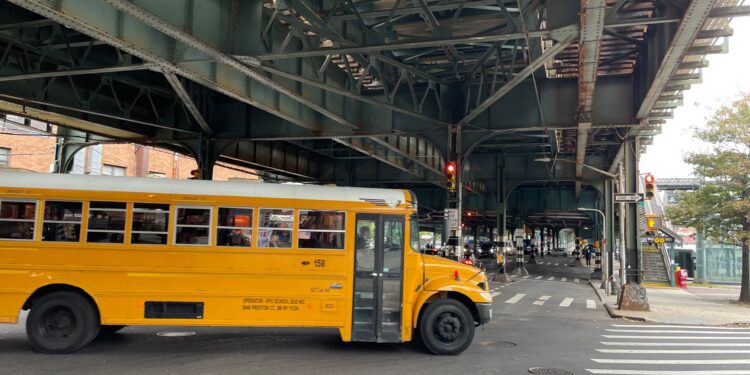
Impact on Student Transportation and Households
The MTA’s announcement indicates that the $48 million saved will be directed to operational budgets for subways, buses, and commuter rail, with the agency planning to use the funds to offset service cuts, improve maintenance, and enhance reliability [4]. For students who rely on public transit to reach schools, colleges, and extracurricular activities, the additional resources could translate into more consistent service schedules and reduced crowding during peak hours [4].
Households with teen drivers may experience adjustments in auto insurance premiums as insurers recalibrate risk models based on the new claim-handling rules [1]. While the PIP component remains unchanged, the reduced likelihood of costly litigation could lead to modest premium declines over the next policy cycle [3]. Schools and districts that operate bus fleets may also benefit indirectly if the MTA’s improved financial position enables collaborative transportation initiatives, such as shared routes or subsidized passes for students [4].
Key Facts
What: New York’s 2026-2027 budget reforms the state’s no-fault auto insurance system, freeing $48 million for the MTA.
By capping certain non-essential medical services and encouraging the use of in-network providers, the reforms are projected to reduce the average cost per injury claim, contributing to the estimated $48 million in annual savings for the MTA [4].
When: Budget passed May 27, 2026; reforms to be implemented during the 2026-2027 fiscal year.
Impact: Savings are earmarked for transit operations, potentially improving service for students; households may see changes in auto insurance costs.




 News
NewsNews