No products in the cart.

NTA Issues Nationwide Warning Against AI-Generated OMR Sheets
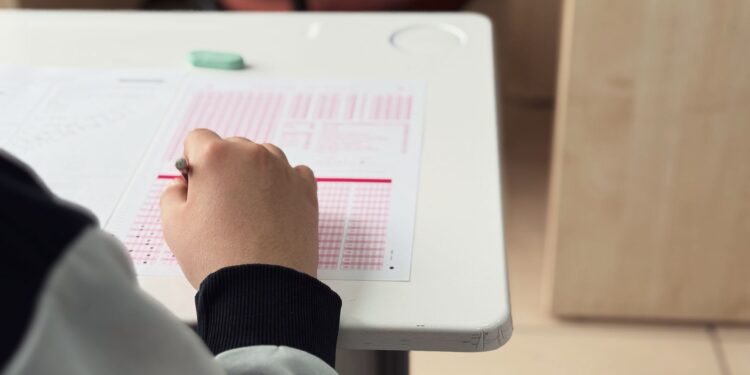
The directive emphasizes verification procedures and outlines penalties for students who attempt to use fabricated documents.

The National Testing Agency (NTA) released an official advisory prohibiting the submission of AI-generated answer-sheet images for its examinations. The directive emphasizes verification procedures and outlines penalties for students who attempt to use fabricated documents.
The NTA announced on July 24, 2026, that it will no longer accept answer-sheet images that appear to be produced by generative-AI tools [2]. The advisory applies to all examinations administered by the agency, including the Joint Entrance Examination (JEE) Main, National Eligibility cum Entrance Test (NEET), and other centrally conducted assessments [2]. The announcement was disseminated through the NTA’s official website and circulated to affiliated institutions across India [2].
The agency’s notice identifies students who submit AI-generated OMR (Optical Mark Recognition) sheets as violating examination regulations [2]. The NTA has instructed test centres to employ digital forensics and AI-detection software to flag inconsistencies in handwriting, shading patterns, and metadata embedded in image files [2]. Violators may face cancellation of scores, barring from future NTA examinations, and legal action under the Prevention of Corruption Act [2]. The directive follows a broader pattern of exam-related misconduct that prompted state authorities, such as the Maharashtra government, to derecognise 107 board-exam centres for malpractice earlier this year [1].
Scope of the NTA’s Directive
The advisory specifies that any answer-sheet image uploaded to the NTA’s verification portal must originate from a physical OMR sheet filled by the candidate [2]. Images generated by text-to-image models, deep-fake tools, or other AI applications are expressly prohibited [2]. The NTA’s verification team will cross-check the uploaded files against the candidate’s biometric data captured at the test centre, as well as the timestamp and device identifier recorded during the upload [2].
In addition to the technical checks, the NTA has mandated that test-centre staff receive training on recognizing AI-generated artifacts, such as uniform pixel density, unnatural shading gradients, and absent ink-bleed signatures [2]. Centres are required to retain the original physical OMR sheets for a minimum of 30 days to facilitate manual audits if the digital verification flags a discrepancy [2]. The agency will publish periodic compliance reports to the Ministry of Education, detailing the number of flagged submissions and subsequent actions taken [2].
The agency will publish periodic compliance reports to the Ministry of Education, detailing the number of flagged submissions and subsequent actions taken [2].
The NTA’s move aligns with recent actions taken by state education authorities to curb exam fraud. In March 2026, the Maharashtra government derecognised 107 board-exam centres after uncovering systematic cheating, including the use of counterfeit answer sheets and collusion among invigilators [1]. That episode underscored the vulnerability of paper-based assessments to manipulation and prompted the central agency to adopt more robust digital safeguards [1].
You may also like
 News
NewsBloomberg This Weekend Highlights Unusual Network Activity Alerts
The recent Bloomberg report on unusual network activity alerts underscores a critical issue for digital marketing professionals. With increasing cybersecurity threats, teams must enhance their…
Read More →Procedural Measures and Enforcement

To implement the crackdown, the NTA has partnered with two technology firms specializing in image-analysis and AI-detection, integrating their APIs into the existing verification workflow [2]. The software scans each uploaded OMR image for tell-tale signatures of generative-AI output, such as repetitive pixel patterns and anomalous color profiles [2]. When a file triggers an alert, it is routed to a human reviewer for secondary assessment [2].
The agency has also updated its examination-conduct regulations to include a specific clause that defines “AI-generated exam documentation” as a prohibited item [2]. The clause outlines punitive measures ranging from score nullification to a permanent ban from all NTA-conducted examinations [2]. Candidates who are found to have submitted falsified documents will receive a written notice detailing the violation and the applicable sanction [2].
Test-centre administrators are required to log every verification attempt in a centralized audit trail, which the NTA will monitor in real time [2]. Any irregularities, such as repeated submission failures from a particular centre, will trigger an on-site inspection by the agency’s compliance officers [2]. The NTA has allocated ₹150 crore for the rollout of these detection tools and training programmes for the 2026-2027 examination cycle [2].
Immediate Impact on Students and Institutions
Students preparing for upcoming NTA examinations must ensure that their answer sheets are completed manually and scanned directly from the physical OMR sheet without any post-processing [2]. The advisory advises candidates to use only the scanning devices provided at the test centre and to verify that the uploaded image matches the original sheet before submission [2]. Failure to comply may result in immediate disqualification from the current exam session [2].
Immediate Impact on Students and Institutions Students preparing for upcoming NTA examinations must ensure that their answer sheets are completed manually and scanned directly from the physical OMR sheet without any post-processing [2].
Educational institutions that host NTA test centres are now responsible for enforcing the new verification protocol, which may require additional staffing and equipment [2]. The requirement to retain physical OMR sheets for a month could increase logistical overhead for colleges and schools that act as exam venues [2]. However, the agency has offered a short-term grant to assist smaller institutions in acquiring compatible scanning hardware [2].
You may also like
 News
NewsBT accused of ‘bullying’ customers
BT's decision to pause broadband services for some customers has sparked accusations of bullying, raising concerns about the impact on vulnerable populations during the transition…
Read More →The crackdown aims to preserve the integrity of nationally administered assessments by eliminating a newly emerging avenue for cheating [2]. By standardising the verification process and imposing clear penalties, the NTA seeks to ensure that all candidates are evaluated on an equal footing, thereby maintaining public confidence in the merit-based selection system [2].
Key Facts
What: The National Testing Agency barred the use of AI-generated OMR sheets and warned students against submitting fabricated answer-sheet images.
When: Advisory issued on July 24, 2026; enforcement begins immediately for the 2026-2027 exam cycle.
Impact: Students must submit only authentic, manually completed OMR scans; test centres must adopt AI-detection tools and retain physical sheets, with penalties for non-compliance.
Impact: Students must submit only authentic, manually completed OMR scans; test centres must adopt AI-detection tools and retain physical sheets, with penalties for non-compliance.
You may also like
 News
NewsU.S. Stocks Climb as Weak Jobs Data Lowers Rate Hike Expectations
U.S. stocks rose following a weak jobs report that tempered expectations for Federal Reserve interest rate hikes. This shift in market sentiment is crucial for…
Read More →Sources
- NTA cracks down on fake OMR sheets; students warned against submitting AI-generated documents – Social News XYZ
- Maharashtra government derecognises 107 board exam centres over malpractice – The Hindu