

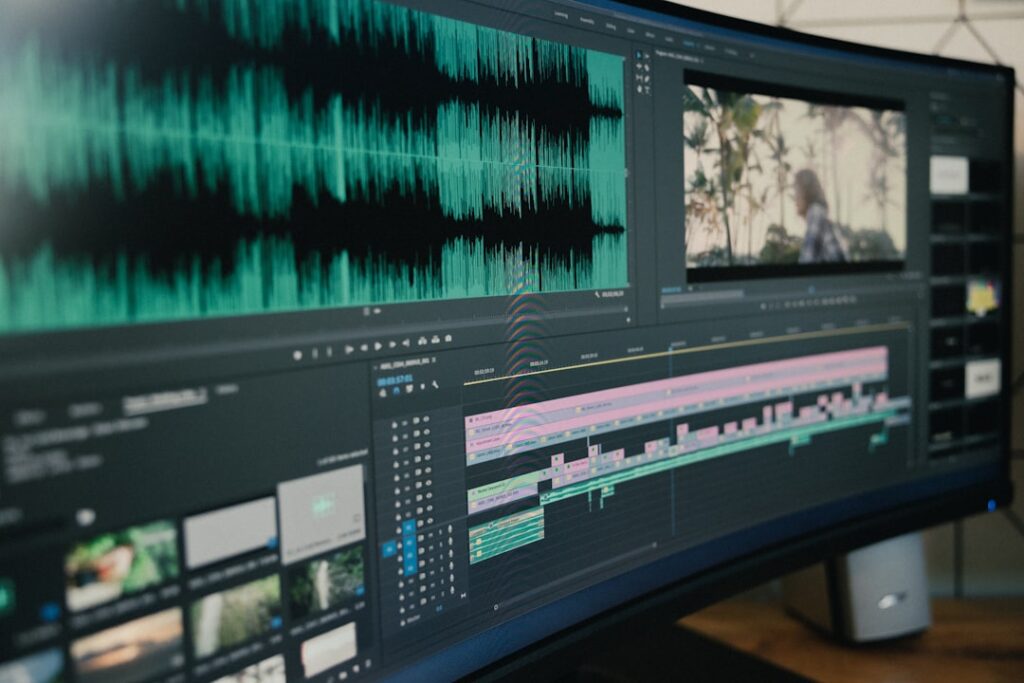
Revolutionizing Video Generation
NVIDIA’s recent launch of the SANA-WM model signifies a major breakthrough in artificial intelligence and video generation. This open-source world model, equipped with an impressive 2.6 billion parameters, can generate minute-long 720p videos using a single GPU. This innovation not only highlights NVIDIA’s dedication to advancing technology but also overcomes significant challenges faced by earlier models that required extensive computational resources.
The SANA-WM model synthesizes realistic video sequences from a single image and a defined camera trajectory, making it applicable in various fields, including gaming, simulation, and robotics. By enabling high-resolution video generation without the need for multiple GPUs, NVIDIA is setting a new benchmark for efficiency and accessibility in video AI technology.
Innovative Architecture of SANA-WM
Central to SANA-WM’s capabilities are several architectural innovations. The model utilizes a hybrid linear attention mechanism alongside Gated DeltaNet (GDN), effectively managing memory and computational complexity. Traditional softmax attention mechanisms often struggle with long sequences, leading to memory overload. In contrast, SANA-WM maintains a consistent memory footprint, allowing for high-quality video outputs without compromising performance.
The model utilizes a hybrid linear attention mechanism alongside Gated DeltaNet (GDN), effectively managing memory and computational complexity.
Moreover, SANA-WM features a dual-branch camera control system that operates at varying temporal rates, ensuring precise adherence to camera trajectories and enhancing the realism of the generated videos. This design captures intricate details of motion and camera dynamics, which are essential for producing believable video sequences.
Performance and Features
Built on the SANA-Video codebase, SANA-WM is available through the NVlabs/Sana GitHub repository. It supports three single-GPU inference variants: a bidirectional generator for high-quality offline synthesis, a chunk-causal autoregressive generator for sequential rollout, and a few-step distilled autoregressive generator for faster deployment. According to NVIDIA Newsroom, the distilled variant can denoise a 60-second 720p clip in just 34 seconds on a single RTX 5090 using NVFP4 quantization.
Industry Applications
The introduction of SANA-WM is expected to have significant implications across various sectors. In gaming, developers can utilize this technology to create immersive environments and dynamic storytelling experiences, allowing for quicker game development and reduced time-to-market for new titles.
In education and training, SANA-WM can facilitate the creation of engaging instructional videos tailored to learners’ needs, particularly in fields like medical training where realistic simulations enhance the learning experience. Additionally, its applications in robotics and autonomous systems are noteworthy, as the ability to generate realistic video sequences can improve AI model training in simulated environments, leading to more effective real-world applications.
In education and training, SANA-WM can facilitate the creation of engaging instructional videos tailored to learners’ needs, particularly in fields like medical training where realistic simulations enhance the learning experience.
Ethical Considerations and Future Directions
Despite the excitement surrounding SANA-WM, there are ongoing discussions within the AI community about the potential misuse of such powerful tools. Critics express concerns that the democratization of video generation technology could lead to the creation of deepfakes or misleading content, raising ethical questions about authenticity and information manipulation.
Furthermore, while SANA-WM enhances efficiency, some experts are concerned about the environmental impact of training large AI models. The computational resources required for training and inference can result in significant energy consumption, prompting discussions about sustainability in AI development. As the industry progresses towards more advanced models, balancing innovation with environmental responsibility remains a critical challenge.

Sources: Gadgets360, NVIDIA Newsroom, 3D Printing Industry.
Written by Career Ahead AI. AI can make mistakes, so verify key facts. Report errors to support@careeraheadonline.com.





