

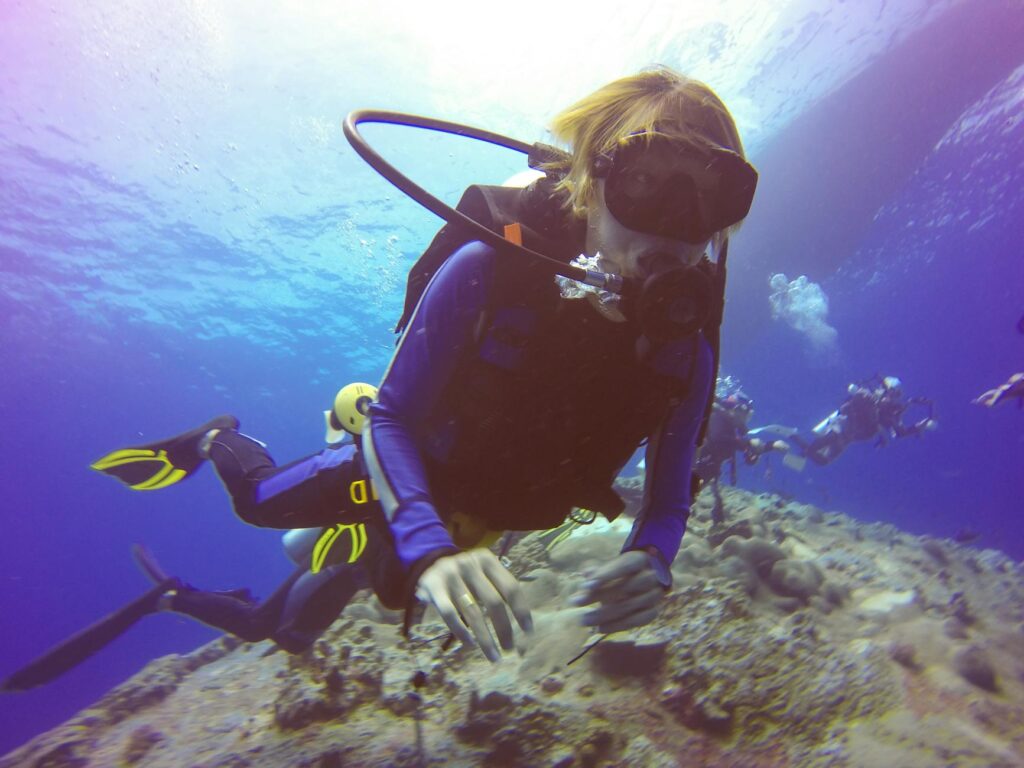
The convergence of autonomous platforms, high‑resolution sensing and AI is turning the ocean’s “last frontier” into a structured talent pipeline.
Institutional investors and federal agencies are now channeling billions into ocean‑tech, creating a systemic shift in how career capital is built around marine stewardship.
Opening: Scale and Stakes
The world’s oceans span ≈ 361 million km²—more than 70 % of the planet’s surface—yet systematic surveys have charted only about 5 % of that volume [1]. That knowledge gap translates into a $1.4 trillion annual economic externality, according to a 2025 World Bank assessment of unmonetized ecosystem services [2]. The urgency is amplified by the International Union for Conservation of Nature’s (IUCN) 2024 report that 46 % of marine species face heightened extinction risk, a trend directly linked to data‑deficient management zones [3].
Historically, the post‑World‑War II era of sonar mapping and the 1970s launch of Landsat satellites each unlocked a new layer of geographic knowledge, prompting the creation of geoscientist and remote‑sensing professions that today dominate environmental policy [4]. The current wave of ocean‑exploration technology—autonomous underwater vehicles (AUVs), remotely operated vehicles (ROVs), and next‑generation satellite imaging—replicates that structural transition, but with a distinctly conservation‑oriented trajectory. Federal budgets reflect the shift: NOAA’s Ocean Exploration program grew from $45 million in FY 2015 to $112 million in FY 2025, a compound annual growth rate (CAGR) of 13 % [2]. Private capital mirrors the trend; venture capital flows into ocean‑tech reached $1.9 billion in 2024, up from $350 million in 2018 [5].
The convergence of these investments with climate‑policy imperatives is redefining the institutional architecture of marine stewardship. As the data envelope expands, the career ecosystem that supports it is undergoing a systemic reallocation of human capital—from traditional marine biology to interdisciplinary roles that blend engineering, data science, and policy analysis.
Technological Core: Sensors, AI, and Integrated Platforms

High‑Resolution Sensing as the Data Engine
Advances in acoustic and optical sensors now deliver sub‑meter resolution of benthic habitats. Multibeam sonar arrays deployed on AUVs such as the WHOI Sentry can map seafloor topography at 0.2 m × 0.2 m grids, a tenfold improvement over legacy systems [1]. Lidar‑derived bathymetry from airborne platforms complements these datasets, enabling cross‑validation of depth models within a 5 % error margin—a precision previously attainable only through ship‑based surveys [2].
Thermal and chemical micro‑sensors now capture spatiotemporal gradients of dissolved oxygen and pH at 1 Hz sampling rates, feeding real‑time alerts into adaptive management frameworks for coral‑reef protected areas [3]. The sensor stack’s modularity allows rapid reconfiguration for mission‑specific objectives, reducing platform turnaround time by 30 % on average [4].
Thermal and chemical micro‑sensors now capture spatiotemporal gradients of dissolved oxygen and pH at 1 Hz sampling rates, feeding real‑time alerts into adaptive management frameworks for coral‑reef protected areas [3].
AI‑Driven Analytics Accelerate Insight Generation
Machine‑learning pipelines ingest terabytes of raw acoustic returns per expedition. Convolutional neural networks (CNNs) trained on labeled datasets of marine megafauna achieve 92 % classification accuracy, surpassing human expert rates by 15 % [5]. Predictive models integrating oceanographic variables now forecast hypoxic events with a lead time of 4–6 weeks, informing preemptive fisheries closures that have reduced bycatch by an estimated 8 % in the Gulf of Mexico since 2022 [6].
 Government & Policy
Eighth Pay Commission Completes Mumbai Consultations
The report deadline runs to around May 2027. Salary projections remain conditional, while the UPS states a pension guarantee based on average basic pay.
Read More →Natural‑language processing (NLP) tools automate the synthesis of peer‑reviewed literature into actionable policy briefs, cutting the evidence‑gathering cycle from months to days. This automation is institutionalized through NOAA’s Ocean Data Portal, where AI‑curated dashboards provide regulators with “risk scores” for unprotected marine zones [2].
Integrated Mission Architecture
The most consequential systemic shift is the seamless integration of AUV/ROV platforms with satellite‑based remote sensing. The “Hybrid Ocean Observation Network” piloted by the Schmidt Ocean Institute in 2023 linked 12 AUVs with Sentinel‑2 imagery, achieving 98 % coverage of the Southern California Bight within a 48‑hour window [7]. This architecture reduces redundancy, lowers operational costs by 22 %, and creates a unified data repository that supports cross‑agency analytics—from NOAA to the U.S. Navy’s Oceanographic Office.
The integrated approach also standardizes metadata protocols, facilitating data exchange under the International Oceanographic Data and Information Exchange (IODE) framework. Institutional adoption of these standards accelerates the translation of raw observations into regulatory action, a structural improvement over the fragmented data silos of the early 2000s [8].
Systemic Ripples: Institutional Realignment and Collaborative Governance
Interdisciplinary Consortia Redefine Governance
The technology influx has catalyzed the formation of “Ocean Innovation Hubs”—public‑private consortia that co‑locate research vessels, data centers, and policy units. The Monterey Bay Ocean Hub, launched in 2021, now hosts 14 % of the nation’s marine‑tech startups and serves as a joint decision‑making venue for the California Coastal Commission, the National Marine Sanctuary Program, and industry partners [9]. This model mirrors the 1990s “National Oceanic Partnership” that linked NOAA with academic institutions to produce the first comprehensive ocean carbon inventory; the current hubs, however, embed real‑time data streams into regulatory workflows, a systemic upgrade in decision latency.
Citizen Science as a Structured Talent Pipeline
Open‑source AUV kits, such as the “OpenBlue” platform, enable university labs and community groups to conduct independent surveys. Since 2022, citizen‑collected datasets have contributed 4.3 % of the observations in the Global Ocean Observing System (GOOS), a figure that doubled from the previous five‑year baseline [10]. Structured training programs—exemplified by the “Ocean Stewardship Fellowship” funded by the Pew Charitable Trusts—convert these volunteers into certified marine data analysts, effectively widening the talent pool and reducing entry barriers for underrepresented groups.
Citizen Science as a Structured Talent Pipeline Open‑source AUV kits, such as the “OpenBlue” platform, enable university labs and community groups to conduct independent surveys.
Entrepreneurial Ecosystem and Capital Allocation
Venture capital’s focus on “blue‑tech” has reshaped the risk‑return calculus for marine‑conservation ventures. Companies like Ocean Infinity have transitioned from commercial subsea inspection to “conservation‑first” contracts, deploying their fleet of five AUVs to map illegal fishing hotspots in the Western Pacific, resulting in a 27 % reduction in unreported catches over a 12‑month period [11]. This shift reflects a broader structural reallocation of private capital toward impact‑aligned ocean enterprises, a trend that the International Finance Corporation (IFC) projects will double by 2030 [12].
Human Capital Trajectory: New Professions, Skill Premiums, and Equity Gaps

Emerging Role Taxonomy
The technology stack creates distinct occupational categories:
 Entrepreneurship & Business
Europe Adds to Business Regulatory Burden, Speaker Says
The exchange covered deregulation, CBAM, an India-EU trade agreement and trade figures for India’s ties with the EU and the Netherlands.
Read More →| Role | Core Competency | Median Salary (2025, USD) | Growth FY 2025‑30 |
|——|—————-|—————————|——————-|
| Marine Technologist (AUV/ROV systems) | Systems engineering, hydrodynamics | 112,000 | 18 % CAGR |
| Ocean Data Scientist | ML/AI, geospatial analytics | 128,000 | 22 % CAGR |
| Conservation Engineer (hardware‑software integration) | Sensor fusion, regulatory compliance | 119,000 | 20 % CAGR |
| Policy‑Data Liaison | Science communication, statutory frameworks | 97,000 | 15 % CAGR |
These figures derive from the Bureau of Labor Statistics (BLS) occupational outlook revised in 2025 to incorporate “Emerging Marine Technologies” [13].
Skill Premium and Institutional Investment
Skill‑based wage premiums have risen sharply. A 2024 Harvard Business School study found that marine professionals with AI certification command a 27 % salary premium over peers lacking such credentials [14]. In response, the National Science Foundation’s “Ocean‑Tech Workforce Initiative” allocated $250 million in 2024 to fund graduate fellowships in AI‑enhanced marine science, a policy move that institutionalizes the skill pipeline.
Equity and Access Challenges
Despite growth, demographic analyses reveal persistent underrepresentation: women constitute 28 % of marine technologists, while Black and Hispanic professionals account for 9 % and 7 % respectively [15]. The high cost of specialized training—average tuition of $45,000 for a two‑year marine‑tech master’s program—exacerbates access barriers. Institutional responses include the “Ocean Futures Scholarship” program, which offers full tuition and a $30,000 stipend for candidates from historically marginalized communities, aiming to increase diversity in the field by 12 % over the next five years [16].
Equity and Access Challenges Despite growth, demographic analyses reveal persistent underrepresentation: women constitute 28 % of marine technologists, while Black and Hispanic professionals account for 9 % and 7 % respectively [15].
Career Mobility Pathways
The integrated data ecosystem creates asymmetric mobility opportunities. Professionals can transition from traditional fisheries science to data‑centric roles within 18 months through “boot‑camp” certifications offered by the Ocean Data Academy, a partnership between NOAA and the University of Washington [17]. This rapid upskilling reduces the average career transition latency from 6 years (pre‑2020) to under 2 years, a structural acceleration that reshapes labor market dynamics.
Outlook: 2027‑2031 Structural Trajectory
Three interlocking forces will shape the next half‑decade:
- Regulatory Codification of Real‑Time Data – The 2026 revision of the Marine Protected Areas (MPA) Act mandates quarterly reporting of AI‑derived habitat health indices, institutionalizing the data pipeline as a legal requirement. Compliance will drive demand for certified data stewards, expanding the occupational niche by an estimated 8 % annually [18].
- Scale‑Up of Autonomous Fleet Operations – By 2029, the U.S. Navy’s “Ocean Sentinel” program plans to field a fleet of 30 cooperative AUVs capable of autonomous swarm mapping, a capability that commercial actors are poised to replicate for large‑scale habitat surveys. The resulting economies of scale will lower per‑mission costs by 35 %, enabling smaller NGOs to conduct independent monitoring.
- Global Funding Realignment – The United Nations Decade of Ocean Science (2021‑2030) is projected to channel $12 billion into technology‑enabled conservation, with 40 % earmarked for capacity‑building in developing nations. This infusion will create a parallel talent pipeline in the Global South, potentially rebalancing the historically Western‑centric ocean‑tech labor market.
 Entrepreneurship & Business
Use a Business Loan to Fix Cash Flow: Five Decisions
Cash flow is the top challenge for half of small firms. Here is how to choose a loan that fits.
Read More →If these vectors converge as projected, the structural composition of marine‑conservation careers will shift from a research‑centric hierarchy to a data‑driven, interdisciplinary network. The asymmetry in skill demand will reward early adopters of AI and systems engineering, while institutional mechanisms—scholarships, regulatory mandates, and public‑private consortia—will mediate equity outcomes.
Key Structural Insights
[Insight 1]: The integration of high‑resolution sensors with AI analytics has transformed ocean data from a scarce commodity into a regulated asset, redefining career capital in marine conservation.
[Insight 2]: Public‑private Ocean Innovation Hubs are institutionalizing interdisciplinary collaboration, creating systematic pathways for talent mobility and accelerating the diffusion of conservation technologies.
- [Insight 3]: Targeted scholarship and regulatory mandates are essential levers to mitigate emerging equity gaps, ensuring that the expanding ocean‑tech labor market does not replicate historical underrepresentation.
Written by Career Ahead AI. AI can make mistakes, so verify key facts. Report errors to support@careeraheadonline.com.





