No products in the cart.

Personal branding supplants résumés in 2026 talent market

As AI filters sift applications in seconds, memorable experiences and authentic brand signals have become decisive levers for career mobility.

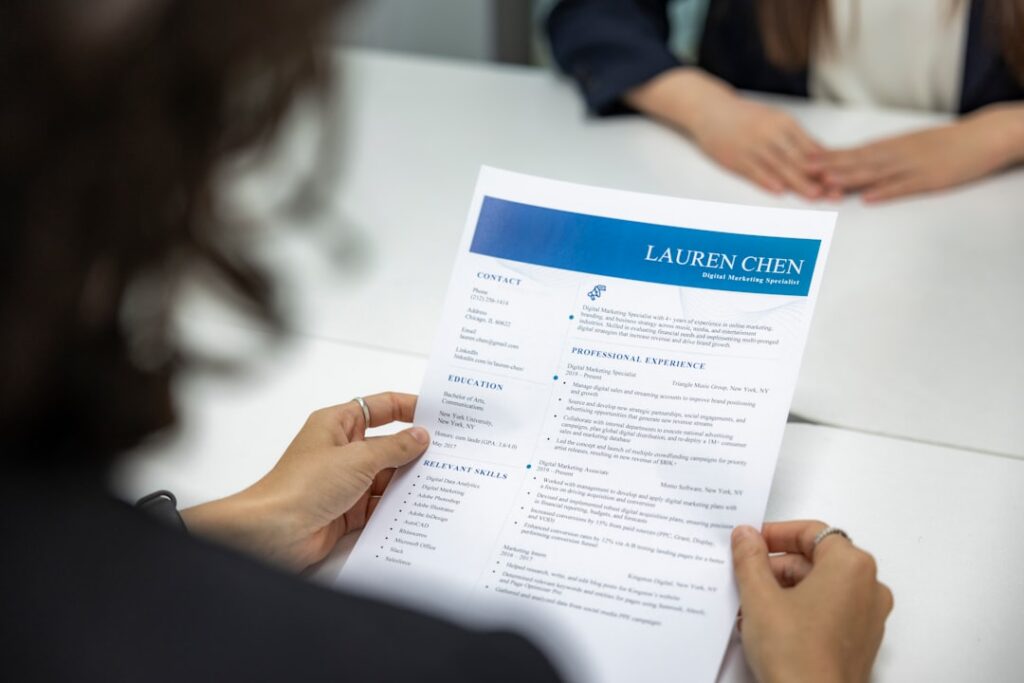
Employers now prioritize the narrative an individual crafts across digital and real‑world touchpoints over the static résumé. As AI filters sift applications in seconds, memorable experiences and authentic brand signals have become decisive levers for career mobility.
The acceleration of AI‑driven hiring pipelines has restructured the power balance between institutions and individual talent, making personal branding a structural asset rather than an optional add‑on. This shift reshapes how leadership evaluates potential, reallocates institutional resources toward brand‑centric recruitment, and redefines the pathways to economic mobility.
AI screening reorders hiring hierarchies
AI‑powered parsing engines now screen résumés in seconds, reducing the document to a keyword match score and relegating it to a gating function. Because algorithms prioritize quantifiable metrics, nuanced competencies and cultural fit are often invisible, prompting firms to seek richer signals elsewhere. Executives therefore lean on candidates’ curated digital footprints, video introductions, and project showcases that survive the algorithmic bottleneck. This structural change forces talent pipelines to pivot from document‑centric to experience‑centric assessment, aligning hiring outcomes with the ability to convey a coherent personal narrative.Narrative consistency drives brand credibility

Recruiters rewire talent pipelines around experiential signals
Employers are redesigning job‑matching workflows to weight experiential artifacts—such as portfolio projects, hackathon wins, or community leadership—more heavily than traditional credentials. A Fortune 500 software firm recently reported that candidates with publicly documented outcomes receive interview invitations at double the rate of those relying solely on résumés.This reallocation of evaluative weight reflects a systemic rebalancing: institutional talent teams invest in brand‑monitoring tools, while hiring managers train to interpret narrative cues. The result is a talent market where experiential proof functions as a proxy for institutional trust, reshaping both supply‑side preparation and demand‑side selection.“Resumes now pass through AI filters in seconds, making personal branding the primary first impression.”
Workers and firms recalibrate capital investments
Three‑year outlook: institutional adoption of brand metrics
Over the next three to five years, we expect standardized brand‑impact scores to emerge, analogous to credit ratings, enabling firms to benchmark candidates across industries. Early adopters—global consulting partnerships and tech conglomerates—are piloting dashboards that aggregate social engagement, project outcomes, and peer endorsements into a single index. As regulatory bodies examine algorithmic fairness, transparent brand metrics may become a compliance requirement, further institutionalizing personal branding within hiring frameworks. Companies that embed these scores into talent‑management systems will likely enjoy faster hiring cycles and stronger alignment between employee identity and corporate culture.
According to Career Ahead’s analysis of the current talent ecosystem, professionals who align their public content with a single value proposition experience a measurable increase in recruiter outreach.
The evolution of personal branding signals a lasting reconfiguration of how talent is sourced, evaluated, and rewarded, reinforcing the urgency for workers and institutions alike to master the mechanics of memorable experience.
You may also like
 Future Skills & Work
Tech firms tap neurodiverse talent for innovation
With an estimated 30 million U.S. workers identifying as neurodivergent, companies like Palantir and AWS are redefining inclusion as a competitive advantage.
Read More →Key Structural Insights
Insight 1: AI‑driven résumé filters have relegated static documents to a gating function, positioning personal branding as the primary differentiator for candidate selection.
Insight 2: Consistent, authentic narratives across platforms act as a living résumé, converting experiential proof into measurable recruiter outreach.
Insight 3: Emerging brand‑impact scores will institutionalize personal branding, creating a new capital metric that reshapes hiring cycles and talent retention.
Insight 1: AI‑driven résumé filters have relegated static documents to a gating function, positioning personal branding as the primary differentiator for candidate selection.
Experiential Learning Trumps Formal Education. As the job market shifts, candidates with unique, project-based experiences are increasingly favored over those with traditional degrees, signaling a paradigm shift in how skills are valued and assessed.
Authentic Storytelling Amplifies Personal Brand. By leveraging memorable experiences and anecdotes, individuals can craft compelling narratives that showcase their skills, passions, and values, making them more relatable and attractive to potential employers and industry partners.