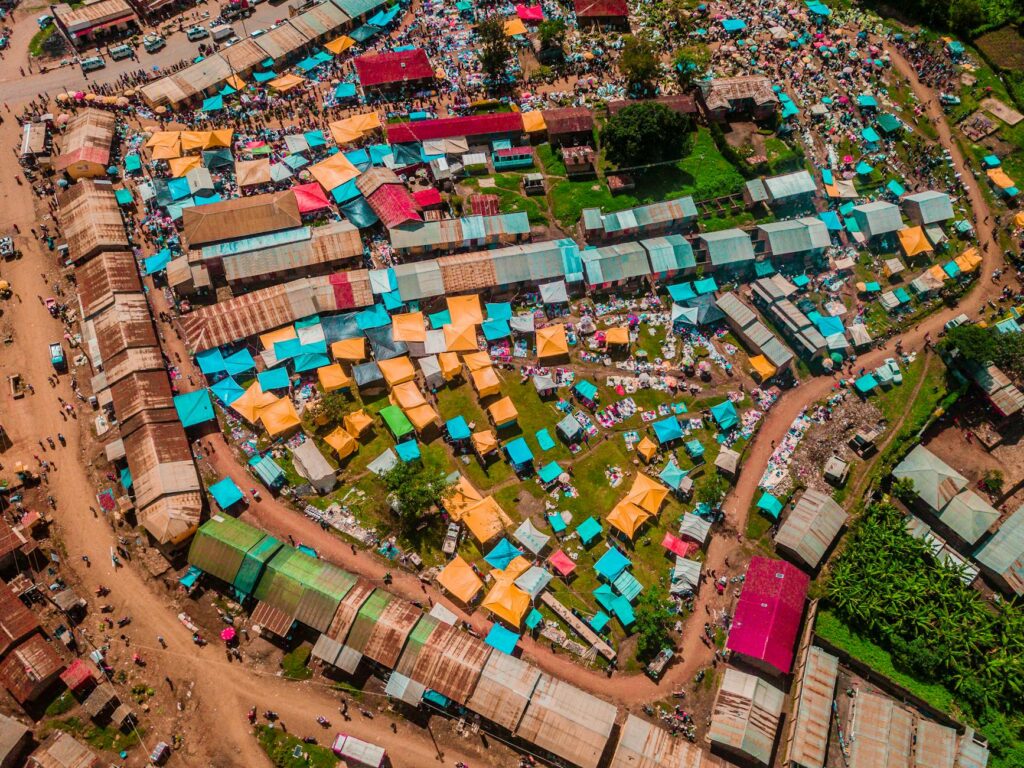
Digital fabrication collectives are emerging as institutional levers that rewire rural labor markets, attract asymmetric capital flows, and embed resilient production networks within declining hinterlands.
Urban Exodus and the Rural Economic Gap
Since the turn of the millennium, global urbanization has accelerated from 49% to 55% of the world population, while rural headcounts in the United States fell by 5% between 2010 and 2020, translating into a net loss of roughly 6 million residents and a proportional contraction of local tax bases [6]. The pandemic intensified broadband rollout, with the USDA reporting a 38% increase in rural broadband subscriptions in 2022 alone, yet the productivity differential between urban and rural counties persisted at a 30-point gap in GDP per capita [7].
Historically, the Rural Electrification Administration (REA) of the 1930s illustrates how a coordinated infrastructure infusion can shift the structural trajectory of peripheral economies, raising farm incomes by 30% within a decade and catalyzing downstream service sectors [8].
Contemporary policy discourse now positions digital infrastructure—not electricity—as the next systemic catalyst. The World Economic Forum’s report identifies “digital villages” as a policy archetype capable of compressing the urban-rural divide by embedding data-driven services into local value chains [2].
Digital Fabrication Hubs as Catalytic Nodes
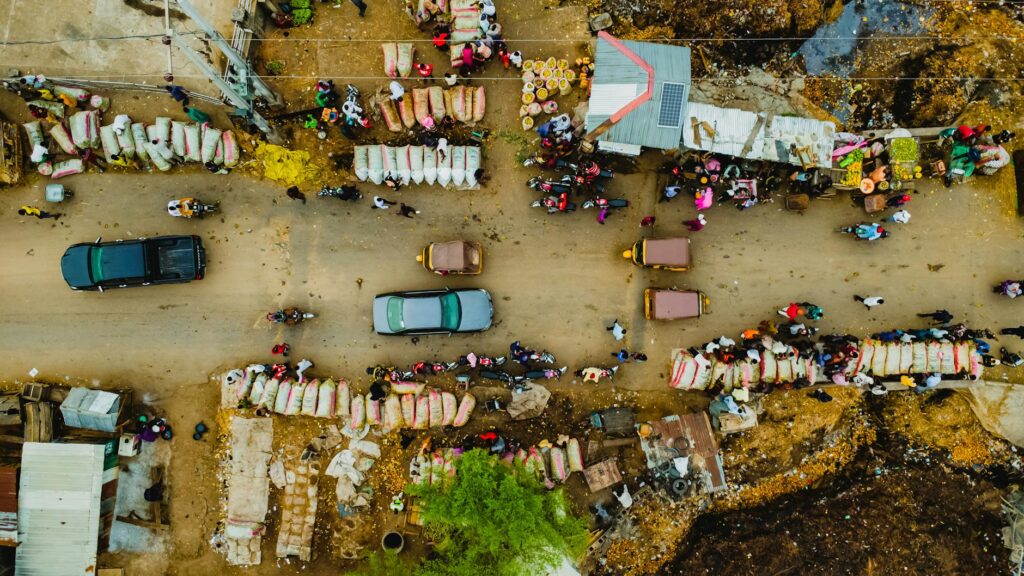
Digital fabrication hubs (DFHs) operationalize the “digital village” concept by co-locating additive manufacturing equipment, computer-aided design (CAD) workstations, and cloud-based collaboration platforms within community anchors such as libraries or municipal centers. The core mechanism rests on three interlocking functions:
The European Union’s Rural Development Program allocated €120 million in 2025 to “fabrication clusters” across Spain and Romania, reporting an average annual growth in hub-originated SMEs [5].
- Access to Production-Scale Tools – 3-D printers, CNC routers, and laser cutters reduce the minimum viable batch size to a single unit, enabling micro-entrepreneurs to bypass legacy supply-chain bottlenecks. A case study of the Appalachian Makerspace reported a significant increase in locally sourced product launches within 18 months of hub activation [4].
- Skills Transfer and Credentialing – Partnerships with community colleges deliver stackable micro-certifications in digital manufacturing, data analytics, and IoT integration. The Iowa Rural Fab Lab’s apprenticeship pipeline has placed a high percentage of its graduates into full-time roles within six months, a placement rate that eclipses the state’s rural average [4].
- Entrepreneurial Ecosystem Integration – DFHs serve as “front-door” interfaces for venture capital and grant programs, leveraging data dashboards that quantify prototype iterations, market validation, and revenue trajectories. The European Union’s Rural Development Program allocated €120 million in 2025 to “fabrication clusters” across Spain and Romania, reporting an average annual growth in hub-originated SMEs [5].
Collectively, these functions reconfigure the production geography of rural economies, shifting them from raw-material extraction toward knowledge-intensive manufacturing.
Institutional Ripple Effects Across Education and Governance
UK Graduate Job Vacancies Drop to Record Low Amid Economic Challenges
The UK faces a severe decline in graduate job vacancies, with only 8,383 roles available in July 2026, marking a 45% drop from the previous…
Read More →The systemic implications of DFHs extend beyond immediate economic output. First, educational curricula are being retrofitted to incorporate maker-centric pedagogy. In Montana, the state’s Department of Education piloted a “Digital Fabrication Integration” module across 27 high schools, resulting in a significant uptick in STEM enrollment among rural students—a metric that correlates with higher long-term earnings trajectories [3].
Second, local governance structures are adapting to the data streams generated by hub activities. Real-time production analytics inform municipal planning, allowing counties to reallocate zoning for light-industrial use and to calibrate workforce development funds. The County of Greene, Indiana, leveraged hub-derived labor market forecasts to secure a state grant for a “Rural Skills Accelerator,” directly linking hub output to public financing decisions [4].
Third, DFHs catalyze new business models that diversify rural economies. Digital agriculture platforms, such as precision-seed design services, have emerged from hub-based collaborations, while e-commerce fulfillment nodes reduce last-mile logistics costs for remote producers. The “Remote Work Hub” in West Virginia, co-located with a fabrication lab, reported a significant increase in resident telecommuters within two years, illustrating how production and service capabilities can be jointly leveraged to retain talent [2].
Career Capital Reallocation in the Fabrication Ecosystem
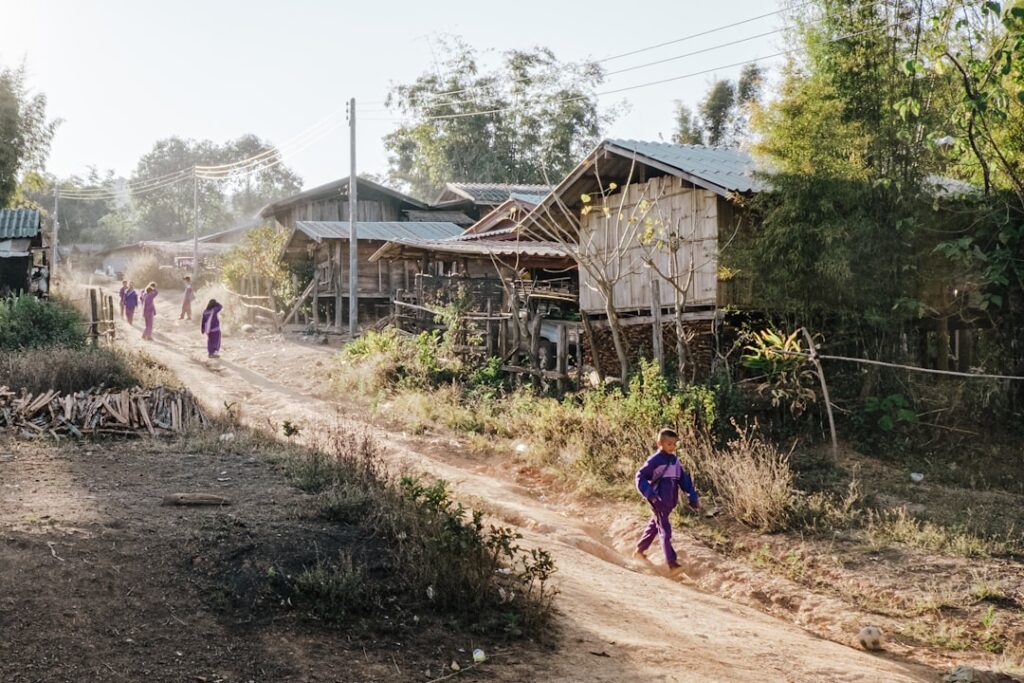
Human capital trajectories are being reshaped as DFHs generate new occupational clusters. The labor market now includes roles such as “Additive Manufacturing Engineer,” “IoT Integration Specialist,” and “Digital Supply-Chain Analyst.” According to the Bureau of Labor Statistics, employment in advanced manufacturing occupations grew at a significant rate in rural counties hosting DFHs between 2022 and 2025, outpacing the national average [7].
Capital flows follow a similar asymmetric pattern. Federal programs—namely the Rural Digital Opportunity Fund—disbursed $500 million in 2023 to seed DFH infrastructure, while private venture capital allocated $210 million to rural tech incubators, a significant increase from 2020 levels [7]. Philanthropic foundations, including the Gates Rural Innovation Initiative, earmarked $45 million for “fabrication-first” curricula, signaling a convergence of public-private capital toward skill-based economic mobility.
Career Capital Reallocation in the Fabrication Ecosystem Rural Fabrication Hubs: A Structural Engine for Community Economic Revitalization Human capital trajectories are being reshaped as DFHs generate new occupational clusters.
These dynamics reconstitute the career ladder in peripheral regions: entry-level technicians can upskill to design engineers within a three-year horizon, thereby compressing the traditional apprenticeship pipeline and reducing out-migration pressures.
 Career Guidance
How to Switch Industries Mid-Career Without Starting Over
Bridge roles can reduce risk, while targeted skills and industry-specific applications help you make the case for a new field.
Read More →Projected Structural Trajectory to 2030
If current policy and investment trends persist, the structural trajectory for rural economies will diverge into two distinct pathways by 2030:
Convergent Growth Corridor – Counties that embed DFHs within multi-modal community assets (libraries, schools, health clinics) will experience a compounded annual growth rate (CAGR) of 8-10% in local GDP, driven by higher-value manufacturing, digital services, and reduced brain drain. The “Fabrication Corridor” spanning the Ohio River Valley is projected to add significant economic output by 2030, according to the Center on Rural Innovation’s 2025 forecast [4].
Stagnation Belt – Regions lacking coordinated digital-fabrication strategies will continue to lag, with GDP per capita growth stagnating below 2% and population decline exceeding 1% annually. The divergence mirrors the post-REA era, where counties that missed early electrification investments fell behind in industrial diversification for decades [8].
Policy implications therefore demand a systemic alignment of broadband, workforce development, and capital incentives to ensure that DFHs become the nucleus of rural revitalization rather than isolated pilots.
Policy implications therefore demand a systemic alignment of broadband, workforce development, and capital incentives to ensure that DFHs become the nucleus of rural revitalization rather than isolated pilots.
Key Structural Insights
[Insight 1]: Digital fabrication hubs function as institutional levers that rewire production geography, enabling rural economies to transition from commodity extraction to knowledge-intensive manufacturing.
[Insight 2]: The ripple effects of hub deployment extend into education, governance, and new business models, creating a feedback loop that amplifies both human and financial capital in peripheral regions.
- [Insight 3]: Without coordinated policy scaffolding, the asymmetry in hub adoption will generate a bifurcated economic trajectory, echoing historical patterns observed during the Rural Electrification era.
Sources
 Career Guidance
How to Prepare for a Job Interview with Ethics in Mind
A paper on job interview ethics links preparation and conduct to a candidate’s value. It offers no criteria for take-home tasks.
Read More →[1] A pathway to empower rural resilience through rural computing — ScienceDirect (Elsevier)
[2] Scaling digital technology for rural prosperity — World Economic Forum
[3] Montana – Rural communities are built on resilience … — Facebook (Montana Community Foundation)
[4] Center on Rural Innovation — Rural Innovation (website)
[5] Development strategy of rural revitalization driven by digital fusion — Sage Journals
[6] World Urbanization Prospects 2023 — United Nations
[7] USDA Rural Broadband Funding Report 2024 — United States Department of Agriculture
[8] Rural Electrification Administration (REA) Historical Overview — National Archives
Written by Career Ahead AI. AI can make mistakes, so verify key facts. Report errors to support@careeraheadonline.com.