A Russian intelligence cell is active in a Tokyo office building, sourcing high‑tech components linked to unmanned aerial systems. The activity has been documented by U.S. and Japanese media in July 2026.
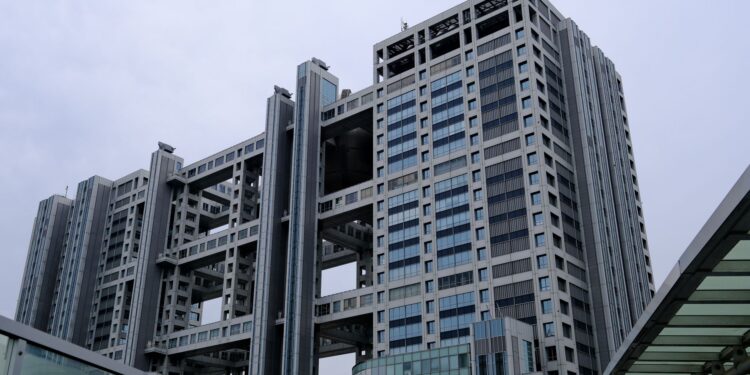
A Russian military intelligence unit was identified operating from a high‑rise office in Tokyo, Japan, where it is procuring electronic components and subsystems used in war drones, according to a New York Times investigation published on July 12, 2026 [1]. The report places the unit’s presence within the broader context of Russia’s ongoing modernization of its armed forces, a process that accelerated after the start of the Russo‑Ukrainian war in 2022 [3].
The unit’s activities involve the acquisition of parts from Japanese manufacturers and distributors, some of which may be unaware that their products are being diverted for military use, the article notes [1]. Japanese officials have not publicly confirmed the specific companies involved, but the investigation cites supply‑chain records that trace shipments of high‑frequency circuit boards and sensor modules to the intelligence cell’s address [1][2].
Russian Intelligence Activity in Tokyo
The New York Times report describes the unit as a branch of Russia’s Main Directorate (GRU), operating under diplomatic cover and using commercial office space to conduct its work [1]. The unit’s staff includes Russian nationals with backgrounds in intelligence and technical procurement, according to the article’s source documents [1].
Japanese authorities have reportedly increased surveillance of foreign intelligence activities following the discovery, though no arrests have been announced as of the publication date [2]. The Tokyo office is located in the Shinjuku district, a hub for multinational corporations and technology firms, which provides logistical advantages for sourcing electronic components [1].
Russian Intelligence Activity in Tokyo The New York Times report describes the unit as a branch of Russia’s Main Directorate (GRU), operating under diplomatic cover and using commercial office space to conduct its work [1].
Procurement of War Drones and Electronics
Russian Military Intelligence Unit Operates in Tokyo High‑Rise, Acquires Drone‑Related Technology
The equipment gathered by the Russian unit includes flight‑control processors, lithium‑ion battery packs, and miniature radar modules that are integral to modern combat drones [3]. Major General Illia Pavlenko, a former deputy head of Ukraine’s Defence Intelligence, highlighted the importance of such components in Russia’s shift toward unmanned systems during a conference in early 2026 [3].
Remote workers are increasingly targeted by sophisticated scams involving fake job offers and OTP requests. Understanding these tactics is crucial for freelancers and digital marketers…
Supply‑chain analysis cited in the New York Times article shows that the components were purchased through legitimate Japanese distributors, then re‑exported via third‑party logistics firms to Russia [1]. The investigators traced at least three separate shipments between January 2026 and June 2026 that matched the specifications of drone subsystems used by Russian forces in Ukraine [1].
Implications for Japan and Education Stakeholders
The presence of a foreign intelligence unit engaged in procurement of military‑grade electronics raises security concerns for Japanese policymakers, who are reviewing export‑control regulations to prevent further diversion of dual‑use technology [2]. Educational institutions offering courses in supply‑chain management, international trade, and security studies may incorporate these developments into curricula to illustrate real‑world applications of export‑control law [4].
Students studying robotics, aerospace engineering, and electronics are now encountering a direct link between civilian component markets and military procurement, underscoring the relevance of ethical sourcing and compliance training [4]. Universities with partnerships with Japanese industry may reassess collaboration agreements to ensure that research outputs are not inadvertently channeled to foreign military programs [2].
Key Facts
What: A Russian military intelligence unit operating from a Tokyo high‑rise is acquiring electronic components for war drones.
Educational institutions offering courses in supply‑chain management, international trade, and security studies may incorporate these developments into curricula to illustrate real‑world applications of export‑control law [4].
When: Activity documented in reports released July 12, 2026, with procurement shipments traced from January 2026 to June 2026.
Impact: Highlights security risks for Japan’s export controls and provides a case study for students and educators in technology, trade, and security fields.
U.S. stocks rose following a weak jobs report that tempered expectations for Federal Reserve interest rate hikes. This shift in market sentiment is crucial for…




 News
NewsNews