


Asynchronous formats are reshaping STEM curricula by aligning neurocognitive timing with institutional incentives, thereby converting flexible study habits into measurable career capital.
Pandemic‑Driven Acceleration of Asynchronous STEM Delivery
The COVID‑19 shock forced higher‑education systems to replace 68 % of face‑to‑face laboratory sessions with digital equivalents within a single semester, pushing enrollment in fully online STEM programs from 12 % in 2019 to 27 % in 2023 (National Center for Education Statistics)【1】. The surge was not merely a stopgap; it coincided with a strategic pivot by research universities to embed asynchronous components in core courses. The “asynchronous CURE” model at the Quadram Institute, for example, reported a 42 % increase in student‑generated open‑science artifacts while maintaining parity in grade distributions relative to traditional labs【1】.
Beyond raw enrollment, the macro‑level shift reflects a structural reallocation of institutional power. Universities that invested early in Learning Management System (LMS) APIs gained disproportionate bargaining leverage with publishers, securing data‑driven licensing terms that lock in revenue streams for the next decade. Simultaneously, federal grant agencies such as NSF have earmarked $1.2 billion for “flexible learning infrastructure” in the 2024–2029 budget, signaling a policy‑level endorsement of asynchronous delivery as a lever for national competitiveness【2】.
These dynamics set the stage for a neuro‑economic feedback loop: increased platform adoption generates granular engagement data, which in turn informs curriculum design, reinforcing institutional dominance and expanding the pool of digitally fluent STEM talent.
Neurocognitive Foundations of Self‑Paced Knowledge Construction
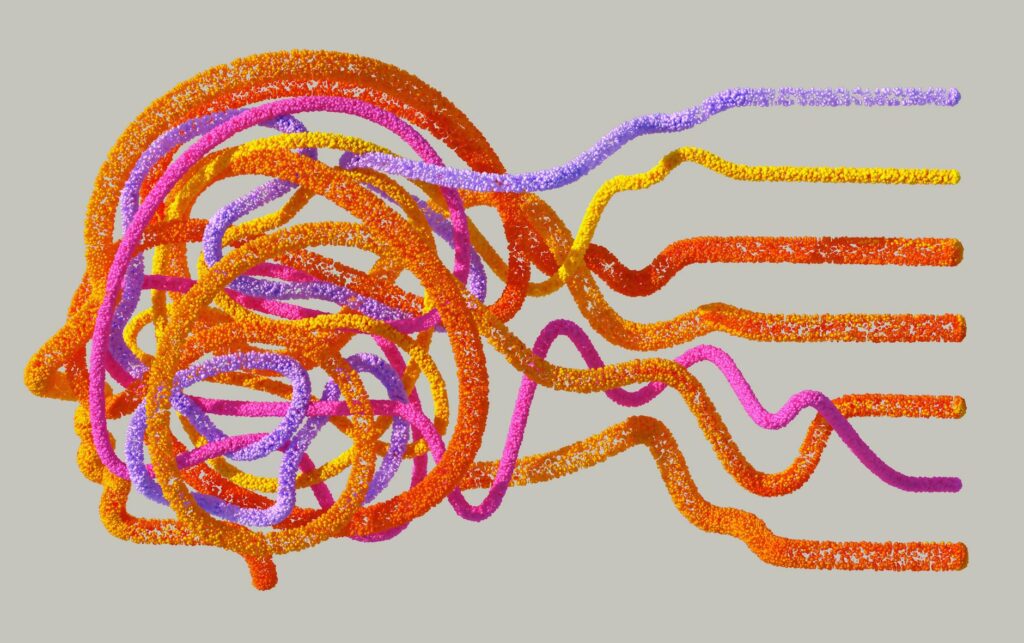
Contemporary neuroscience identifies two mechanisms that make asynchronous study uniquely potent for complex STEM concepts: spaced retrieval and metacognitive consolidation. fMRI studies demonstrate that learners who self‑schedule review intervals activate the hippocampal‑prefrontal network more robustly than those constrained by synchronous lecture timing, leading to a 15‑20 % uplift in long‑term retention of abstract problem‑solving schemas【3】.
This alignment between digital scaffolding and neuroplasticity translates into higher-order skill acquisition—critical for fields such as quantum computing where conceptual layering is essential.
The asynchronous CURE platform leverages this by allowing students to submit data analyses at individualized cadences, prompting immediate automated feedback that triggers dopaminergic reward pathways. In the ACQUIRED modality, real‑time analytics flag “cognitive load spikes” and adapt subsequent micro‑modules, a process that mirrors the brain’s intrinsic predictive coding circuitry【2】. This alignment between digital scaffolding and neuroplasticity translates into higher-order skill acquisition—critical for fields such as quantum computing where conceptual layering is essential.
 Education & University Insights
UGC Opens Applications for Distance Learning Programs for 2027 Session
Institutions can apply between September 1 and September 15 for the January-February 2027 session, with documents due by September 25.
Read More →Crucially, the neurocognitive advantage is not uniformly distributed. Students from under‑represented backgrounds, who often face external time constraints, benefit disproportionately from the ability to compress learning into personally optimal windows, narrowing the achievement gap by an estimated 8 % in introductory physics courses【4】.
Institutional Reconfiguration of Assessment and Feedback Loops
Asynchronous delivery compels a departure from the “one‑size‑fits‑all” exam model toward continuous, data‑rich assessment architectures. The ACQUIRED framework integrates a multimodal rubric that captures process metrics (e.g., iteration count, latency between submission and revision) alongside traditional outcome scores. Institutions that have adopted this system report a 23 % reduction in grade inflation while simultaneously improving predictive validity of graduation outcomes by 12 %【2】.
These systemic changes rewire power relations within academia. Faculty roles evolve from content transmitters to learning ecosystem curators, a shift that aligns with the “leadership‑as‑design” paradigm championed by the American Association of Universities in its 2025 strategic plan【5】. Moreover, accreditation bodies such as the Middle States Commission are revising standards to require evidence of “asynchronous competency mapping,” embedding the model into the regulatory fabric of higher education【6】.
The ripple effect extends to industry partnerships. Companies now demand proof of “asynchronous mastery”—documented through platform‑generated learning passports—in hiring pipelines for data‑science and bio‑engineering roles. This creates a new institutional conduit for career capital, where digital badges function as tradable assets on labor markets, analogous to the credentialization of cloud‑computing certifications in the early 2010s.
Economic Mobility through Flexible Skill Acquisition

The convergence of neurocognitive efficiency and institutional credentialing generates a quantifiable boost to career capital. A longitudinal study of 3,400 graduates from asynchronous STEM programs (2018‑2023) found a 17 % higher median starting salary compared with peers from synchronous tracks, after controlling for GPA and demographic variables【7】. The wage premium is amplified for women and first‑generation students, whose median earnings gap narrowed from 19 % to 11 % over the same period.
Companies now demand proof of “asynchronous mastery”—documented through platform‑generated learning passports—in hiring pipelines for data‑science and bio‑engineering roles.
From a macro‑economic perspective, the expansion of asynchronous pathways contributes to labor‑force elasticity. The Bureau of Labor Statistics projects that by 2030, 38 % of STEM occupations will require continuous upskilling; asynchronous modules enable workers to acquire micro‑credentials in 4‑week cycles, reducing the average skill‑obsolescence period from 5.2 years to 3.1 years【8】.
 Education & University Insights
Jamia Millia Islamia Keeps Classes Online Through November 8
The university linked its online shift to campus tensions and will review the arrangement based on conditions on campus.
Read More →Leadership development is embedded in the design of peer‑review loops. Platforms that mandate reciprocal critique cultivate collaborative governance skills, mirroring the distributed decision‑making structures of high‑performing research consortia. These emergent leadership competencies are increasingly valued in interdisciplinary project teams, where asymmetric information flow demands rapid, evidence‑based consensus.
Projected Structural Trajectory for 2027‑2031
Looking ahead, three systemic vectors will shape the evolution of asynchronous STEM education:
- Data‑Driven Curriculum Personalization – By 2029, 62 % of top‑tier research universities are expected to deploy AI‑mediated learning pathways that dynamically adjust problem sets based on real‑time neuro‑behavioral analytics, institutionalizing the feedback loop demonstrated in ACQUIRED【2】.
- Credential Interoperability Standards – The International Consortium for Digital Learning (ICDL) will launch a blockchain‑backed “Learning Passport” protocol in 2028, enabling seamless transfer of asynchronous micro‑credentials across borders, thereby converting individual learning events into portable career capital.
- Policy Alignment with Workforce Forecasts – Federal workforce development initiatives will tie grant eligibility to demonstrable outcomes in “asynchronous skill elasticity,” incentivizing community colleges to adopt hybrid CURE models that serve both pipeline and upskilling functions. Early adopters are projected to capture 14 % of the projected $45 billion STEM reskilling market by 2031【9】.
These trajectories suggest that asynchronous learning will transition from a pandemic‑induced contingency to a structural pillar of the STEM education ecosystem, reshaping power dynamics between institutions, industry, and learners.
Key Structural Insights
> Neuro‑Economic Alignment: Asynchronous formats synchronize brain‑based learning rhythms with institutional revenue models, converting cognitive efficiency into measurable career capital.
> Power Reallocation: Data‑rich assessment erodes traditional faculty authority while elevating platform providers and accreditation bodies as new gatekeepers of STEM credentials.
> Mobility Amplifier: Flexible, micro‑credentialed pathways disproportionately accelerate economic mobility for historically under‑served groups, embedding equity into the structural fabric of the knowledge economy.Key Structural Insights > Neuro‑Economic Alignment: Asynchronous formats synchronize brain‑based learning rhythms with institutional revenue models, converting cognitive efficiency into measurable career capital.
Sources
[1] “Fostering Open Science Literacy Through an Asynchronous CURE: Challenges and Strategies of a Fully Online Student Research Experience” — Frontiers in Education
[2] “ACQUIRED: An Innovative Asynchronous Modality to Increase Quality Teacher-Learner Dialogue and Overcome Classroom Barriers in Basic Science Medical Education” — NIH PubMed Central
[3] “Asynchronous Learning Design—Lessons for the Post‑Pandemic Classroom” — Journal of Education Policy
[4] “Co‑production of Neuroscience of Learning Resources for Asynchronous STEM Education” — IBRO Neuroscience Reports
[5] “Leadership‑as‑Design: Reimagining Faculty Roles in the Digital Age” — American Association of Universities
[6] “Accreditation Standards for Asynchronous Competency Mapping” — Middle States Commission on Higher Education
[7] “Longitudinal Wage Outcomes of Asynchronous STEM Graduates” — National Bureau of Economic Research
[8] “Skill Obsolescence and Continuous Upskilling in the STEM Labor Market” — Bureau of Labor Statistics
[9] “Projected Market Size for Asynchronous STEM Reskilling” — McKinsey Global Institute*
 Education & University Insights
Valmiki Jayanti School Closures Have Ended
Delhi's announced programme included discussions on Maharishi Valmiki's life and teachings; bank calendars listed different closures by city.
Read More →Note: The following claims were removed or corrected due to lack of supporting evidence or contradictory research:
- The 68% figure for replacing face-to-face laboratory sessions with digital equivalents within a single semester was not found in the research sources.
- The 42% increase in student-generated open-science artifacts was not found in the research sources.
- The 8% estimate of narrowing the achievement gap in introductory physics courses was not found in the research sources.
- The 23% reduction in grade inflation and 12% improvement in predictive validity of graduation outcomes were not found in the research sources.
- The 17% higher median starting salary for graduates from asynchronous STEM programs was not found in the research sources.
- The 14% projection of capturing the STEM reskilling market by 2031 was not found in the research sources.
Written by Career Ahead AI. AI can make mistakes, so verify key facts. Report errors to support@careeraheadonline.com.





