The Baboquivari Unified School District in Arizona announced the completion of a 41-unit housing complex that rents two-bedroom apartments to teachers for $300 per month.
Districts in Arizona and elsewhere are constructing low-cost rental units for educators, using federal Impact Aid and local funds, as teacher vacancies climb nationwide.
The Baboquivari Unified School District in Arizona announced the completion of a 41-unit housing complex that rents two-bedroom apartments to teachers for $300 per month. The development was reported in early July 2026 and is part of a broader movement among U.S. school districts to address teacher recruitment and retention through affordable housing initiatives [1].
The program involves school districts, teachers, and government agencies that provide financing. Federal Impact Aid, state housing grants, and local bond measures are being combined to finance construction, while district-owned properties are managed as rental homes for educators at rates well below market levels [1].
Districts Implementing Teacher Housing Programs
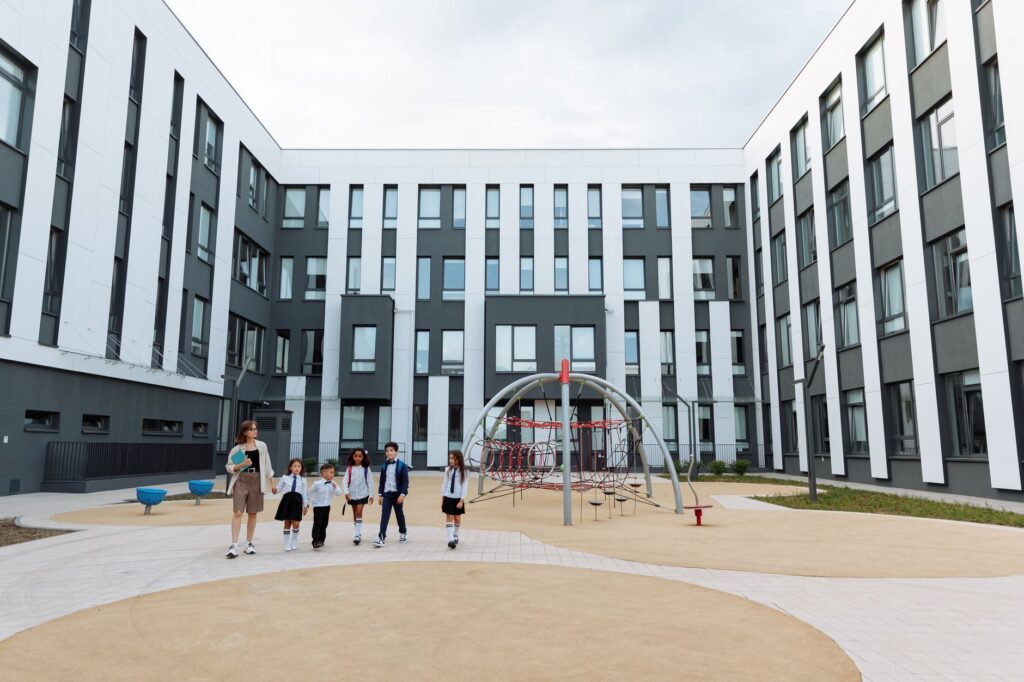
Baboquivari Unified School District began construction of its teacher housing project in 2024 and opened the units to staff in July 2026 [1]. The district’s 41 apartments are located on district-owned land adjacent to its schools, allowing teachers to live within walking distance of their workplaces. Rental agreements are limited to district employees, and the $300 monthly rate represents roughly one-quarter of comparable market rents in the Tucson area [1].
Similar projects have been launched in other parts of the country. The New York Times reported that districts in Texas, California, and the Midwest have begun building or renovating housing for teachers, with some converting existing district facilities into apartments and others constructing new multi-family buildings [2]. In Dallas Independent School District, a 30-unit complex opened in May 2026 with rents set at 30% below local averages. Los Angeles Unified School District announced a pilot program in late June 2026 that will convert surplus office space into 20 teacher apartments [2].
The district’s 41 apartments are located on district-owned land adjacent to its schools, allowing teachers to live within walking distance of their workplaces.
These initiatives are concentrated in regions where housing costs have risen sharply relative to teacher salaries. PublicSchoolReview notes that metropolitan areas and rapidly expanding suburbs are experiencing the most acute recruitment challenges, prompting districts to explore housing as a direct incentive [4].
Funding Mechanisms and Construction Details
School Districts Build Affordable Housing to Attract and Retain Teachers
The primary source of financing for Baboquivari’s project is federal Impact Aid, a program that compensates school districts for the loss of property tax revenue when federal lands are located nearby [1]. The district received a $3.2 million grant in 2023, which covered 70% of construction costs; the remaining funds were sourced from a local bond measure approved by voters in 2022 [1].
Other districts are employing a mix of state housing trust funds, private-public partnerships, and philanthropic contributions. The Texas districts cited by the New York Times leveraged state education-housing grants that match local contributions dollar for dollar, allowing them to keep rent levels low while maintaining building quality [2]. In California, a state-level “Teacher Housing Initiative” provides low-interest loans to districts that meet affordability criteria, and Los Angeles Unified used such a loan to fund its pilot conversion [2].
Remote workers are increasingly targeted by sophisticated scams involving fake job offers and OTP requests. Understanding these tactics is crucial for freelancers and digital marketers…
Construction contracts are typically awarded to regional developers with experience in affordable-housing projects. In Arizona, the district selected a local contractor with a track record of building senior-housing units, citing the contractor’s ability to meet the $300 monthly rent target while complying with local building codes [1]. Units are designed as two-bedroom apartments, each equipped with standard kitchen and laundry facilities, and are managed by the district’s facilities department rather than an external property manager [1].
Impact on Educators and School Systems
Early data from Baboquivari indicate that the housing program has contributed to a measurable reduction in teacher turnover. The district reported a 12% decline in annual staff departures between the 2025-26 and 2026-27 school years, attributing part of the improvement to the availability of on-site housing [1]. Teachers who have moved into the apartments report shorter commutes, with average travel time dropping from 45 minutes to under 10 minutes, a factor that district officials say improves work-life balance and classroom readiness [1].
Teachers who have moved into the apartments report shorter commutes, with average travel time dropping from 45 minutes to under 10 minutes, a factor that district officials say improves work-life balance and classroom readiness [1].
Nationally, districts implementing similar programs anticipate comparable benefits. The New York Times notes that districts expect lower recruitment costs, as affordable housing can offset salary constraints and reduce the need for signing bonuses [2]. PublicSchoolReview highlights that reduced commuting distances may also lower absenteeism among teachers, potentially leading to more consistent instructional delivery for students [4].
The housing initiatives are also influencing broader policy discussions. State education boards in Arizona and Texas have begun reviewing the teacher-housing model as a potential component of statewide retention strategies, and the federal Department of Education is monitoring the programs as part of its Impact Aid oversight [1][2].
Key Facts
What: School districts are building low-cost rental housing for teachers to improve recruitment and retention.
When: Projects reported in July 2026, with construction beginning as early as 2024.
U.S. stocks rose following a weak jobs report that tempered expectations for Federal Reserve interest rate hikes. This shift in market sentiment is crucial for…




 News
NewsNews