No products in the cart.

Seafloor Science Meets Military Chatbots
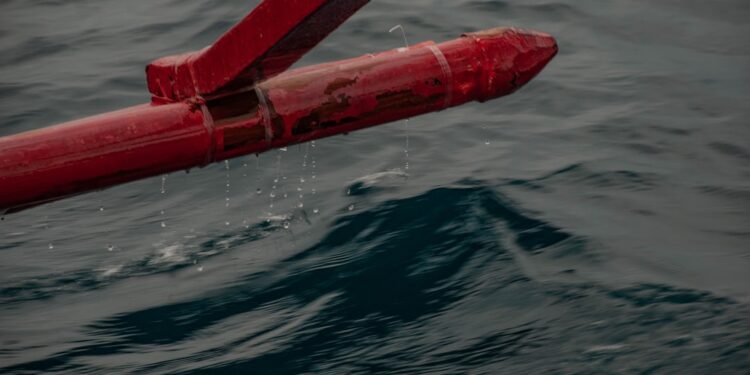
Innovations in Ocean Exploration and Military AI Recent advancements in seafloor exploration technology and military AI are reshaping our understanding of the ocean and defense strategies. In May 2026, two innovative submersibles descended nearly 6,000 meters into the Pacific Ocean, aiming to map the seafloor for critical mineral deposits. Meanwhile, AI chatbots are transforming military operations, raising ethical questions about their use in decision-making.

Innovations in Ocean Exploration
Recent advancements in seafloor exploration technology are reshaping our understanding of the ocean. In May 2026, two innovative submersibles descended nearly 6,000 meters into the Pacific Ocean. Built by Orpheus Ocean, these submersibles aim to map the seafloor for critical mineral deposits, significantly reducing the costs associated with deep-sea exploration and making it more accessible for researchers and companies.
The potential of these submersibles extends beyond exploration. They promise to enhance our understanding of the deep sea, a largely unexplored region of our planet. Such technologies could lead to groundbreaking discoveries, including new species and insights into marine ecosystems, benefiting industries like biotechnology and pharmaceuticals that rely on marine organisms for new compounds.
However, these technologies also raise concerns about environmental impacts. The same submersibles that aid scientific research are attracting the interests of deep-sea mining companies. This dual-use technology could lead to ecological degradation if not monitored carefully, highlighting the critical debate between exploration and conservation.
AI’s Role in Military Operations
As seafloor exploration advances, the military is leveraging technology to enhance operational capabilities. The integration of AI chatbots into military strategies represents a significant shift in how defense forces operate. These AI systems are not just tools for data analysis; they are becoming decision-making partners for commanders on the battlefield.
Military chatbots are designed to analyze vast amounts of data quickly, providing actionable insights that allow military personnel to make informed decisions in real-time. However, this reliance on AI raises ethical questions about accountability and the potential for errors in high-stakes situations.
AI’s Role in Military Operations As seafloor exploration advances, the military is leveraging technology to enhance operational capabilities.
The emergence of AI in military contexts also sparks a debate about implications for global security. As nations invest in advanced military technologies, the risk of an arms race increases, particularly between countries like the US and China, which are developing AI systems that could redefine conventional warfare.
Environmental and Ethical Challenges
You may also like
 Entrepreneurship & Business
Nscale Hires Meta’s Justin Osofsky to Be COO Ahead of IPO
Nscale has appointed Justin Osofsky as COO, leveraging his extensive experience from Meta to enhance operational efficiency ahead of its IPO. This strategic hiring reflects…
Read More →The intersection of seafloor exploration and military technology presents complex ethical dilemmas. The potential for deep-sea mining to disrupt marine ecosystems is a pressing concern. Environmental advocates warn that the rush to extract resources could lead to irreversible damage to delicate underwater habitats.
Furthermore, the use of AI in military operations introduces ethical challenges regarding decision-making processes. The reliance on algorithms for critical decisions raises questions about accountability and moral responsibility. Critics argue that the lack of transparency in AI decision-making can lead to grave consequences, particularly in combat scenarios.
Contradictions in Societal Values
While advancements in seafloor science and military AI offer promising benefits, they also highlight contradictions in societal values. The pursuit of knowledge and resource extraction can lead to economic growth and scientific discovery, yet these endeavors risk environmental degradation and ethical dilemmas.

Proponents of deep-sea mining argue that it is essential for meeting the increasing demand for critical minerals used in technology. However, environmentalists counter that the long-term impacts on marine ecosystems could outweigh the short-term economic benefits. This ongoing debate reflects a broader societal struggle to balance progress with sustainability.
Proponents of deep-sea mining argue that it is essential for meeting the increasing demand for critical minerals used in technology.
Similarly, the use of AI in military contexts presents a paradox. While AI can enhance operational efficiency and save lives by providing better intelligence, it also raises concerns about the dehumanization of warfare. The ethical implications of machines making decisions about human lives are profound and unresolved, necessitating robust discussions about the future of technology in our lives.
Navigating Future Challenges
The future of seafloor science and military AI is poised for significant transformation. As technology continues to evolve, the potential for new discoveries in the deep sea remains vast. Advancements in submersible technology could lead to breakthroughs in understanding climate change, biodiversity, and ocean health.
In the military realm, the integration of AI will likely deepen. As nations invest in these technologies, the landscape of global security will change. Policymakers must engage in discussions about the appropriate use of AI in military operations to prevent misuse and ensure accountability.
You may also like
 Entrepreneurship & Business
Amazon Launches Ultra-Fast Delivery in 120+ Indian Cities
Amazon has expanded its ultra-fast delivery service, Amazon Now, to over 120 cities in India, doubling its reach in just two weeks. This growth signifies…
Read More →
Moreover, the dialogue surrounding environmental protection and resource extraction will need to intensify. As the demand for minerals grows, finding a balance between exploration and conservation will be critical. The future of both seafloor science and military AI will depend on our ability to navigate these complex issues responsibly.