Global Share of Informal Activity and Pandemic Acceleration Estimates from the International Monetary Fund and the World Bank place the shadow economy between 1…
Informal sector activity now underpins up to a third of GDP in many emerging markets, and its pandemic‑induced expansion is reshaping pathways to career capital, fiscal stability, and institutional legitimacy.
Global Share of Informal Activity and Pandemic Acceleration
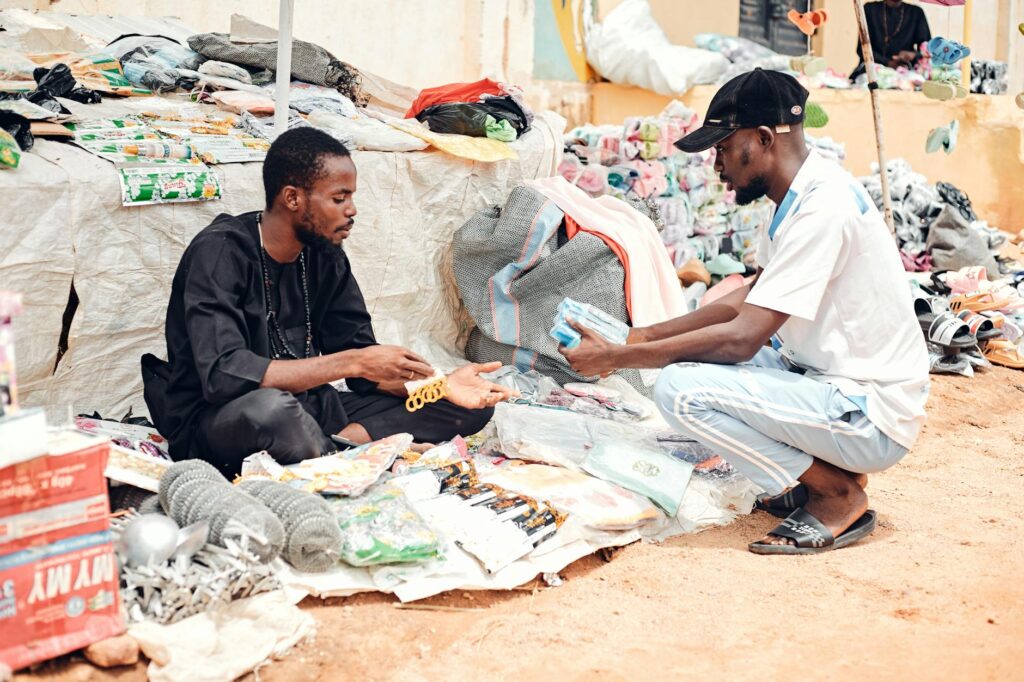
Estimates from the International Monetary Fund and the World Bank place the shadow economy between 15 % and 30 % of total output across low‑ and middle‑income economies, with the highest concentrations in sub‑Saharan Africa, South Asia, and parts of Latin America [1]. The COVID‑19 shock amplified this share: labor force surveys in 2023 showed a rise in informal employment in India, Kenya, and Brazil, as workers displaced from formal contracts turned to street vending, home‑based manufacturing, and platform‑mediated gig work [2].
These dynamics are not merely cyclical responses to a health crisis; they reflect a structural shift in the labor‑supply curve, where formal job creation lagged behind rapid digital platform proliferation. In Kenya, the “Matatu” minibuses that operate outside licensing regimes expanded between 2020 and 2022, delivering 1.4 billion passenger‑kilometers while remaining largely invisible to tax authorities [3]. Such cases illustrate how pandemic‑induced income insecurity re‑oriented marginal workers toward unregulated income streams that now constitute a durable component of local economies.
Institutional Drivers of Informal Labor Markets
Shadow Economies as Engines of Local Development: A Structural Re‑evaluation
The persistence of shadow activity is rooted in a matrix of institutional weaknesses, regulatory burdens, and asymmetric incentives. High compliance costs—averaging 12 % of annual turnover for small enterprises in Brazil—combined with opaque licensing procedures push marginal producers into informal arrangements [1]. Simultaneously, weak property rights and limited access to formal credit create a financing gap that informal lenders fill through community‑based rotating savings and credit associations (ROSCAs).
Regulatory capture further entrenches informality. In Mexico City, municipal enforcement of street‑vendor permits has been historically inconsistent, leading vendors to self‑organize into “co‑operativas” that negotiate de‑facto zones with police—an arrangement that operates parallel to official zoning law [4]. This pattern mirrors the post‑World War II reconstruction era in Europe, where informal workshops supplied essential reconstruction materials while formal building codes lagged, ultimately prompting the creation of “social housing” programs that incorporated informal builders into state‑led projects.
These shortfalls constrain public investment in health, education, and infrastructure—domains that could otherwise raise the productivity ceiling of both formal and informal workers.
Fiscal and Supply‑Chain Externalities of Shadow Production
Informal activity exerts asymmetric pressures on public finances. The IMF’s 2025 fiscal impact study estimates that advanced economies lose an average of 2.3 % of potential tax revenue per annum to unregistered firms, while emerging markets experience losses up to 4.1 % of GDP [1]. These shortfalls constrain public investment in health, education, and infrastructure—domains that could otherwise raise the productivity ceiling of both formal and informal workers.
Supply‑chain linkages intensify the systemic relevance of the shadow sector. In Vietnam, informal textile workshops provide a significant portion of the raw‑material processing for formally registered garment exporters, reducing lead times and lowering costs for multinational buyers [3]. However, the lack of contractual enforcement exposes formal firms to quality volatility and labor‑rights violations, creating a feedback loop where formal firms may either pressure for formalization or, paradoxically, outsource risk to informal partners to preserve margins.
Environmental and social externalities also emerge. Informal e‑waste recycling in Accra generates hazardous runoff that contaminates groundwater, while unregulated construction sites in Delhi contribute to particulate matter exceeding World Health Organization thresholds [2]. These outcomes underscore the need for policy frameworks that internalize external costs rather than treating informality as a peripheral nuisance.
Human Capital Formation within Unregulated Workflows
Shadow Economies as Engines of Local Development: A Structural Re‑evaluation
From a career‑capital perspective, the shadow economy offers asymmetric opportunities for skill acquisition and entrepreneurship, particularly for low‑skill and marginalized cohorts. Street vendors in Lagos acquire logistics, inventory management, and micro‑marketing competencies that translate into higher‑margin formal enterprises when access to credit improves [4]. In the Philippines, ride‑hailing drivers who began as informal motorbike taxi operators report a significant increase in digital literacy after three years of platform engagement [2].
Nonetheless, the absence of formal training pathways, social protection, and credit registries creates a “skill‑trap.” Workers cannot leverage accumulated experience into formal employment because their labor histories remain undocumented. Micro‑finance institutions that require formal registration exclude up to 68 % of informal borrowers, reinforcing a financing asymmetry that limits scaling potential [1]. Historical parallels can be drawn to the Soviet “second economy” of the 1990s, where informal artisans built technical expertise that later fed into post‑Soviet private enterprises once legal reforms opened market entry.
Projected Structural Evolution through 2030
Policy responses over the next three to five years will determine whether the shadow economy remains a peripheral adjunct or becomes an integrated pillar of local development. Three structural trajectories are observable:
Project Jagrook aims to combat the influence of anonymous financial advisors and so-called "finfluencers," who often provide misleading advice to unsuspecting retail investors.
Nonetheless, the absence of formal training pathways, social protection, and credit registries creates a “skill‑trap.” Workers cannot leverage accumulated experience into formal employment because their labor histories remain undocumented.
Digital Formalization Pathway – Countries such as Rwanda have piloted mobile‑based tax identification that links informal sales data to a digital ledger, increasing registration rates from 12 % to 38 % within two years [3]. If replicated, this pathway could convert up to 15 % of informal turnover into taxable revenue by 2029, while granting workers access to social insurance schemes.
Hybrid Co‑Regulation Model – Municipalities in Brazil’s Northeast region have instituted “informal business zones” where vendors receive limited licensing in exchange for compliance with health and safety standards. Early evaluations show a 9 % rise in average daily sales and a 4 % reduction in occupational injuries [4]. Scaling this model could embed informal enterprises within formal supply chains without imposing prohibitive compliance costs.
Continued Marginalization Scenario – In the absence of coordinated reforms, the shadow economy may expand asymmetrically, deepening fiscal gaps and perpetuating labor precarity. Projections from the World Bank’s 2026 scenario analysis suggest that, under a “business‑as‑usual” trajectory, informal employment could account for a significant portion of total labor by 2030 in the Democratic Republic of Congo, limiting upward mobility for millions of workers [2].
The most plausible outcome is a blended trajectory, where digital identification and localized co‑regulation coexist, gradually reducing the fiscal asymmetry while preserving the entrepreneurial dynamism that informal work provides. This hybrid model aligns with the “institutional learning” literature, which argues that incremental policy adjustments—rather than abrupt formalization mandates—produce durable shifts in labor market structure [1].
—
Key Structural Insights Fiscal Asymmetry: Informal activity erodes tax bases by up to 4 % of GDP in emerging markets, constraining public investment and reinforcing a cycle of under‑service. Skill‑Trap Dynamics: While the shadow economy cultivates entrepreneurial competencies, the lack of documented work histories prevents conversion of informal capital into formal career trajectories.
Hybrid Formalization Potential: Digital ID systems combined with localized co‑regulation can integrate informal enterprises without imposing prohibitive compliance costs, offering a pathway to systemic fiscal and social inclusion.
Sources
Regional authority and the shadow economy — Springer
The Long Shadow of Informality: Challenges and Policies — World Bank
Contributions of the shadow economy and gig economy to entrepreneurship and business development in emerging economies — International Journal of Sociology and Social Policy
The Informal Sector: A Hidden Force of Producers and Consumers in Developing Economies — ResearchGate



Government & Policy

 Government & Policy