No products in the cart.

Solar booms in industrial US midwest as energy crisis persists
The Midwest is witnessing a significant increase in solar energy projects, driven by rising utility costs and geopolitical tensions. Innovations like floating solar technology are reshaping energy production, offering economic benefits and addressing community concerns.

Midwest Solar Boom Driven by Energy Demands
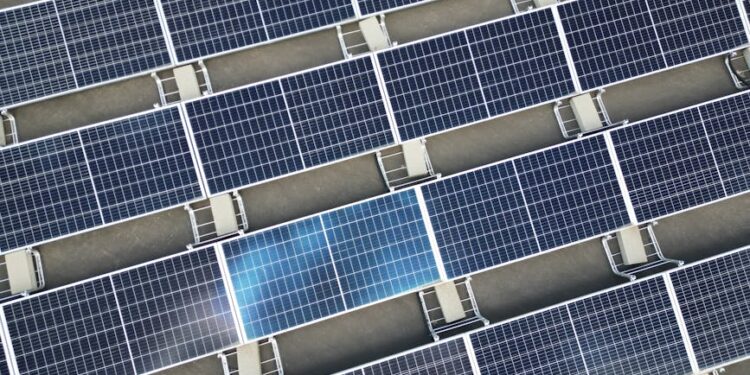
The Midwest region of the United States is experiencing a notable surge in solar energy projects. This growth comes as the energy crisis escalates, driven by increasing utility costs and geopolitical tensions affecting fuel prices. In Lima, Ohio, a floating solar project is set to provide significant power to a local water treatment facility, showcasing how innovation can address immediate energy needs.
According to reports from The Guardian, the floating solar arrays at Twin Lake Reservoir will cover four acres and are expected to generate substantial electricity. This initiative is part of a broader trend where cities are seeking sustainable energy solutions to stabilize rising costs. The project aims to save Lima around $10 million over its lifetime by reducing energy expenses associated with water treatment.
Advantages of Floating Solar Technology
Floating solar technology is gaining traction in the Midwest due to its unique advantages. Unlike traditional solar farms that require large land areas, floating solar installations utilize bodies of water to generate electricity. This method not only conserves land for agriculture but also reduces water evaporation and algae growth, contributing to environmental sustainability.
According to a report by the National Renewable Energy Laboratory (NREL), floating solar systems occupy significantly less space than ground-mounted systems. For instance, a one-megawatt floating solar setup can fit on just two acres of water, compared to five acres of land for a similar ground system. This efficiency is crucial in a region where agricultural land is paramount, allowing for a coexistence of energy production and farming.
This method not only conserves land for agriculture but also reduces water evaporation and algae growth, contributing to environmental sustainability.
Economic Impact of Solar Expansion
The economic landscape in the Midwest is shifting as solar energy becomes a more prominent feature. With rising costs in traditional energy sources, many local governments are exploring solar projects as a means to secure energy independence. This transition not only addresses immediate energy needs but also creates job opportunities in construction, engineering, and maintenance sectors.
You may also like
 Government & Policy
Why do I have to pay for buses if
As public transport systems increasingly adopt digital payment methods, users without smartphones are at a disadvantage. A letter from a concerned citizen in Scotland noted…
Read More →For instance, the Lima solar project involves a team of engineers and construction workers, contributing to local employment. The growth of solar energy initiatives is also attracting investments, as companies recognize the potential for profit in renewable energy. As a result, states like Ohio, Illinois, and Indiana are positioning themselves as leaders in solar capacity, enhancing their economic prospects.
Community Reactions to Solar Projects
The reception of solar projects in rural communities varies widely. While some residents embrace the shift towards renewable energy, others express skepticism, particularly regarding land use and environmental impacts. For example, in Paulding County, a farmer reported frustration over high transmission fees despite generating surplus electricity from his solar installation.

Doug Goyings, a local farmer, noted that while he benefits from reduced electricity costs, the associated fees imposed by utility companies can negate those savings. This sentiment underscores the complexities of integrating solar energy into existing economic frameworks. Many farmers feel caught between the benefits of renewable energy and the realities of utility pricing structures.
Future Prospects for Solar Energy in the Midwest
The future of solar energy in the Midwest appears promising. As technology advances, the efficiency of solar panels continues to improve, making solar energy more accessible and cost-effective. The growth of floating solar projects is likely to expand, especially in states rich in water resources, such as Michigan and Minnesota.
This sentiment underscores the complexities of integrating solar energy into existing economic frameworks.
Additionally, the increasing urgency of energy independence amid global tensions will likely drive further investments in renewable energy. The Midwest’s unique combination of agricultural land and water resources positions it well to become a leader in solar energy production. This shift could redefine the region’s economic landscape, creating new opportunities for innovation and sustainability.
Sources: Article, Now, Rocketnews.
You may also like
 Industry & Global Trends
UPI volume jumps 27% to touch 145 bn in first half
India's Unified Payments Interface (UPI) transactions grew by 27% in the first half of 2026, reaching 145 billion transactions. This growth reflects a strong demand…
Read More →