

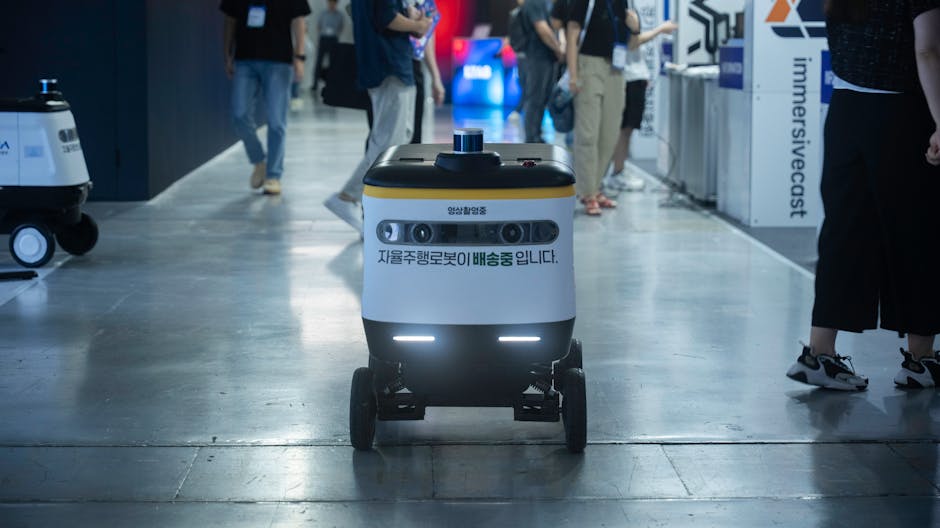
Innovative AI Development in South Korea
RLWRLD, a South Korean startup, is revolutionizing artificial intelligence by capturing the intricate techniques of skilled workers. The company aims to develop AI brains for robots capable of performing complex tasks across various industries. This initiative is crucial as South Korea seeks to enhance its manufacturing capabilities and address labor shortages exacerbated by an aging population.
According to AP News, RLWRLD collaborates with companies like Lotte Hotel and CJ Logistics to gather data on how workers perform their tasks. For instance, waitstaff at Lotte Hotel are filmed as they fold napkins and serve food, while logistics workers demonstrate how they handle goods. This data collection is vital for training robots to replicate human dexterity and decision-making.
The startup’s approach highlights a shift in the AI landscape, focusing not just on coding but on understanding human actions. By harnessing the skills of workers, RLWRLD aims to create robots capable of performing delicate tasks that require a human touch, potentially redefining automation in industries such as hospitality and logistics.
Human Skills as Data Points
RLWRLD’s strategy involves meticulously capturing human techniques to build a comprehensive database of skills. The company’s engineers use advanced technology, including body cameras and motion-tracking devices, to record every movement of workers. This data is then converted into machine-readable formats, allowing robots to learn and mimic these actions.
The emphasis on capturing nuanced human skills is essential for developing humanoid robots. The ability to replicate intricate tasks, such as setting a table or organizing a display, is crucial for robots’ acceptance in everyday environments. This data-driven approach enhances the functionality of robots and ensures they can adapt to various settings.
The implications of this technology extend beyond mere automation; they touch on the future of work itself.
 Future Skills & Work
Moving into Management: The Evidence on Trade-Offs
Management is a social job: leaders spend 85% of their time collaborating. The trade-offs are real, but the skills transfer widely.
Read More →The implications of this technology extend beyond mere automation; they touch on the future of work itself. As RLWRLD prepares to roll out its robotics foundation model, industries must consider how these advancements will reshape job roles and expectations. The integration of AI into the workforce could lead to a significant transformation in how tasks are performed.
Government Support and Industry Response
The South Korean government is backing RLWRLD’s initiatives with substantial funding, including a recent $33 million project aimed at capturing the skills of master technicians. This support reflects the government’s commitment to positioning South Korea as a leader in AI and robotics. The project aims to enhance productivity in manufacturing, particularly as the nation faces a declining workforce due to aging demographics.
Major corporations like Hyundai and Samsung are also investing heavily in AI and robotics. Hyundai plans to deploy humanoids in its factories by 2028, while Samsung aims to convert its manufacturing sites into AI-driven facilities by 2030. This collective push highlights the urgency for industries to adapt to technological advancements.
However, the rapid integration of AI into the workforce has raised concerns among labor groups. Unions warn that the deployment of robots could lead to job losses and a hollowing out of skilled labor. The government and businesses must navigate these challenges carefully, balancing innovation with workforce stability.

The government and businesses must navigate these challenges carefully, balancing innovation with workforce stability.
Challenges of Implementing AI in Real-World Settings
Despite ambitious plans, RLWRLD and other companies face significant challenges in deploying AI robots in real-world environments. One major hurdle is ensuring that robots can perform tasks with the same efficiency and accuracy as human workers. Current humanoid robots still lag behind in executing complex tasks, often requiring extensive training and adjustments.
The ability to replicate human-like dexterity is crucial for tasks that require fine motor skills. RLWRLD’s focus on five-fingered designs aims to address this gap, but achieving this level of functionality remains a work in progress. The startup’s engineers are continuously refining their technologies to improve robot performance.
 AI & Technology
Microsoft Unveils AI-Optimized PCs with Nvidia Technology
Microsoft has unveiled new PCs powered by Nvidia's RTX Spark chip and an updated Windows 11, enhancing AI capabilities for developers and researchers. This shift…
Read More →The path forward involves not only technological advancements but also a cultural shift in how society views automation. As robots become more integrated into daily life, public acceptance will play a crucial role in their success. Engaging workers and addressing their concerns will be essential in fostering a collaborative environment between humans and machines.
Future Prospects for AI and Robotics
The potential for RLWRLD’s technology to reshape industries is immense. As robots become more capable of performing complex tasks, their applications could expand beyond traditional manufacturing into areas like healthcare, hospitality, and even domestic settings. The ability to automate tasks could lead to increased efficiency and productivity across various sectors.
However, the question remains: how will the workforce adapt to these changes? While RLWRLD’s innovations promise to enhance productivity, they also raise concerns about job displacement. As industries evolve, workers will need to acquire new skills to remain relevant in an AI-driven economy.
This innovative approach to AI development in South Korea not only highlights the potential of robotics but also underscores the importance of human skills in shaping the future of work.

Ultimately, the success of RLWRLD and similar startups hinges on their ability to balance technological advancement with workforce engagement. As the landscape of work continues to change, the dialogue between technology developers, employers, and workers will be crucial in shaping a future where humans and robots can coexist harmoniously.
This innovative approach to AI development in South Korea not only highlights the potential of robotics but also underscores the importance of human skills in shaping the future of work. The ongoing evolution of AI technology raises critical questions about the future of labor and the role of automation in society.
 AI & Technology
Hong Kong Tech Index Expands, Fuels AI Startup Growth
The Hang Seng Tech Index has expanded from 30 to 50 companies, enhancing opportunities for AI startups and data scientists in Hong Kong. This shift…
Read More →Written by Career Ahead AI. AI can make mistakes, so verify key facts. Report errors to support@careeraheadonline.com.





