No products in the cart.

Students’ Guide to Career Prep in the AI Era
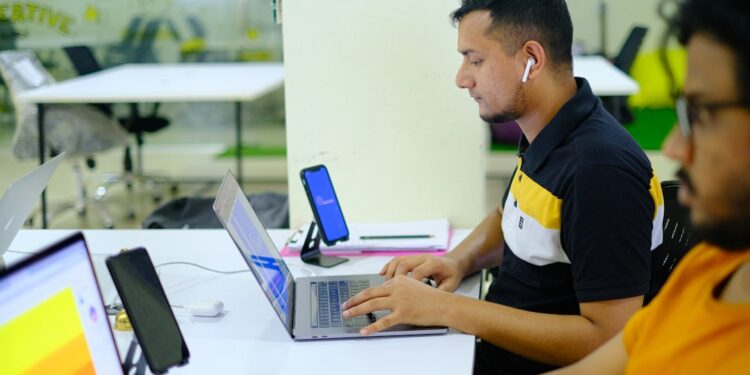
Navigate the evolving job market with AI insights. Learn to balance digital tools and personal touch for career success.

“`html
The AI Revolution: Transforming the Job Search Landscape
Generative Tools in the Campus Ecosystem
Generative software has moved from labs to everyday use on university campuses. Tools that create polished emails, summarize articles, or organize schedules are now as common as word processors. For seniors eager to find jobs after graduation, the appeal of quick, well-crafted outputs is strong. However, this convenience can lead to a trap: relying too much on algorithms to shape their professional identity.
The Recruiter’s Radar
Recruiters have quickly adapted to this change. Since reviewing applications is their main job, they can easily spot machine-generated cover letters by their awkward phrasing, generic achievements, and lack of personal touch. As CareerAddict notes, “recruiters can identify a robotic cover letter in seconds and flag portfolios that lack a human touch.” This often leads to quick rejections before a recruiter even looks at the candidate’s full profile.
Shifts in Skill Demand
AI screening not only reduces the number of applications but also changes the skills employers value. While algorithms can replicate standard marketing plans, they struggle with office dynamics, crisis management, and strategic pivots. Hiring managers now prioritize originality, critical thinking, and the ability to handle uncertainty—traits that are distinctly human. Universities are updating academic integrity policies to address AI-generated work, knowing that violations can harm a graduate’s job prospects.
balancing digital Tools and Human Touch: A Guide for Students
Setting Digital Boundaries
Students should distinguish between using AI for help and letting it take over. It’s fine to use AI for brainstorming, grammar checks, or finding sources, but letting it write a resume or cover letter removes the personal touch that recruiters want. The same CareerAddict article warns that “depending entirely on automated writing creates a massive professional risk.” By treating AI as a partner rather than a replacement, students can maintain the authenticity that shows confidence and self-awareness.
balancing digital Tools and Human Touch: A Guide for Students Setting Digital Boundaries Students should distinguish between using AI for help and letting it take over.
Verifying Ownership and Authenticity
Hiring committees increasingly use software to detect AI-generated content in submitted documents. Students who cannot prove their work risks failing their applications and facing disciplinary actions from their universities. It’s wise to keep a clear record: save drafts, note prompts used, and annotate AI-assisted sections. This not only helps with compliance checks but also encourages reflective writing, a skill that benefits students long after graduation.
Forging Genuine Competence
You may also like
 AI & Technology
AI Becomes Silent Co‑Founder in Boardrooms
The analysis below dissects how AI’s silent co‑founder status reconfigures decision‑making, risk.
Read More →True competence is best shown through real experiences. Internships, project portfolios, and open-source contributions provide undeniable proof of skills that no algorithm can replicate. For instance, a student who creates a data visualization dashboard for a campus sustainability project demonstrates problem-solving and technical skills. Such tangible work speaks louder than polished writing and gives recruiters a basis for deeper discussions.

Future-Proofing Careers: Skills and Mindsets for the AI Era
Critical Thinking and Problem Solving
AI is great at recognizing patterns but struggles with conflicting information or creating new solutions under pressure. Employers value candidates who can break down complex problems, question assumptions, and synthesize different data points. Academic programs that use case-based learning and cross-disciplinary projects help develop these skills. Students who regularly ask “why” and “what if” build a valuable mental toolkit that remains relevant even as automation takes over routine tasks.
Creativity as Competitive Edge
Humans still excel at creative thinking. Whether crafting a brand story or proposing a unique market entry, originality shows the ability to create value beyond mere execution. For example, Harvard Library’s use of AI-enhanced search tools illustrates this: while the technology helps retrieve information, scholars must still define research questions, interpret findings, and create compelling narratives. This principle applies in the workplace as well—AI provides data, but humans shape insights.
Adaptability and Lifelong Learning
The rapid pace of AI development means today’s essential tools will change or vanish in a few years. Students who adopt a growth mindset and view new platforms as learning opportunities will thrive. This adaptability shows in two ways: staying updated with emerging technologies through micro-credentials and webinars, and developing soft skills like emotional intelligence and collaboration that are less likely to be automated. As demonstrated by the Harvard Library rollout, technology can enhance research, but curiosity and judgment remain key.
Future-Proofing Careers: Skills and Mindsets for the AI Era Critical Thinking and Problem Solving AI is great at recognizing patterns but struggles with conflicting information or creating new solutions under pressure.

In a world where algorithms filter candidates, those who blend authenticity, critical thinking, and creativity will stand out. The goal is not to reject AI but to work with it—using these tools to enhance, not replace, the human qualities that employers value. Students who find this balance will not only navigate the AI-driven hiring process but also set new standards for future talent.
You may also like
 AI & Technology
Google’s AI Leadership Shift Impacts California Tech Talent
Google's shift in AI leadership from California is set to reshape the job landscape, creating new opportunities for AI professionals and intensifying competition with rivals…
Read More →“`