No products in the cart.

Synthetic Biology Reshapes Biomanufacturing: Institutional Leverage, Career Capital, and the New Economic Engine

Synthetic biology is converting cellular factories into programmable platforms, a shift that redefines institutional power, career pathways, and the macro‑economic trajectory of the bio‑economy.

Synthetic biology is converting cellular factories into programmable platforms, a shift that redefines institutional power, career pathways, and the macro‑economic trajectory of the bio‑economy.
The Macro Context: A Structural Pivot in Global Production
The biomanufacturing sector is approaching a structural inflection point. Forecasts place the synthetic‑biology‑enabled market at $30 billion by 2025, expanding at a 25 % compound annual growth rate—far outpacing the broader chemicals industry’s 7 % CAGR [1]. By 2030, the total biomanufacturing ecosystem is projected to exceed $1 trillion, driven largely by bio‑based fuels, plastics, and therapeutics [1].
This trajectory mirrors the late‑19th‑century transition from artisanal metallurgy to mass‑produced steel: a technology‑led reallocation of capital that re‑engineered supply chains, labor markets, and geopolitical influence. Today, gene‑editing tools such as CRISPR/Cas9 and advanced cellular chassis design constitute the “steel‑making” process for biology, compressing development cycles from years to months and slashing production costs by up to 30 % for high‑value metabolites [2].
Institutions that internalize these capabilities—whether multinational pharma, state‑backed research labs, or venture‑backed platform companies—stand to capture asymmetric returns, while also shaping the career capital of engineers, data scientists, and regulatory specialists who navigate this new landscape.
Core Mechanism: Programmable Cells as Production Assets
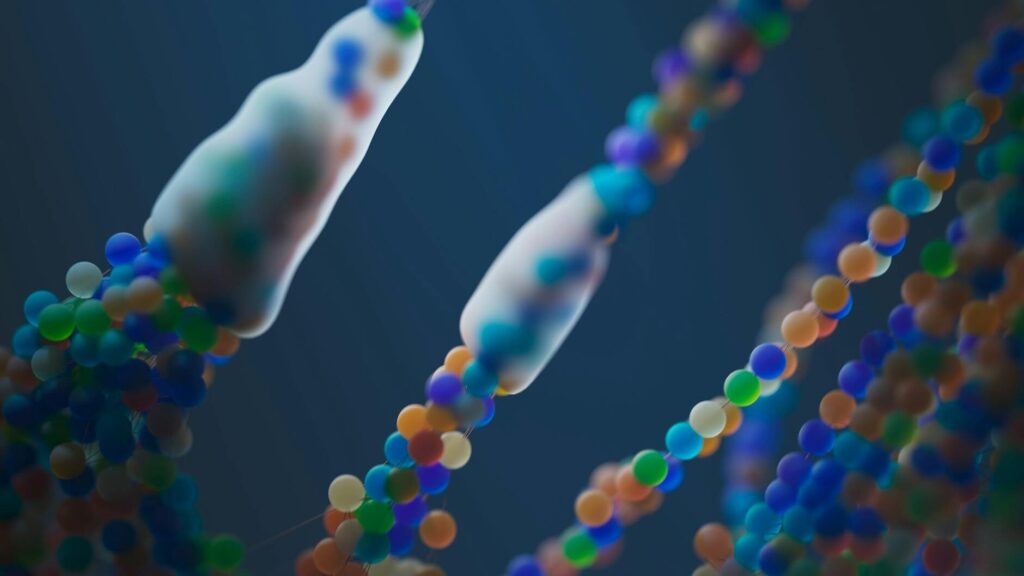
Synthetic biology’s operative core lies in the systematic design of biological parts, devices, and systems (the “Bio‑Brick” paradigm) that can be assembled into functional pathways. Modern platforms integrate three technical pillars:
Engineers who master the DBTL loop acquire a portable skill set—data‑centric design, regulatory navigation, and cross‑functional project leadership—that commands premium compensation and rapid promotion within both corporate and startup ecosystems.
- Precision Gene Editing – CRISPR‑Cas variants now achieve single‑base resolution with off‑target rates below 0.1 % in industrial strains, enabling the insertion of non‑native pathways for compounds such as artemisinin precursors and polyhydroxyalkanoates [1][2].
- Cellular Engineering Platforms – Engineered chassis (e.g., E. coli MG1655‑ΔglnA, Yarrowia lipolytica lipid‑optimized strains) provide predictable metabolic fluxes, reducing batch‑to‑batch variability by 40 % relative to legacy fermentation [2].
- AI‑Driven Design‑Build-Test‑Learn (DBTL) – Machine‑learning models now predict enzyme kinetics and pathway bottlenecks with R² > 0.85, accelerating the design cycle from 12–18 months to under six [2].
You may also like
 AI & Technology
Swim and Bathe Confidently with Temple Adhesive
Deepinder Goyal's insights on the Temple device highlight its innovative adhesive technology, ensuring it remains secure during swimming and showering.
Read More →The economic impact of this mechanistic shift is quantifiable. A 2023 case study at Amyris demonstrated a 28 % reduction in cost of goods for a renewable terpene product after deploying a CRISPR‑based pathway optimization, translating into a $45 million margin improvement over three years [2]. Ginkgo Bioworks’ “foundry” model, which rents out modular bio‑foundry capacity, has generated $250 million in recurring revenue by 2024, evidencing a new institutional asset class that blends capital equipment with intellectual property [1].
Beyond cost, the speed of iteration creates a talent multiplier. Engineers who master the DBTL loop acquire a portable skill set—data‑centric design, regulatory navigation, and cross‑functional project leadership—that commands premium compensation and rapid promotion within both corporate and startup ecosystems. This career capital is increasingly a prerequisite for senior leadership roles in biotech, where boardrooms now expect fluency in both molecular biology and algorithmic optimization.
Systemic Ripples: Institutional Realignment and Economic Mobility
The diffusion of synthetic‑biology platforms triggers systemic ripples across multiple layers of the economy:
Industrial Diversification – Nations that invest in synthetic‑biology research hubs (e.g., Singapore’s Biopolis, Germany’s Bioeconomy Cluster) have recorded GDP lifts of 0.4–0.7 % annually, an effect comparable to the early digital economy surge in the 2000s [1]. The creation of “bio‑foundry districts” reconfigures regional labor markets, generating high‑skill jobs that outpace average wage growth by 3.5 % per annum.
Environmental Externalities – Life‑cycle analyses of microbe‑derived bio‑plastics indicate up to 50 % lower greenhouse‑gas emissions relative to petrochemical equivalents, a structural shift that rebalances climate policy incentives toward bio‑based production pathways [2].
Regulatory Evolution – The FDA’s Emerging Technology Program now treats CRISPR‑engineered microbial products as “novel biologics,” expediting review timelines by 30 % when developers submit pre‑IND data packages aligned with standardized safety matrices [1]. This regulatory acceleration creates a feedback loop: faster market entry fuels capital inflow, which in turn expands institutional capacity for further R&D.
Talent Mobility – The “bio‑foundry” model democratizes access to high‑end manufacturing, allowing small firms to outsource scale‑up. Engineers can therefore pivot between startups and incumbents without geographic relocation, enhancing economic mobility and flattening traditional hierarchies of institutional power.
Historical parallels underscore the systemic nature of this shift. The 1970s petrochemical boom redistributed capital from oil extraction to downstream polymer manufacturing, birthing a new class of chemical engineers whose career trajectories were defined by process optimization. Synthetic biology replicates this pattern, but with a digital overlay that magnifies the speed and scope of capital reallocation.
The 1970s petrochemical boom redistributed capital from oil extraction to downstream polymer manufacturing, birthing a new class of chemical engineers whose career trajectories were defined by process optimization.
Human Capital Impact: Winners, Losers, and the New Leadership Pipeline

The redistribution of career capital follows predictable structural lines:
You may also like
 Government & Policy
GST Council Approves Compliance Reforms for E-commerce
India's GST Council is poised to implement significant reforms aimed at easing compliance burdens for e-commerce sellers, enabling them to thrive in the digital marketplace.
Read More → Winners – Professionals who combine wet‑lab expertise with computational fluency (e.g., “bio‑informatic engineers”) are experiencing a 45 % salary premium over traditional biochemists, according to a 2024 compensation survey by BioSpace. Leadership pipelines now prioritize candidates with cross‑disciplinary project ownership, a trend evident in the recent appointment of a former AI‑research lead as chief scientific officer at Zymergen [2].
Institutional Leaders – Universities that embed synthetic‑biology curricula within engineering schools (MIT’s Integrated Biological Design program, TU Delft’s Bio‑Design Lab) are seeing a 20 % increase in industry‑sponsored research funding, reinforcing their role as talent incubators and policy influencers.
- Losers – Legacy process engineers whose skill sets remain confined to conventional fermentation without digital integration face a 12 % decline in placement rates, highlighting the asymmetry of upskilling opportunities.
From an economic mobility perspective, the synthetic‑biology sector offers a pathway for under‑represented groups to acquire high‑value, future‑proof skills. Programs such as the National Science Foundation’s “Bio‑Foundry Fellowship” have placed 150 early‑career scientists from minority‑served institutions into high‑impact projects, correlating with a 7 % increase in upward wage mobility within five years [1].
Institutionally, the rise of “platform biotech” reshapes power dynamics. Companies that own the DBTL pipeline (e.g., Ginkgo, Zymergen) wield leverage over downstream product developers, effectively becoming the new gatekeepers of biomanufacturing capacity. This concentration of platform ownership creates a structural incentive for traditional pharma and agribusinesses to acquire or partner with synthetic‑biology firms, accelerating consolidation trends observed in the 2010s biotech M&A wave.
Outlook: A Five‑Year Structural Forecast
Looking ahead to 2029, three converging forces will define the sector’s trajectory:
Institutions that proactively embed synthetic‑biology capabilities—through dedicated capital budgets, cross‑functional talent development, and strategic partnerships with platform providers—will secure a decisive leadership advantage.
- Scale‑Up Standardization – International consortia (e.g., the Global Biofoundry Alliance) will codify modular hardware and software interfaces, reducing capital expenditures for new foundries by 35 % and enabling rapid geographic replication of production capacity.
- Policy‑Driven Market Creation – The European Union’s “Bio‑Circular Economy Action Plan” will allocate €12 billion to synthetic‑biology pilots, creating a structural demand pipeline for biodegradable polymers and renewable chemicals.
- Talent Pipeline Maturation – By 2029, at least 30 % of senior R&D leadership in top‑10 biotech firms will have formal training in both CRISPR engineering and AI‑driven DBTL, cementing a new normative credential for executive roles.
Institutions that proactively embed synthetic‑biology capabilities—through dedicated capital budgets, cross‑functional talent development, and strategic partnerships with platform providers—will secure a decisive leadership advantage. Conversely, entities that cling to legacy fermentation without digital integration risk marginalization in a market where speed, precision, and data transparency are becoming institutional prerequisites.
You may also like
 Government & Policy
Ministers Tackle Misuse of New Spending Powers
UK ministers are considering measures to prevent misuse of new spending powers by regional leaders, including a select committee and enhanced reporting rules.
Read More →Key Structural Insights
- Synthetic biology reconfigures production capital into programmable cellular assets, a shift that redefines institutional power and creates a new class of high‑value career capital.
- The convergence of CRISPR precision, AI‑driven DBTL, and standardized bio‑foundry modules generates systemic cost reductions and accelerates market entry, reshaping economic mobility across regions.
- Over the next five years, policy incentives and platform consolidation will embed synthetic biology as the foundational infrastructure of the global bio‑economy, dictating leadership pipelines and institutional hierarchies.