No products in the cart.

The Rise of the Agentic Enterprise: India’s AI Revolution

Discover how AI is transforming Indian enterprises, enhancing productivity, and reshaping talent needs in the evolving tech landscape.



“`html
AI: The Catalyst for India’s Enterprise Evolution
Artificial intelligence has shifted from a lab experiment to a key strategy for Indian companies of all sizes. This change is visible in both startups and established manufacturers, who are reworking core processes to remain competitive globally. While government policies provide a framework, the real change is happening in boardrooms and on shop floors, where AI is transforming value chains, speeding up product cycles, and changing productivity metrics.
For tech-focused companies, the message is clear. A recent NetApp survey found that 70% of Indian firms are changing their tech-hiring strategies due to AI-driven productivity improvements. This shift means companies are looking for talent that can work with intelligent systems, turn algorithm insights into business results, and manage the ethical aspects of automation.
AI is also making strides in sectors not typically associated with software. Bharat Forge, a major supplier in the commercial vehicle sector, saw its stock rise 4% after North American Class 8 truck orders surged 159% year-on-year in February, reaching 47,200 units. This increase reflects economic confidence, but analysts note that Bharat Forge’s investments in AI-driven predictive maintenance and simulation tools have helped it take advantage of this demand, improving margins and reducing downtime.
Rethinking Talent: How Companies are Adapting to AI
The talent landscape is also changing. The NetApp survey shows a clear shift: companies now value “soft” skills—creativity, problem-solving, and critical thinking—more than just technical skills. As AI takes over routine coding and data tasks, human workers need to interpret results, create new use cases, and navigate the complex relationship between technology, regulation, and market needs.
Major IT firms like Infosys and Wipro have announced internal academies focused on AI skills, recognizing that future hiring will prioritize “AI literacy” alongside technical knowledge.
Upskilling is becoming a key strategy. Major IT firms like Infosys and Wipro have announced internal academies focused on AI skills, recognizing that future hiring will prioritize “AI literacy” alongside technical knowledge. Meanwhile, mid-sized companies are trying blended learning models, combining online courses with practical projects that integrate AI tools into daily tasks.
From a recruitment perspective, the change is evident. Job listings that once required “Java” or “C++” now also ask for “experience with machine-learning platforms” or “ability to turn model predictions into actionable business insights.” This reflects a cultural shift: tech teams are evolving into cross-functional groups where data scientists, product managers, and domain experts collaborate on AI initiatives.

The Road Ahead: Challenges and Opportunities in AI Adoption
You may also like
 Industry & Global Trends
Bond Market Rates Challenge Home Buyers, AI Data Centers
Rising bond market rates are reshaping the financial landscape, presenting hurdles for home buyers and AI data centers while creating new investment opportunities for retirees.
Read More →Despite the excitement, Indian companies face several challenges that could slow AI adoption. Data quality is a major issue; outdated systems and inconsistent practices often lead to unreliable inputs. Cybersecurity is another concern, as AI models store valuable insights that can attract cyber threats, necessitating strong governance frameworks that many companies lack.
Regulatory clarity is also needed. While the Indian government has outlined broad AI strategies, detailed guidelines on algorithm accountability, bias reduction, and data flow are still being developed. Companies find themselves navigating a grey area, balancing innovation with potential compliance risks.
Bharat Forge: A Case Study in Pragmatic AI Integration
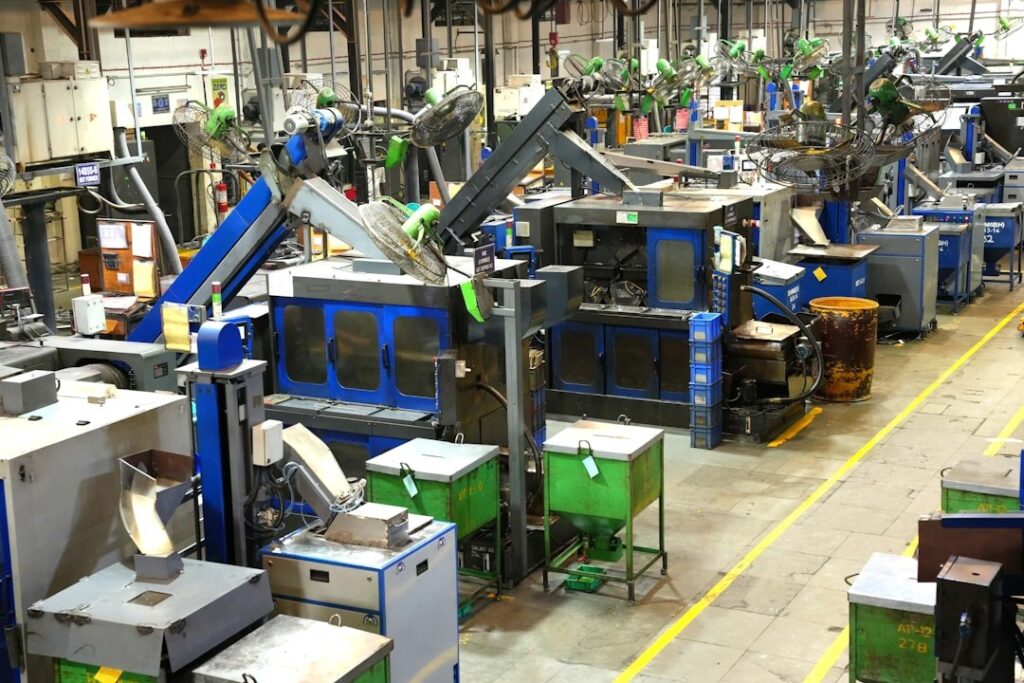
Bharat Forge’s experience shows how traditional manufacturers can overcome challenges and gain benefits. Facing fluctuating global demand, the company implemented AI-driven predictive maintenance in its production lines. Sensors monitor equipment health in real time, allowing algorithms to predict failures and schedule maintenance without disrupting production. Early results show reduced unplanned downtime, helping the company capitalize on increased truck orders.
This speeds up the validation of new components, shortening development cycles and reducing material waste.
Additionally, the design teams have started using AI-assisted simulation tools to automate structural model iterations. This speeds up the validation of new components, shortening development cycles and reducing material waste. While exact cost savings are not disclosed, analysts agree that these capabilities are crucial for manufacturers competing against those using digital twins and generative design.
Bharat Forge’s journey offers a model for other Indian companies: begin with high-impact, low-risk AI applications—like maintenance and quality control—where measurable ROI is achievable, then expand into more strategic areas like product innovation and supply chain optimization.
Strategic Outlook: Harnessing AI for Sustainable Growth
Looking ahead, AI-driven efficiency and changing talent expectations will shape India’s enterprise landscape. Companies that invest in data governance, promote continuous learning, and integrate AI into core processes are likely to gain significant market share. In contrast, those treating AI as an afterthought risk falling behind more agile competitors.
The transition will not be easy. Bridging the gap between outdated systems and modern analytics will require significant investment, careful project management, and a willingness to explore beyond familiar territory. However, the benefits—greater productivity, quicker market response, and better adaptability to global demand—are strong incentives.
You may also like
 AI & Technology
OpenAI’s $400 Gadget Aims to Disrupt Market
OpenAI's upcoming gadget, priced between $300 and $400, aims to disrupt the smart speaker market with innovative features and a focus on user experience, potentially…
Read More →The companies that thrive will view AI not just as a technology but as a catalyst for redefining work, creating value, and shaping the nation’s economic future.
India is at a pivotal point where the goal of becoming a global AI hub meets the realities of implementation. The companies that thrive will view AI not just as a technology but as a catalyst for redefining work, creating value, and shaping the nation’s economic future.
“`