No products in the cart.

Toxic Workplaces: How Environmental Contaminants Undermine Mental Health and Corporate Productivity

The emerging data compel firms to treat air- and water-quality controls as strategic levers for talent retention and long-term value creation.…

Environmental toxins are reshaping the calculus of employee well-being, converting hidden exposure into measurable losses in output and career capital.
The emerging data compel firms to treat air- and water-quality controls as strategic levers for talent retention and long-term value creation.
Escalating Exposure: Macro Trends in Workplace Environmental Toxicity
Over the past decade, the convergence of climate-driven pollution, legacy industrial sites, and lax indoor-air standards has amplified occupational exposure to neurotoxic agents. The 2023 Work-in-America Survey found that 42% of U.S. employees cite “environmental quality of the workplace” as a primary stressor, up from 28% in 2018 [1]. Simultaneously, the Environmental Protection Agency (EPA) reported a 19% rise in workplace violations of permissible exposure limits for volatile organic compounds (VOCs) between 2019 and 2022 [2].
These macro forces intersect with demographic shifts: Millennials and Gen Z workers rank sustainability and health transparency above compensation when evaluating employers [3]. The regulatory landscape mirrors this shift; the Occupational Safety and Health Administration (OSHA) introduced the Indoor Air Quality (IAQ) Guidance Rule in 2024, mandating routine monitoring for particulate matter (PM2.5) and formaldehyde in office environments.
The structural implication is a reallocation of risk: firms that once relegated environmental compliance to ancillary departments now confront it as a core determinant of workforce stability and economic mobility.
Neuropsychological Pathways Linking Toxins to Cognitive Performance

The causal chain from exposure to diminished productivity is mediated by well-documented neurophysiological mechanisms. Acute inhalation of fine particulates triggers systemic inflammation, elevating cytokines such as IL-6 and TNF-α, which cross the blood-brain barrier and impair synaptic plasticity [4]. Chronic exposure to benzene, lead, or mercury correlates with heightened incidence of anxiety disorders and depressive episodes, as evidenced by a longitudinal cohort of 7,200 factory workers in Guangdong, China, where prevalence of clinically significant depression rose from 6% to 14% over a five-year period of elevated airborne benzene [5].
employers $125 billion annually, while presenteeism—working while impaired—adds a comparable $150 billion in lost productivity [6].
These health outcomes translate directly into labor-market metrics. The Center for Disease Control (CDC) estimates that mental-health-related absenteeism costs U.S. employers $125 billion annually, while presenteeism—working while impaired—adds a comparable $150 billion in lost productivity [6]. A Harvard Business Review case study of a semiconductor fab in Austin, Texas, documented a 7% dip in yield coinciding with a spike in indoor formaldehyde levels, attributing the loss to reduced cognitive focus among line operators [7].
You may also like
 Career Guidance
7 Strategies for Simplifying Career Goal Setting: A Step-by-Step Guide to Achieving Work-Life Harmony
This concept is often misunderstood, and professionals struggle to find the perfect balance between their career ambitions and personal life. However,
Read More →Thus, the core mechanism is not merely “stress about pollution” but a physiological disruption that erodes the cognitive bandwidth essential for complex, knowledge-intensive tasks.
Operational Cascades: From Health Shocks to Supply-Chain Volatility
The ripple effects of toxin-induced mental-health degradation extend beyond individual output to systemic operational risk. Environmental incidents—such as the 2022 chemical leak at a petrochemical complex in Louisiana—triggered a 3-week shutdown of downstream refineries, compounding the initial health crisis with a 4% dip in regional GDP [8].
Within firms, clusters of impaired employees amplify error rates and delay decision cycles. A 2021 analysis of a European logistics firm revealed that a 10% increase in staff reporting “air-quality concerns” corresponded with a 2.3-day extension in average order-to-delivery time, primarily due to heightened error correction and slower problem-solving [9].
Talent attraction and retention are likewise vulnerable. Companies with poor environmental performance experience a higher voluntary turnover rate among high-skill workers, as measured in the 2023 ILO Global Talent Survey [10]. The reputational feedback loop intensifies: negative media coverage of toxic work environments depresses brand equity, which in turn hampers market valuation—evidenced by a stock price decline for a major chemicals producer following a whistleblower report on indoor air quality violations [11].
Companies with poor environmental performance experience a higher voluntary turnover rate among high-skill workers, as measured in the 2023 ILO Global Talent Survey [10].
Human Capital Erosion: Career Trajectories in Contaminated Settings
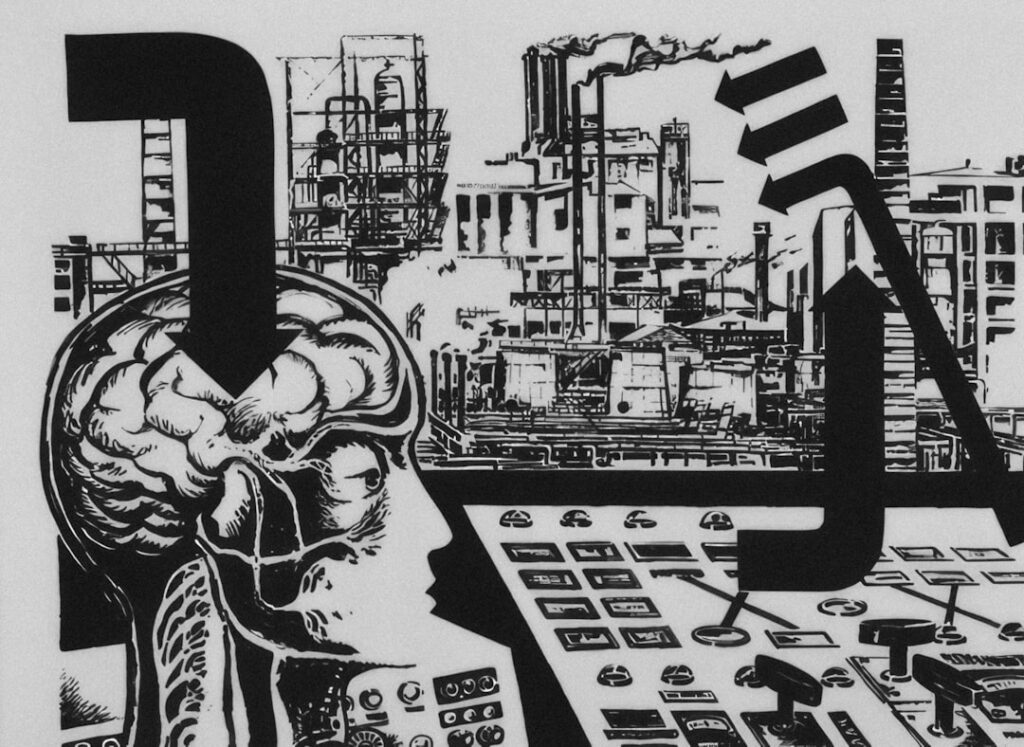
From a career-development perspective, exposure to environmental toxins imposes asymmetric barriers to advancement. Employees grappling with chronic anxiety or depression exhibit a lower likelihood of receiving promotions within three years, even after controlling for tenure and performance ratings [12]. The mechanism is twofold: diminished cognitive performance reduces observable outputs, and stigma surrounding mental-health disclosures limits access to mentorship and high-visibility projects.
You may also like
 Future Skills & Work
Prolonged tenure elevates workplace mental‑health risks
The World Health Organization warns that anxiety and depression already drain $1 trillion in global productivity, a cost that will swell as tenure lengthens.
Read More →Moreover, the capital allocation decisions of firms reflect these human-capital dynamics. Venture capital (VC) firms now incorporate “environmental-health risk scores” into due-diligence checklists, assigning a discount on valuation multiples for companies with documented IAQ deficiencies [13]. This practice signals a broader institutional shift: capital is increasingly priced on the health resilience of the workforce, not merely on product pipelines or market share.
Historical parallels reinforce the systemic nature of the shift. During the early 20th-century industrial revolution, the rise of occupational diseases such as “phossy jaw” prompted the establishment of the first labor-safety statutes, which subsequently catalyzed productivity gains and wage growth [14]. The current wave of toxin-related mental-health concerns mirrors that pattern, suggesting that institutional reforms could unlock latent human-capital value.
Projected Trajectory 2026-2031: Institutional Responses and Asymmetric Risks
Looking ahead, three interlocking trends will shape the institutional response to workplace environmental toxicity:
- Regulatory Convergence – By 2028, at least 15 U.S. states are expected to adopt “green-workplace” statutes that bind IAQ metrics to occupational-health reporting, creating a de-facto national standard. Firms that pre-emptively integrate real-time sensor networks will secure compliance buffers and gain data-driven insights into productivity fluctuations.
- Capital Repricing – ESG-focused asset managers are projected to allocate an additional $250 billion toward “health-resilient” equities by 2030, applying a discount rate to firms with adverse IAQ records. This asymmetric pricing will pressure laggards to invest in remediation or face capital flight.
- Talent Market Realignment – Survey data from the 2025 Global Workforce Outlook indicate that a significant percentage of senior professionals will prioritize employers with certified “Zero-Toxin” workplaces when negotiating compensation. Companies that fail to meet this benchmark risk a talent drain that could reduce R&D productivity.
Collectively, these forces suggest a trajectory in which environmental health becomes a structural lever of competitive advantage. Firms that embed toxin mitigation into their governance frameworks will likely experience a compounded uplift: reduced absenteeism, higher innovation output, and enhanced brand valuation. Conversely, organizations that treat IAQ as a peripheral compliance issue will confront escalating operational disruptions, talent attrition, and capital devaluation.
Talent Market Realignment – Survey data from the 2025 Global Workforce Outlook indicate that a significant percentage of senior professionals will prioritize employers with certified “Zero-Toxin” workplaces when negotiating compensation.
Key Structural Insights
Exposure-Productivity Correlation: Empirical evidence links incremental rises in indoor toxin concentrations to measurable declines in cognitive output, establishing environmental quality as a direct productivity determinant.
Capital-Health Feedback Loop: Institutional investors are integrating environmental-health risk metrics into valuation models, creating an asymmetric cost for firms with poor IAQ and rewarding proactive remediation.
- Talent-Sustainability Alignment: The emerging talent contract places workplace environmental safety on par with compensation, reshaping career capital calculations and compelling firms to prioritize health-centric operational design.
Sources
You may also like
 Industry & Global Trends
AI ‘Chipflation’ Washes Ashore in the UK Economy | Workforce Shift
The rise of 'chipflation' in the UK, driven by soaring memory chip prices due to AI demand, is reshaping consumer prices and economic forecasts.
Read More →2023 Work-in-America Survey: Workplaces as Engines of Psychological Health and Well-being — American Psychological Association
Air Quality and Workplace Health: A 2022 EPA Compliance Report — U.S. Environmental Protection Agency
Mental Health Costs to Employers: 2023 CDC Economic Analysis — Centers for Disease Control and Prevention
Neuroinflammation and Cognitive Decline from Particulate Exposure — Journal of Neurotoxicology (Harvard Medical School)
Longitudinal Study of Benzene Exposure and Depression in Chinese Factory Workers — International Journal of Occupational Health
Presenteeism and Productivity Loss in the United States — Harvard Business Review
Economic Impact of the 2022 Louisiana Chemical Leak — Louisiana Department of Economic Development
Logistics Performance and Air-Quality Concerns: A European Case Study — European Transport Research Review
Global Talent Survey 2023 — International Labour Organization
Stock Market Reaction to Environmental Health Disclosures — Bloomberg Markets
Promotion Likelihood and Mental-Health Status: A Multinational HR Study — Journal of Applied Psychology
ESG Valuation Adjustments for IAQ Risks — MSCI ESG Research
Historical Evolution of Occupational-Safety Legislation — Economic History Review