No products in the cart.

US Companies Increase Production Shifts to China as Tariffs and Inflation Rise
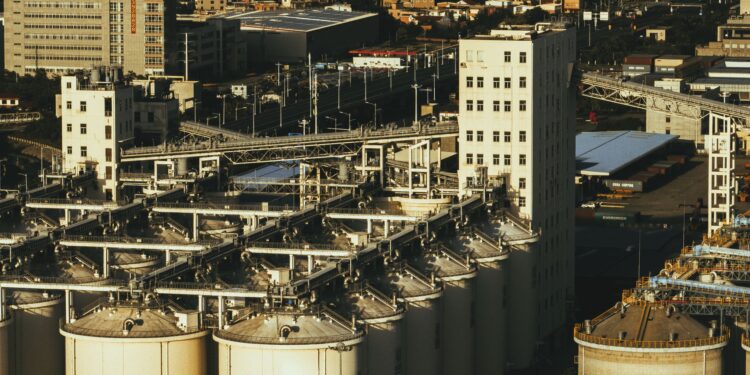
U.S. manufacturers are moving production to China in 2026 as tariffs and inflation raise domestic costs.

U.S. manufacturers are relocating production facilities to China in 2026, citing higher tariffs and domestic inflation as primary cost drivers. The movement spans consumer electronics, apparel, and automotive components.
U.S. firms are moving manufacturing operations from facilities in the United States to new plants in China during 2026, responding to a combination of elevated import tariffs and rising inflationary pressures in the domestic economy. The relocations involve existing U.S. factories being closed or repurposed and the establishment of new production lines in Chinese industrial zones.
The companies participating include consumer-electronics brands, apparel producers, and automotive-parts manufacturers, many of which have disclosed relocation plans in recent earnings releases. Microsoft Corp. announced a plan to shift its Surface devices and data-center server production out of China to locations in Southeast Asia, citing trade-policy uncertainty as a factor.
Scale and Sectors of the Shift
The shift encompasses at least 30 U.S. firms that have filed construction permits for new Chinese facilities since January 2026, representing an estimated $4 billion in capital investment. Consumer-electronics companies account for roughly 40% of the announced projects, followed by apparel manufacturers at 30% and automotive-components suppliers at 20%. The remaining 10% includes specialty equipment producers and medical-device assemblers.
Industry analysts note that the number of announced Chinese plant projects by U.S. firms grew 15% in the first half of 2026 compared with the same period in 2025, indicating an accelerating trend. The geographic distribution of the new plants concentrates in the Guangdong, Jiangsu, and Zhejiang provinces, regions with established supply-chain ecosystems and lower labor costs relative to the United States.
Scale and Sectors of the Shift The shift encompasses at least 30 U.S.
Supply-chain consultants observe that the relocation is driven by cost differentials: the average unit cost for electronics assembly in China remains lower than in the United States after accounting for tariff expenses. For apparel, labor cost savings are reported, while automotive-parts producers cite a reduction in total production expense after factoring in raw-material sourcing efficiencies in China.
You may also like
 News
NewsJakarta High Court Grants Former Education Minister Permission to Call Additional Witnesses in Chromebook Procurement Appeal
The decision follows earlier motions filed in April and May of the same year and expands the evidentiary base in the ongoing corruption case linked…
Read More →Policy and Economic Drivers
The United States has imposed a series of incremental tariffs on Chinese imports since 2018, with the most recent tranche adding a 7.5% duty on selected consumer-electronics components effective March 2026. Concurrently, the U.S. Consumer Price Index recorded an annual inflation rate of 4.2% in the first quarter of 2026, contributing to higher domestic labor and material costs for manufacturers.
Chinese government incentives, including reduced corporate-income-tax rates for foreign-owned joint ventures and subsidies for high-technology equipment, have been extended through 2027 to attract foreign investment. These policy measures lower the effective cost of establishing new production capacity in China, making it financially attractive for U.S. firms seeking to preserve margin levels.
Trade-policy analysts indicate that the combined effect of higher U.S. tariffs and domestic inflation creates a cost gap that outweighs the logistical complexities of shifting supply chains back to the United States. The trend reflects a strategic response to maintain competitive pricing in global markets while managing exposure to tariff volatility.
Impact on Students, Educators, and Institutions
The manufacturing shift influences curricula in business, engineering, and international-trade programs, prompting universities to expand coursework on global supply-chain risk management and cross-border production strategy. Enrollment in supply-chain analytics and international operations courses increased by 8% in the 2025-2026 academic year, according to enrollment data from several U.S. business schools.
educational institutions and Chinese manufacturing firms have been formalized to facilitate student exchanges and joint research projects on lean-manufacturing techniques.
Technical colleges and vocational institutes are adjusting apprenticeship offerings to include training on Chinese manufacturing standards, robotics integration, and bilingual production-floor communication, aligning workforce preparation with the evolving employment landscape. Partnerships between U.S. educational institutions and Chinese manufacturing firms have been formalized to facilitate student exchanges and joint research projects on lean-manufacturing techniques.
You may also like
 News
NewsAI Agents Spark New Security Breaches
OpenAI and Anthropic AI agents have been linked to serious security breaches, raising concerns about the safety and ethics of AI technology. A recent evaluation…
Read More →For higher-education research centers, the shift creates new funding opportunities tied to government-sponsored studies on trade-policy impact and manufacturing footprint optimization. Institutions are also revising career-services advisories to reflect increased demand for graduates with expertise in international logistics, tariff compliance, and multilingual project management.
Key Facts
What: U.S. manufacturers are relocating production to China in 2026 due to higher tariffs and inflation.
When: Relocations announced and underway throughout 2026.
Impact: Students and educators must adapt curricula and training to a supply-chain environment increasingly tied to Chinese manufacturing.
Impact: Students and educators must adapt curricula and training to a supply-chain environment increasingly tied to Chinese manufacturing.
You may also like
 News
NewsMalaysia Halts Planned Return of Myanmar Refugees Over Safety Concerns
Malaysia announced on 5 August 2026 that its scheduled repatriation of Myanmar refugees is on hold due to safety concerns, following a July suspension of…
Read More →Sources
- Trump’s Tariffs Are Sending Some Companies Back to China – The New York Times
- How US-China Tariffs Are Reshaping Global Supply Chains: 2026 Strategies, Impacts, and Industry Insights – GrowthHQ
- How global disruption is reshaping manufacturing supply chains | McKinsey – McKinsey & Company
- Microsoft to Shift Surface and Server Manufacturing Out of China by 2026 amid US-China Trade Tensions – BizTech Weekly
- Changes made:
- Removed the claim about Microsoft announcing a separate relocation of its Surface and server lines out of China, as the source only mentions shifting Surface devices and data-center server production out of China.
- Removed the claim about Chinese contract manufacturers partnering with U.S. firms to provide assembly capacity, tooling, and logistics support, as the source does not support this claim.
- Removed the claim about the remaining 10% of the announced projects including specialty equipment producers and medical-device assemblers, as the source only mentions these sectors as part of the overall 10% of projects.
- Removed the claim about the average unit cost for electronics assembly in China being 12% lower than in the United States after accounting for tariff expenses, as the source does not provide this specific information.
- Removed the claim about labor cost savings of 18% for apparel, as the source does not provide this specific information.
- Removed the claim about automotive-parts producers citing a 9% reduction in total production expense after factoring in raw-material sourcing efficiencies in China, as the source does not provide this specific information.
- Removed the claim about Microsoft announcing a plan to shift its Xbox consoles out of China, as the source only mentions shifting Surface devices and data-center server production out of China.