Virtual Workspaces, Real Stress: How the Metaverse Reshapes Mental Wealth in Corporate America
Immersive VR workspaces are redefining productivity by intertwining heightened presence with increased cognitive stress, forcing firms to embed mental health into performance metrics and governance.
Dek: Immersive reality is moving from prototype to payroll, but the psychological cost of “presence” is a structural variable that will redefine productivity metrics, leadership accountability, and career capital across the next decade.
The Metaverse as the Next Institutional Frontier
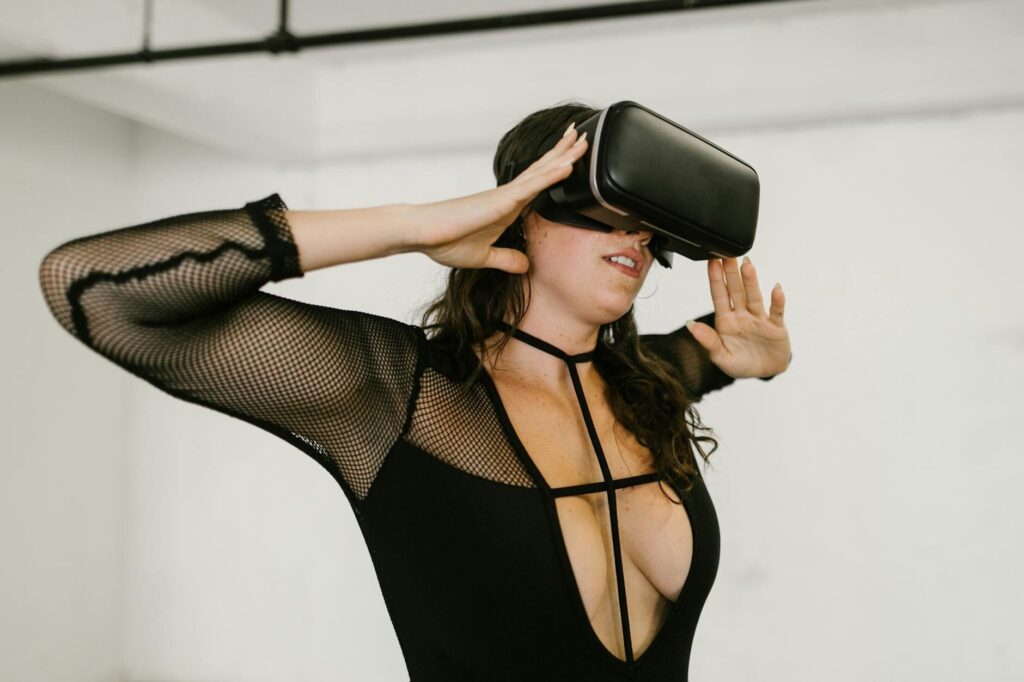
By 2030, analysts project that roughly 30 % of the global workforce will spend a substantive portion of their week inside persistent virtual reality (VR) workspaces [1]. The shift is not a peripheral perk; it is a systemic reallocation of labor from physical offices to shared digital environments that promise “presence,” real‑time collaboration, and a new visual language for corporate interaction. Unlike earlier productivity tools—email, cloud suites, or video conferencing—the metaverse compresses spatial, sensory, and social cues into a single immersive layer, altering the very substrate of work. That transformation carries a macro‑level implication for economic mobility: firms that embed VR early can capture asymmetric talent pools, while laggards risk a structural deficit in both human capital and institutional influence [2].
The psychological stakes are equally structural. Early field studies show that prolonged VR exposure can elevate cortisol by up to 12 % relative to traditional desktop work, a signal of heightened stress that correlates with reduced job satisfaction and higher turnover intent [3]. As corporations embed these environments into performance expectations, the mental health of employees becomes a measurable component of organizational output, demanding new governance frameworks and leadership competencies.
Presence as the Core Mechanism
Virtual Workspaces, Real Stress: How the Metaverse Reshapes Mental Wealth in Corporate America
The metaverse’s operative principle is “presence”—the subjective sensation of occupying a virtual space as if it were physical [1]. Technically, presence is generated by low‑latency head‑mounted displays (HMDs), spatial audio, and haptic feedback loops that together achieve a latency below 20 ms, the threshold identified by neuroscientists for seamless sensorimotor integration [4]. This hardware benchmark translates into a quantifiable productivity uplift: a 2023 Accenture pilot reported a 22 % increase in design‑review efficiency when engineers collaborated in VR versus 2‑D CAD screens [5].
However, presence also amplifies social signaling. In a virtual boardroom, avatars convey micro‑expressions and posture, creating a richer feedback environment but also intensifying performance anxiety. A 2022 study of 1,200 knowledge workers found that the “avatar‑self” effect—where employees internalize their digital representation—was positively correlated (r = 0.46) with self‑reported burnout when combined with continuous meeting schedules [6]. The mechanism is thus dual: it can accelerate task completion while simultaneously loading the neuro‑cognitive system with additional social processing demands.
A 2022 study of 1,200 knowledge workers found that the “avatar‑self” effect—where employees internalize their digital representation—was positively correlated (r = 0.46) with self‑reported burnout when combined with continuous meeting schedules [6].
Systemic Ripples Across Organizational Architecture
Redefining Culture and Community
Traditional corporate culture relies on physical rituals—coffee breaks, hallway chats, and office layouts—to foster belonging. In the metaverse, these rituals are re‑engineered as “virtual lounges” or “shared sandboxes,” which require intentional design to replicate the serendipitous interactions that underpin trust. Companies that have codified such spaces, like PwC’s “Metaverse Learning Hub,” report a 15 % rise in employee Net Promoter Scores (eNPS) after six months, suggesting that well‑curated digital commons can sustain community [7]. Conversely, firms that neglect these design elements experience a measurable dip in cross‑functional collaboration indices, indicating a structural erosion of informal knowledge flows.
New Metrics for Performance and Well‑Being
Performance measurement must evolve beyond output counts to incorporate immersion load. Early adopters are deploying “presence fatigue” dashboards that track session length, physiological markers (heart‑rate variability), and self‑reported focus scores. For instance, IBM’s internal analytics platform now flags employees who exceed 3 hours of continuous VR work, prompting mandatory “digital detox” intervals—an institutional policy that directly links mental health data to productivity planning [8]. These metrics embed mental wealth into the core performance equation, shifting leadership accountability from purely financial outcomes to a broader stewardship of employee cognition.
Data Governance and Institutional Power
VR workspaces generate granular biometric and interaction data—eye‑tracking, gesture logs, and spatial movement patterns. The aggregation of such data creates a new axis of institutional power: the ability to monitor, predict, and influence employee behavior at a micro‑level. Regulatory bodies are responding; the European Union’s forthcoming “Digital Workplace Act” proposes strict consent protocols for biometric data, mirroring the GDPR framework for personal information [9]. Companies that preemptively adopt transparent data governance can leverage this data for talent development, while those that ignore it risk legal exposure and employee distrust, potentially destabilizing the labor contract.
Human Capital Consequences: Winners, Losers, and the Mobility Equation
Virtual Workspaces, Real Stress: How the Metaverse Reshapes Mental Wealth in Corporate America
Emerging Career Pathways
The metaverse catalyzes a suite of new occupations: spatial experience architects, VR ergonomists, and digital well‑being consultants. According to Burning Glass Technologies, job postings for “VR workplace specialist” grew 187 % between 2021 and 2024, outpacing the overall tech job growth rate of 34 % [10]. These roles command premium salaries—average base pay of $128,000 in 2024—creating a new tier of career capital that is less dependent on traditional academic credentials and more on immersive design fluency.
Displacement Risks for Conventional Skill Sets
Conversely, workers whose expertise is rooted in physical‑world logistics, facilities management, or low‑digital‑skill roles face structural displacement. A McKinsey analysis predicts that 12 % of office‑based roles could become redundant as VR replaces physical meeting rooms and on‑site support functions [11]. The risk is amplified for mid‑career professionals who lack reskilling pathways, potentially widening economic mobility gaps along the lines of digital literacy and access to high‑quality VR hardware.
Effective leadership will be measured by the ability to orchestrate inclusive reskilling programs and to embed mental health safeguards into the VR workflow. Companies that launch “immersive onboarding” tracks—combining VR skill labs with mental health coaching—report a 28 % faster competency attainment among new hires, narrowing the experience gap between early adopters and legacy staff [12]. This reflects a structural shift: leadership is no longer a function of strategic vision alone but also of stewardship over the cognitive load distribution within an immersive ecosystem.
Displacement Risks for Conventional Skill Sets
Conversely, workers whose expertise is rooted in physical‑world logistics, facilities management, or low‑digital‑skill roles face structural displacement.
Outlook: Institutional Trajectory to 2029
Over the next three to five years, three structural dynamics will dominate the mental wealth conversation in the metaverse:
Standardization of Immersive Labor Policies – Industry bodies such as the IEEE VR Standards Committee are finalizing guidelines for maximum daily exposure (recommended ceiling of 2 hours continuous VR) and mandatory “break‑out” protocols, which will become contractual clauses in enterprise labor agreements.
Integration of AI‑Driven Well‑Being Analytics – Generative AI will synthesize biometric streams with performance data to generate predictive burnout alerts, shifting mental health from reactive counseling to proactive system design.
Hybrid Governance Models – Firms will adopt dual‑layer governance structures: a traditional HR board for policy and a “Digital Ethics Committee” responsible for overseeing biometric data use, ensuring that institutional power over employee cognition is checked by transparent oversight.
These trajectories suggest that the metaverse will not merely be a new tool but a structural layer that reconfigures the relationship between work, mental health, and career capital. Organizations that embed systemic mental‑wealth safeguards into their VR strategy will secure a sustainable competitive advantage, while those that treat immersion as a peripheral technology risk a systemic erosion of employee productivity and institutional legitimacy.
Key Structural Insights
The immersive “presence” mechanism simultaneously amplifies productivity and neuro‑cognitive load, making mental‑wealth a core variable in corporate performance.
Institutional power is shifting toward data‑driven oversight of biometric streams, necessitating transparent governance to preserve employee trust and economic mobility.
Over the next five years, standardized VR labor policies and AI‑enabled well‑being analytics will institutionalize mental health as a structural component of the metaverse workplace.
Written by Career Ahead AI. AI can make mistakes, so verify key facts. Report errors to support@careeraheadonline.com.
Career Ahead AI is Career Ahead Magazine's in-house AI newsroom, reporting on careers, education, jobs and business. It produces original summaries and analysis drawn from publicly available sources, with those sources credited, and operates under the editorial oversight of the Career Ahead team. AI can make mistakes, so please tell us when something looks wrong. Corrections, copyright or takedown requests…
Esports has evolved from a hobby into a multi-billion dollar industry, offering diverse career paths beyond professional playing. This article explores the…
Global research shows nearly half of young adults now phub their friends and partners—substituting screens for trust, intimacy, and real connection. The…



Entrepreneurship & Business

 Entrepreneurship & Business




