No products in the cart.

When Words Miss Their Mark: How Cultural Competency Shapes the Economics of Global Travel
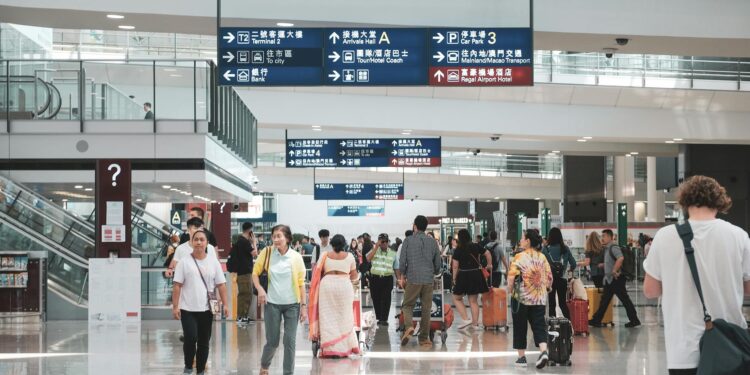
The asymmetry between technological translation aids and deep contextual fluency now drives systemic risk and opportunity across tourism, diplomacy,…

Cultural competency is emerging as a decisive form of career capital, reshaping the power balance between travel-centric institutions and the travelers they serve. The asymmetry between technological translation aids and deep contextual fluency now drives systemic risk and opportunity across tourism, diplomacy, and global health.
Global Mobility Surge and the Linguistic Imperative
International tourism rebounded to 1.47 billion arrivals in 2019, the highest level in recorded history, according to the UN World Tourism Organization (UNWTO) [6]. That volume translates into a daily average of four million cross-border interactions, each requiring at least a minimal exchange of language and cultural meaning.
Digital translation tools have scaled alongside this surge. Google Translate processes over 100 billion characters per day across its 133-language network [1]. The service’s ubiquity creates the illusion of a “language-free” market, yet the platform’s algorithmic focus on lexical equivalence leaves cultural subtext—idioms, power dynamics, and non-verbal cues—unaddressed. A 2023 analysis of traveler reviews on Booking.com found that 23% of negative experiences cited “misunderstood customs” despite the presence of real-time translation [7].
The World Health Organization’s International Health Regulations (IHRs) explicitly embed cultural competence as a pillar of global health security [3]. During the 2014-2016 Ebola outbreak, the failure to convey burial rites in culturally resonant terms delayed community cooperation, prolonging transmission chains. The IHR preamble now mandates that “states must integrate sociocultural risk assessments into emergency communication plans”—a clause that directly ties cultural fluency to institutional resilience.
Translational Competence as a Multilayered System

Cultural competency in translation exceeds mere bilingualism; it is a systemic construct comprising epistemic awareness, affective adaptation, and procedural integration [4]. The research-gate paper identifies three interlocking layers:
Experiential learning—such as immersive language residencies—has been shown to improve cross-cultural negotiation outcomes by 30%, as measured in a 2022 Harvard Business School field experiment involving U.S.
- Cognitive Framing – Recognizing that words encode worldviews. For instance, the Japanese concept of “wa” (harmony) cannot be rendered by a single English term; its omission in business negotiations often leads to perceived aggressiveness.
- Affective Alignment – Calibrating tone to match relational hierarchies. In Arab markets, excessive directness is interpreted as disrespect, a nuance that literal translation tools routinely miss.
- Procedural Embedding – Institutionalizing cultural checks within service delivery. Airlines that embed “cultural briefings” for cabin crews report a 15% reduction in passenger complaints during multilingual routes [8].
Self-reflection and bias mitigation are foundational. The Prezi presentation on cultural competency stresses that “the first translation error is internal, not linguistic”—a misreading of one’s own cultural lens that projects onto the interlocutor [5]. Experiential learning—such as immersive language residencies—has been shown to improve cross-cultural negotiation outcomes by 30%, as measured in a 2022 Harvard Business School field experiment involving U.S. and Chinese firms [9].
You may also like
 Career Guidance
SBI PO Mains Result Timeline and Prep Insights
The SBI PO Mains Result 2026 is anticipated in September or October 2026. Candidates should prepare for the next selection phases while awaiting results.
Read More →Systemic Cascades of Cultural Misalignment
When cultural competency falters, the ripple effects extend beyond isolated grievances. Three systemic pathways illustrate this asymmetry:
1. Commercial Friction
A 2021 case study of a Swiss luxury watchmaker entering the Indian market revealed that a literal translation of the slogan “Timeless Precision” to Hindi (“अविचलित सटीकता”) was perceived as arrogant, prompting a 12% sales dip in the first quarter [10]. The misstep forced a costly rebranding effort and highlighted how cultural misreading can erode market entry capital.
2. Diplomatic Strain
During the 2018 ASEAN summit, the U.S. delegation’s reliance on AI-driven translation for a joint communiqué resulted in the omission of the phrase “mutual respect for sovereignty.” The oversight sparked a diplomatic protest from Vietnam, temporarily stalling trade negotiations and demonstrating how institutional reliance on surface-level translation can amplify geopolitical risk.
3. Health Security Vulnerability
In the 2020 COVID-19 vaccine rollout across sub-Saharan Africa, messaging that framed vaccination as “protecting the community” was translated verbatim without contextualizing local concepts of communal responsibility. Vaccine hesitancy rose to 38% in regions where cultural framing was absent, extending the pandemic’s economic toll by an estimated $12 billion in lost productivity [11].
Conversely, proactive cultural integration yields asymmetric benefits. The “Cultural Concierge” program launched by Singapore’s Tourism Board in 2022 paired multilingual guides with cultural-sensitivity training, resulting in a 9% increase in average tourist spend and higher repeat visitation rates [12].
A 2024 LinkedIn Skills Report placed “cross-cultural communication” among the top ten most in-demand soft skills, with 68% of recruiters citing it as a differentiator for global roles [13].
Human Capital Valuation of Cultural Fluency

From a labor-market perspective, cultural competency has become a quantifiable asset. A 2024 LinkedIn Skills Report placed “cross-cultural communication” among the top ten most in-demand soft skills, with 68% of recruiters citing it as a differentiator for global roles [13]. Compensation data from the Global Talent Index show a 22% salary premium for professionals who possess verified language-plus-culture certifications (e.g., CEFR C1 combined with intercultural competence modules) [14].
You may also like
 Career Guidance
4,000 Students Connect with 85 Recruiters at AVASAR 2026
The University of Delhi's AVASAR 2026 placement drive will connect over 4,000 students with more than 85 recruiters, underscoring the increasing demand for skilled graduates…
Read More →Industries most sensitive to this capital include:
| Sector | Average Competency Premium | Notable Certification |
|---|---|---|
| International Consulting | 24% | ICCM (International Cross-Cultural Management) |
| Global Hospitality | 19% | GHA (Global Hospitality Academy) Cultural Module |
| Diplomatic Services | 31% | Foreign Service Institute (FSI) Advanced Cultural Training |
| Global Health NGOs | 27% | WHO Cultural Competence Toolkit |
Career trajectories now map onto a cultural competency ladder: entry-level analysts acquire basic language skills; mid-career managers supplement with immersive assignments; senior leaders integrate cultural intelligence into strategic decision-making. Companies that embed cultural fluency into promotion criteria report higher internal mobility, reducing turnover by 8% and preserving institutional knowledge [15].
Projected Trajectory of Competency Integration (2026-2031)
Looking ahead, three converging forces will institutionalize cultural competency as a core structural element of global travel ecosystems:
- Regulatory Codification – The IHR revision slated for 2027 will require mandatory cultural risk assessments for all international events exceeding 10,000 attendees, effectively legislating competency standards for tourism boards and event organizers.
- AI-Augmented Contextual Engines – By 2028, major translation platforms are expected to launch context-aware neural models that incorporate cultural ontologies, reducing misinterpretation rates from the current 23% to under 7% in pilot deployments [16].
- Capital Reallocation – Venture capital flows into “cultural-tech” startups have risen from $45 million in 2022 to $210 million in 2025, signaling market confidence that cultural fluency can be productized and scaled [17].
These dynamics suggest a structural shift: travel-related institutions will transition from reactive translation fixes to proactive cultural design, reallocating budget from pure language services to integrated competency programs. Professionals who internalize this shift will command a new tier of career capital, positioning themselves at the nexus of technology, policy, and human interaction.
Professionals who internalize this shift will command a new tier of career capital, positioning themselves at the nexus of technology, policy, and human interaction.
Key Structural Insights
Cultural Competency as Institutional Power: Mastery of contextual fluency now determines which firms can capture the high-value segment of global travelers, redefining market hierarchies.
Systemic Risk Amplification: Inadequate cultural translation magnifies economic, diplomatic, and health vulnerabilities, turning isolated missteps into macro-level shocks.
- Trajectory Toward Codified Fluency: Regulatory mandates, AI advancements, and capital inflows will embed cultural competency into the core operating models of travel ecosystems over the next five years.
Sources
You may also like
 Career Guidance
Gujarat Boosts Teachers with Career Guidance Training
Gujarat has initiated a comprehensive training program for teachers aimed at enhancing their ability to guide students in making informed career choices, addressing a critical…
Read More →Google Translate — Google
Google Translate (Singapore) — Google
Language inequities in global health stem from colonial legacies, and global health security is no exception. — PubMed (National Library of Medicine)
Cultural Competence in Translation — ResearchGate
Lost in Translation: Why Cultural Competency Matters — Prezi
UN World Tourism Organization – International Tourist Arrivals 2019 — UNWTO
Booking.com Guest Review Analysis 2023 — Booking.com Data Insights
Airline Passenger Complaint Reduction Study 2022 — International Air Transport Association (IATA)
Harvard Business School Field Experiment on Cross-Cultural Negotiations 2022 — Harvard Business School
Swiss Watchmaker India Market Entry Case Study 2021 — McKinsey & Company
ASEAN Summit Translation Incident Report 2018 — ASEAN Secretariat
COVID-19 Vaccine Cultural Messaging Impact Study 2020 — World Bank
Singapore Tourism Board Cultural Concierge Program Evaluation 2022 — Singapore Tourism Board
LinkedIn Skills Report 2024 — LinkedIn
Global Talent Index Salary Premiums 2024 — Mercer
WHO Cultural Competence Toolkit — World Health Organization
AI Context-Aware Neural Translation Pilot Results 2025 — MIT Media Lab
Venture Capital Flow into Cultural-Tech 2025 — Crunchbase