AI tools boost individual output but simultaneously trigger a significant dip in intrinsic motivation and a surge in boredom, warning of a looming homogenization trap.
A study co-authored by Wharton professors Gideon Nave and Christian Terwiesch found that generative AI may boost individual performance, but it can also limit how teams think. New research suggests that while AI improves the quality of individual ideas, it also leads groups to generate fewer diverse ideas.
Most readers will glance at that figure and conclude that the problem is merely a morale hiccup—something HR can patch with perks or a one‑off training session—without appreciating that motivation is the engine of divergent thinking, and its attenuation reshapes the very architecture of idea generation.
What the Data Reveals About Team Innovation
When a team’s internal drive wanes, the collective imagination contracts; the same pattern emerges in the data showing a rise in boredom after AI adoption. Those two trends together sketch a feedback loop: as motivation erodes, curiosity dulls, and the appetite for risk‑laden experimentation shrinks, leading to a narrower pool of concepts. In practice, this manifests as a “one‑size‑fits‑all” aesthetic, where prompts fed to generative models converge on the most statistically likely outputs, and human contributors defer to the algorithm’s comfort zone rather than venture into uncharted territory.
Our view is that the algorithmic scaffold amplifies efficiency while muting the serendipitous cross‑pollination that fuels breakthrough innovation. The homogenization effect is not a peripheral side‑effect; it is a structural shift that redefines how teams iterate, evaluate, and ultimately select concepts. When every member leans on the same language model, the variance that once sprang from disparate experiences, cultural lenses, and personal quirks is replaced by a statistically optimized median.
A worker who feels less intrinsically motivated may still produce technically flawless drafts, yet the subtle “spark” that distinguishes a visionary concept from a competent one often lies in the willingness to flounder, fail, and recombine.
Scott Bessent emphasizes the need for the AI industry to acknowledge its risks and pursue solutions, highlighting the importance of accountability and ethical considerations in…
What the Data Does Not Tell Us About Individual Creativity
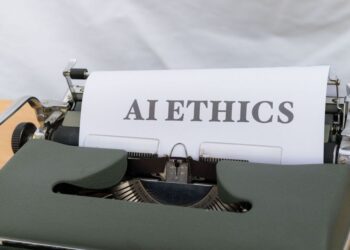
Why AI‑assisted creativity may erode innovation for creative teams Photo: pexels
Numbers alone cannot capture the nuanced ways in which AI reshapes personal creative agency. A worker who feels less intrinsically motivated may still produce technically flawless drafts, yet the subtle “spark” that distinguishes a visionary concept from a competent one often lies in the willingness to flounder, fail, and recombine. Ahmed-Kristensen warns that “while AI amplifies human creativity, if it is used to replace thinking, it risks diminishing cognitive abilities.” This insight points to a deeper erosion: the atrophy of mental heuristics that individuals cultivate through iterative trial‑and‑error.
Our own analysis suggests that the apparent boost in individual performance masks a longer‑term depreciation of creative muscles. When AI supplies the first line, the second, and even the third, the human mind is relieved of the cognitive load that ordinarily forces it to explore alternative pathways. Over time, the internal repository of analogical reasoning thins, and the capacity to generate truly novel metaphors—those that connect distant domains—weakens. The data set does not record this gradual loss because it is not a discrete event; it is a diffusion process that only becomes evident when the collective output starts to echo the same phrases, the same narrative arcs, and the same visual motifs.
To make sense of this invisible drift, we propose the Creative Dependency Index (CDI), a diagnostic framework that scores teams on three dimensions: (1) frequency of AI‑initiated idea seeds, (2) variance in subsequent human‑only revisions, and (3) self‑reported intrinsic motivation levels. A high CDI signals a reliance pattern that, if left unchecked, predicts a plateau in idea originality. By tracking CDI, leaders can intervene before the homogenization becomes entrenched.
How Leaders Can Guard Against Homogenization
First, embed “human‑only sprint” intervals into project timelines; allocate dedicated blocks where team members must generate concepts without AI assistance, then reconvene to compare the breadth of those ideas with AI‑augmented outputs. This practice re‑energizes intrinsic motivation, as the act of solitary ideation restores a sense of ownership and personal challenge.
Second, diversify the AI models in use. Relying on a single platform funnels everyone through the same statistical lens; rotating between models with different training corpora or even open‑source alternatives introduces varied stylistic biases, nudging the team toward a richer idea space.
David Robinson's resignation from OpenAI raises critical concerns about AI safety protocols and ethical responsibilities, reflecting a broader trend among AI safety professionals advocating for…
Third, cultivate a culture that celebrates failure as a learning milestone. When a prototype is deliberately “broken” to test its limits, the team experiences the cognitive dissonance that fuels curiosity, counteracting the boredom spike that AI‑smoothened workflows often generate.
A high CDI signals a reliance pattern that, if left unchecked, predicts a plateau in idea originality.
Finally, monitor the Creative Dependency Index and treat any upward trend as a signal to recalibrate. As we noted in an earlier piece, “organizations that treat AI as a collaborative partner rather than a creative crutch preserve the elasticity needed for long‑term innovation” ([as we examined in our earlier analysis](https://careeraheadonline.com/)).
By weaving these safeguards into the fabric of creative processes, leaders can retain the efficiency gains of generative AI while protecting the divergent thinking that fuels breakthrough products, campaigns, and experiences.
In the next period, the dip in intrinsic motivation and the surge in boredom will likely become baseline metrics for any firm that adopts AI at scale, unless proactive measures are taken. We anticipate that companies which ignore the Creative Dependency Index will see a flattening of patent filings, a slowdown in brand differentiation, and an erosion of talent retention as creative professionals seek environments where their cognitive agency is respected. Career Ahead’s read: the paradox of AI‑assisted creativity is not that it stifles imagination outright, but that it reshapes the incentive structure of creative work; the onus is on leaders to redesign that structure before homogenization becomes the new normal.




AI & Technology
 AI & Technology