


AI‑generated certificates are converting data into a new signaling medium, forcing institutions, firms, and workers to renegotiate the economics of credibility.
The emerging ecosystem amplifies asymmetries in access to skill validation while reshaping the structural pathways of professional mobility.
Macro Shift in Credentialing
The last decade has witnessed a convergence of three forces: pervasive AI in talent acquisition, an accelerating pace of skill obsolescence, and a widening gap between traditional degree output and employer‑defined competencies. A 2026 Harvard Business Review survey finds that 75 % of Fortune 500 firms now rely on AI‑driven screening tools to shortlist candidates[1]. Simultaneously, the Global Skills Development Council estimates that 30 % of occupations will be “AI‑intensive” by 2026, demanding demonstrable, algorithm‑verified proficiencies rather than merely institutional pedigrees[2].
The World Economic Forum’s 2020 Future of Jobs Report projected that by 2025 half of the global workforce will require reskilling, a forecast that has materialized in the surge of platform‑based micro‑credentials. This macro environment creates a structural pressure point: the historic monopoly of universities over credentialing is being contested by data‑centric validators that can quantify skill performance at scale. The shift is not a peripheral trend; it reflects a systemic reallocation of career capital from institutional prestige to algorithmic proof of ability.
Mechanics of AI‑Generated Credentials
AI‑generated credentials emerge from supervised learning models trained on large datasets of employee performance, project outcomes, and competency assessments. Platforms such as Coursera’s “AI‑Verified Certificate” and IBM’s “SkillsBuild” ingest thousands of anonymized work samples, mapping task‑level indicators to predictive success scores. The output is a digital badge that encodes:
- Skill vectors – multidimensional representations of competencies (e.g., data‑engineering, prompt‑engineering) calibrated against industry benchmarks.
- Performance provenance – cryptographically signed evidence of task completion, peer review, and outcome metrics.
- Bias filters – algorithmic constraints that strip demographic identifiers, aiming to reduce disparate impact in hiring decisions.
Proponents argue that these mechanisms compress the signaling lag between learning and labor market recognition. A 2025 pilot with a major U.S. retailer showed a 22 % reduction in time‑to‑hire for AI‑verified candidates, while maintaining comparable turnover rates to degree‑qualified hires[1].
Platforms such as Coursera’s “AI‑Verified Certificate” and IBM’s “SkillsBuild” ingest thousands of anonymized work samples, mapping task‑level indicators to predictive success scores.
However, the absence of standardized taxonomies—unlike the Common European Framework of Reference for Languages—creates a validity vacuum. The European Commission’s AI Act, slated for enforcement in 2027, proposes a “high‑risk AI” classification for credentialing systems but stops short of prescribing uniform data schemas. Without a cross‑industry ontology, employers risk “credential inflation,” where the sheer volume of AI‑issued badges dilutes their discriminative power.
Systemic Ripple Effects
Recalibration of Educational Institutions
Universities confront a structural incentive to re‑engineer curricula around modular, outcomes‑based units that can be mapped to AI skill vectors. The University of Arizona’s “Digital Credential Lab” partnered with a machine‑learning vendor to translate capstone projects into blockchain‑anchored badges, thereby preserving alumni value while entering the AI‑credential market. Early adoption data show a 15 % uptick in enrollment for stackable micro‑degrees, suggesting that students perceive algorithmic verification as a viable alternative to traditional diplomas.
Corporate Talent Development Realignment
Corporations are redesigning internal learning ecosystems to align with AI‑driven validation. Google’s “Career Certificates” now integrate an AI‑generated proficiency score that feeds directly into its internal talent marketplace, allowing employees to pivot across functional silos without formal re‑hiring. This creates a feedback loop: as AI certifies skill acquisition, firms adjust promotion criteria, further marginalizing degree‑centric pathways.
Emergence of New Credentialing Markets
The convergence of AI verification and blockchain has spawned “nano‑degrees”—single‑skill attestations priced on a subscription model. Companies such as Credly and OpenBadges report a 40 % YoY growth in nano‑degree issuance, driven largely by fintech and cybersecurity sectors where rapid skill turnover is the norm. These markets generate asymmetric information flows: platform owners accrue data capital, while workers must navigate a fragmented credential landscape that can exacerbate existing inequities if access to AI‑validated learning is uneven.
Institutional Power Shifts
Historically, the credentialing monopoly shifted from guild apprenticeships to university degrees during the Industrial Revolution, a transition that centralized knowledge production and redefined social mobility. The AI‑credential wave mirrors that paradigm shift, but with a digital centralization of validation authority in a handful of technology firms. This reallocation of institutional power has implications for regulatory capture, as platforms lobby for self‑regulation rather than statutory oversight, potentially entrenching proprietary standards.
These markets generate asymmetric information flows: platform owners accrue data capital, while workers must navigate a fragmented credential landscape that can exacerbate existing inequities if access to AI‑validated learning is uneven.
Human Capital Reallocation
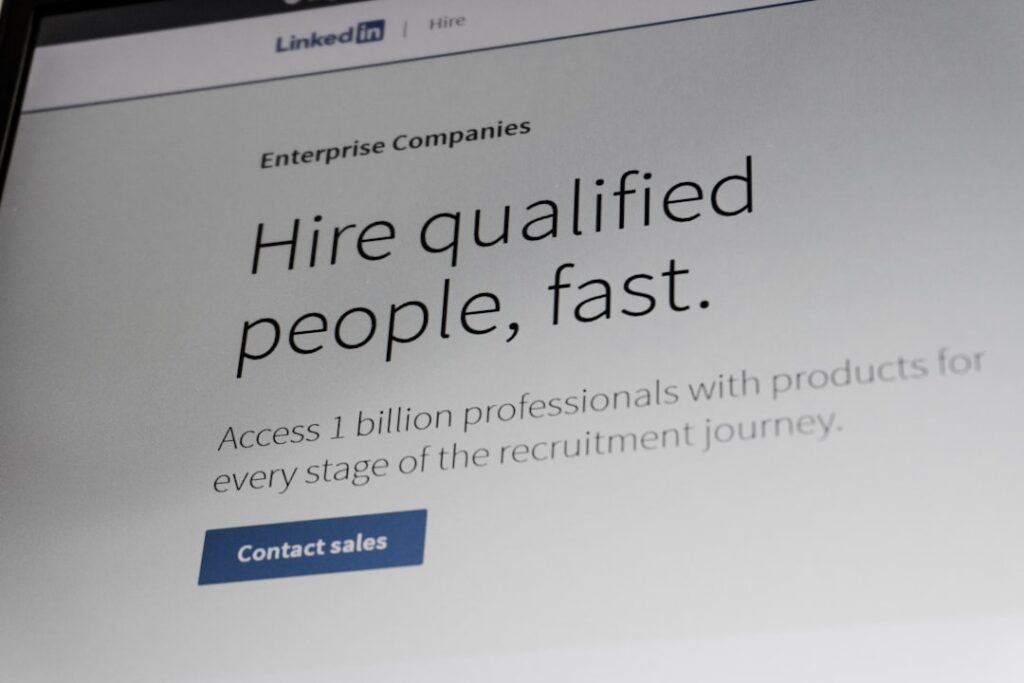
The labor market is stratifying along algorithmic signaling lines. Professionals who acquire AI‑verified micro‑credentials gain a quantifiable edge in talent pools that prioritize skill vectors over legacy degrees. A 2026 survey of 12,000 knowledge workers found that 60 % of respondents who earned AI‑generated badges reported a salary increase of 8–12 % within six months, compared with 3 % for traditional certificate holders[2].
Conversely, workers lacking digital access or AI literacy face a structural disadvantage. Rural and lower‑income cohorts exhibit a 27 % lower adoption rate of AI‑verified learning platforms, amplifying existing mobility gaps. The asymmetry is compounded by network effects: firms that embed AI credentials into internal promotion algorithms inadvertently reinforce a closed loop that privileges early adopters.
From an organizational perspective, AI‑generated credentials enable skills‑based workforce planning. Companies can model future capability gaps using the same predictive algorithms that generate badges, aligning hiring pipelines with strategic objectives. However, reliance on algorithmic proxies also introduces systemic risk: if the underlying data reflect historical biases, the AI will perpetuate them under the guise of objectivity. A 2025 audit of a major consulting firm’s AI credentialing system uncovered a 4.2 % gender disparity in badge issuance, prompting a redesign of bias filters.
Projection to 2029
Looking ahead, three structural trajectories are likely to define the next half‑decade:
This hybridization will preserve institutional relevance while offering students a portfolio of algorithmic proof that can be dynamically updated throughout their careers.
- Regulatory Convergence – By 2028, the European Union and the United States are expected to adopt interoperable credential standards (e.g., ISO/IEC 23053 for digital certificates), reducing fragmentation and enabling cross‑border verification. This will elevate the credibility of AI‑generated badges and embed them within formal labor market reporting systems.
- Platform Consolidation – Market analysis predicts a 30 % consolidation among AI credential providers, as larger firms acquire niche micro‑credential startups to assemble end‑to‑end learning‑to‑hiring pipelines. The resulting oligopoly will concentrate data capital, giving a handful of platforms disproportionate influence over career trajectories.
- Hybrid Credential Models – Universities will increasingly adopt dual‑track programs, pairing accredited degrees with AI‑verified skill modules. This hybridization will preserve institutional relevance while offering students a portfolio of algorithmic proof that can be dynamically updated throughout their careers.
The net effect will be a redefinition of career capital: the most valuable asset will be a living, data‑driven skill ledger rather than a static diploma. Workers and institutions that internalize this shift will capture asymmetric returns, while those that cling to legacy credentialing risk marginalization in an increasingly algorithmic labor market.
Key Structural Insights
- AI‑generated credentials convert performance data into market‑recognized signals, reshaping the economics of professional credibility across sectors.
- The concentration of validation authority in a few tech platforms creates systemic power asymmetries that could entrench existing inequities without coordinated standards.
- Over the next five years, regulatory harmonization and hybrid credential models will institutionalize algorithmic proof, making continuous skill verification a core component of career mobility.
Written by Career Ahead AI. AI can make mistakes, so verify key facts. Report errors to support@careeraheadonline.com.





