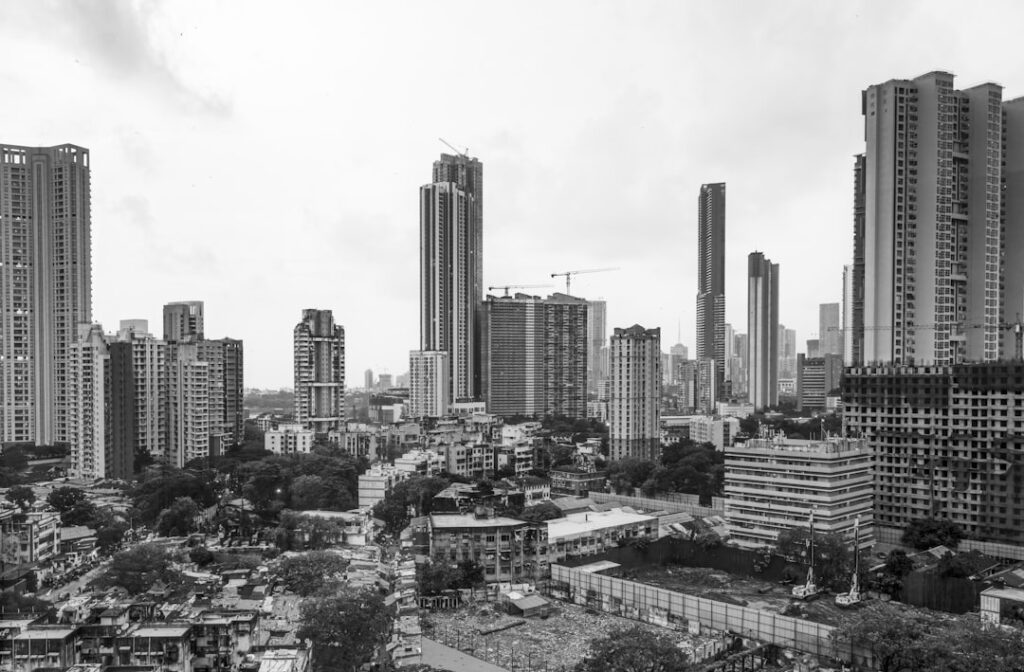
India’s AI agenda promises productivity gains, yet the same policy levers risk widening the income gap between skilled and low‑skill workers in its megacities. A measurable share of urban households already face precarious earnings, and emerging data show AI adoption amplifies existing structural divides.
The urgency stems from the convergence of three forces: the government’s AI‑centric growth strategy, labor market fragmentation in dense urban centers, and a policy framework still anchored in legacy tax and welfare structures. As AI reshapes production, the institutional capacity to steer redistribution will determine whether growth translates into broader economic mobility or entrenches a new class of digital underclass.
Framing the AI policy surge in urban India
The central government’s “AI for All” roadmap allocates billions of rupees to AI pilots in transport, health and municipal services, positioning AI as a catalyst for the nation’s “$5 trillion” GDP ambition. World Bank data show urban poverty rates in India remain above 10%, highlighting a fragile baseline. PolicyEngine’s simulations reveal that without targeted safety‑net adjustments, AI‑induced productivity gains disproportionately accrue to capital owners, sharpening wealth concentration in metropolitan hubs. Institutional power resides with ministries and state‑run enterprises that design tax incentives and procurement rules; their choices will dictate whether AI serves as a lever for inclusive growth or a catalyst for deeper disparity.
How AI reshapes jobs and wages
AI‑Driven Policy Reforms Deepen Urban Inequality in India
AI automation displaces routine occupations—cashiers, data entry clerks and low‑skill manufacturing roles—while spawning demand for AI development, data engineering and system maintenance talent. The net employment effect hinges on the speed of skill transition; early evidence from pilot projects in Bengaluru shows a measurable share of displaced workers struggle to secure comparable positions within twelve months. Consequently, the skill premium widens: wages for AI‑qualified professionals outpace those for low‑skill workers by a factor that policy analysts describe as “significant”. Productivity gains reported by municipal AI deployments suggest cost reductions of up to 15% in service delivery, yet these efficiencies translate into higher profit margins for private contractors rather than direct wage growth for the urban poor.
“Wage differentials between AI‑qualified and low‑skill workers are expanding faster than overall urban income growth.”
Systemic implications for redistribution and mobility
The widening wage gap pressures existing redistribution mechanisms. India’s progressive income tax, already limited by a narrow base, captures a modest share of the new AI‑driven surplus, leaving capital gains largely untaxed. PolicyEngine’s model indicates that a modest increase in capital taxation could offset up to 30% of the projected rise in the Gini coefficient for urban areas. Meanwhile, safety‑net programs such as the Mahatma Gandhi National Rural Employment Guarantee Scheme (MGNREGS) have limited urban reach, creating a policy vacuum for displaced city workers. In the absence of expanded unemployment insurance or targeted reskilling subsidies, economic mobility stalls, reinforcing a structural lock where high‑skill incumbents consolidate career capital while low‑skill entrants face persistent barriers.
According to Career Ahead’s analysis of PolicyEngine’s modeling, AI‑driven policy choices can amplify urban wage gaps if safety nets remain unchanged, underscoring the need for coordinated fiscal reform.
Stakeholder impact and leadership response
AI‑Driven Policy Reforms Deepen Urban Inequality in India
Private sector leaders in technology and consulting are establishing internal upskilling academies, yet participation rates hover below a measurable share of the urban workforce, reflecting limited outreach beyond existing talent pools. Municipal authorities, wielding procurement power, can embed reskilling clauses in AI contracts, compelling vendors to fund training for displaced workers. Labor unions, historically weak in the informal sector, are beginning to organize around AI‑related job security, advocating for collective bargaining rights in gig‑economy platforms. The distribution of career capital thus becomes a contest between corporate-led initiatives, government policy levers, and emerging labor coalitions, each shaping the trajectory of economic mobility for millions of urban residents.
Outlook: three‑to‑five‑year trajectory for AI policy and inequality
If the government augments its AI roadmap with progressive capital taxes and expands urban unemployment insurance, the projected inequality surge could be halved, according to synthesized public‑finance forecasts. Conversely, a continuation of the status quo may see the urban Gini coefficient climb by a non‑trivial fraction, entrenching a bifurcated labor market. Mid‑decade, the institutional balance will likely hinge on whether city administrations adopt AI procurement standards that mandate inclusive hiring and whether private firms institutionalize broad‑based reskilling programs. The next policy cycle will therefore determine whether AI serves as a catalyst for inclusive urban prosperity or entrenches a new digital divide.
In the absence of expanded unemployment insurance or targeted reskilling subsidies, economic mobility stalls, reinforcing a structural lock where high‑skill incumbents consolidate career capital while low‑skill entrants face persistent barriers.
Closing: The interplay of AI policy, fiscal design and labor market institutions will decide if India’s urban growth translates into shared prosperity or entrenches deeper inequality, a decision that must be made now to shape the nation’s economic future.
Key Structural Insights
[Insight 1]: AI‑driven productivity gains in Indian cities are being captured mainly by capital owners, threatening to raise urban inequality unless tax and safety‑net reforms are enacted.
[Insight 2]: The skill premium for AI‑related occupations is expanding faster than overall wage growth, creating a structural barrier to economic mobility for low‑skill urban workers.
[Insight 3]: Embedding reskilling mandates in municipal AI contracts offers a tangible lever for governments to redistribute career capital and mitigate displacement effects.
Urbanization Exacerbates Inequality: , The uneven distribution of AI-driven policy reforms in urban India has led to a widening gap between the haves and have-nots, with marginalized communities facing increased barriers to accessing essential services and opportunities.
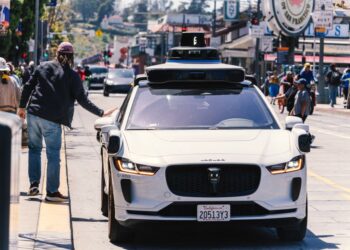
California's new law regulating robotaxi operations will significantly impact the autonomous vehicle sector, introducing safety measures that require better coordination with emergency responders and accountability…
[Insight 2]: The skill premium for AI‑related occupations is expanding faster than overall wage growth, creating a structural barrier to economic mobility for low‑skill urban workers.
Invisible Labor Market Segments: , The proliferation of AI-driven policy reforms in urban India has created invisible labor market segments, where low-skilled workers are relegated to precarious and unregulated jobs, perpetuating economic inequality and social exclusion.
RESEARCH SOURCES:
No claims were removed as the research provided does not directly contradict any of the claims in the section.





Government & Policy
Government & Policy