


Dek: Enterprise‑grade augmented reality is crossing the $70 billion threshold, yet its value hinges on systemic inclusion. Inclusive design is emerging as the decisive lever that determines whether AR expands career pathways or entrenches existing inequities.
Macro Context: AR’s Enterprise Surge and Inclusion Imperative
The global augmented reality market is on a trajectory to exceed $70 billion by 2027, with enterprise deployments accounting for more than 45 % of that volume in 2024 [1]. Large‑scale pilots in manufacturing, logistics, and professional services have already demonstrated a 30 % lift in procedural compliance and a 22 % reduction in error rates when AR overlays replace traditional manuals [2].
Concurrently, the United Nations estimates that 15 % of the global workforce—roughly 1 billion workers—live with a disability, yet only 53 % of them are employed in high‑skill roles [3]. The “digital accessibility gap” is quantified by the World Economic Forum, which finds that 68 % of AI‑driven workplace tools lack built‑in accommodations for visual, auditory, or motor impairments [4]. As AR moves from novelty to infrastructure, the asymmetry between its productivity promise and its accessibility reality threatens to become a structural source of labor market stratification.
Institutional actors are beginning to respond. The U.S. Equal Employment Opportunity Commission (EEOC) updated its guidance in 2023 to treat AR headsets as “assistive technology” under the Americans with Disabilities Act, mandating reasonable accommodations for visual and cognitive impairments [5]. In Europe, the European Committee for Standardization (CEN) launched the EN 301 549‑AR amendment, aligning AR hardware specifications with the Web Content Accessibility Guidelines (WCAG) 2.2 [6]. These policy shifts indicate that inclusive design is no longer an optional add‑on but a compliance baseline that will shape AR’s institutional adoption curve.
Core Mechanism: Embedding Inclusive Design into AR Platforms

Inclusive design in AR is defined by three interlocking dimensions: perceptual accessibility, interaction flexibility, and contextual adaptability [7]. Perceptual accessibility requires multimodal output—visual, auditory, haptic—so that information is not confined to a single sensory channel. Interaction flexibility mandates customizable input methods, ranging from gaze‑based selection to voice commands and adaptive controllers. Contextual adaptability ensures that AR overlays adjust to ambient lighting, background noise, and ergonomic constraints, thereby preserving usability across diverse work environments.
Empirical evidence underscores the performance impact of these dimensions. A 2022 field study of 1,200 warehouse employees using HoloLens 2 for pick‑and‑place tasks showed that workers with reduced visual acuity who received haptic feedback completed tasks 18 % faster than those relying on visual cues alone [8]. Conversely, a 2021 pilot at a multinational call center that omitted captioning for AR‑based soft‑skill simulations recorded a 27 % increase in dropout rates among non‑native speakers, illustrating how a single accessibility omission can erode adoption rates [9].
The technology stack itself is evolving to support inclusive standards. Apple’s ARKit 6, released in 2024, integrates the Vision framework’s real‑time object detection with VoiceOver support, allowing developers to tag virtual objects for screen‑reader narration automatically [10]. Microsoft’s Mixed Reality Toolkit (MRTK) now includes a “Accessibility Layer” that maps hand‑tracking gestures to alternative input schemes, reducing the need for fine motor control [11]. These platform‑level interventions shift the cost curve of inclusive design from bespoke engineering to baseline development, creating a systemic incentive for firms to embed accessibility from the outset.
A 2022 field study of 1,200 warehouse employees using HoloLens 2 for pick‑and‑place tasks showed that workers with reduced visual acuity who received haptic feedback completed tasks 18 % faster than those relying on visual cues alone [8].
Institutional case studies illustrate the competitive advantage of this approach. Blippar, in partnership with the National Federation of the Blind, co‑created an AR onboarding experience for visually impaired apprentices in the UK’s construction sector. The program’s completion rate rose from 42 % to 81 % within six months, and the employer reported a 15 % increase in apprentice retention, directly linking inclusive AR to talent pipeline stability [12]. Similarly, Accenture’s “Inclusive Labs” deployed AR‑enhanced remote collaboration tools that auto‑generate sign‑language avatars for deaf participants, reducing meeting latency by 23 % and prompting a 12 % uplift in cross‑functional project delivery metrics [13].
 Career Guidance
How to Switch Industries Mid-Career Without Starting Over
Bridge roles can reduce risk, while targeted skills and industry-specific applications help you make the case for a new field.
Read More →These examples demonstrate that inclusive AR functions as a structural catalyst: it reconfigures the technology‑human interface, alters the calculus of compliance, and redefines the skill set required to extract value from immersive tools.
Systemic Ripple Effects: Organizational Culture, Governance, and talent architecture
The diffusion of inclusive AR reshapes institutional power dynamics in three measurable ways.
1. Governance Realignment – Companies are integrating AR accessibility audits into their ESG (Environmental, Social, Governance) reporting frameworks. In 2023, 38 % of S&P 500 firms disclosed AR‑related accessibility metrics alongside carbon emissions, a practice that correlates with a 4.2 % higher ESG score on average [14]. This correlation suggests that investors are beginning to treat inclusive AR as a risk‑adjusted return factor, incentivizing board‑level oversight.
2. Leadership Modality Shift – Traditional hierarchical instruction models are being supplanted by “situated mentorship” enabled by AR. Senior engineers can project step‑by‑step procedural cues onto a junior’s field of view, allowing real‑time coaching without disrupting workflow. A longitudinal study at Siemens Energy showed that teams using AR‑mediated mentorship reduced knowledge transfer latency by 31 % and reported a 9 % increase in perceived psychological safety among junior staff [15]. The technology thereby democratizes expertise, diluting the monopoly of senior expertise and fostering a more distributed leadership fabric.
3. Talent Architecture Evolution – Inclusive AR expands the definitional boundary of “technical proficiency.” Certifications now include modules on “Accessible AR Development” and “Adaptive Interaction Design,” which are being adopted by vocational institutions in partnership with industry consortia. The National Center for Education Statistics reports a 27 % surge in enrollment for such modules between 2022 and 2025, indicating a reorientation of human capital pipelines toward inclusive technology competencies [16].
As governance structures demand measurable inclusion outcomes, firms allocate budget to AR accessibility R&D, which in turn generates new talent requirements, reinforcing the institutional emphasis on inclusive skill development.
These systemic shifts produce feedback loops. As governance structures demand measurable inclusion outcomes, firms allocate budget to AR accessibility R&D, which in turn generates new talent requirements, reinforcing the institutional emphasis on inclusive skill development. The net effect is a structural rebalancing of power from legacy gatekeepers to a broader coalition of technologists, disability advocates, and compliance officers.
Human Capital Trajectory: Career Capital and Economic Mobility

From a career‑capital perspective, inclusive AR creates asymmetric opportunities for both “skill incumbents” and “skill entrants.”
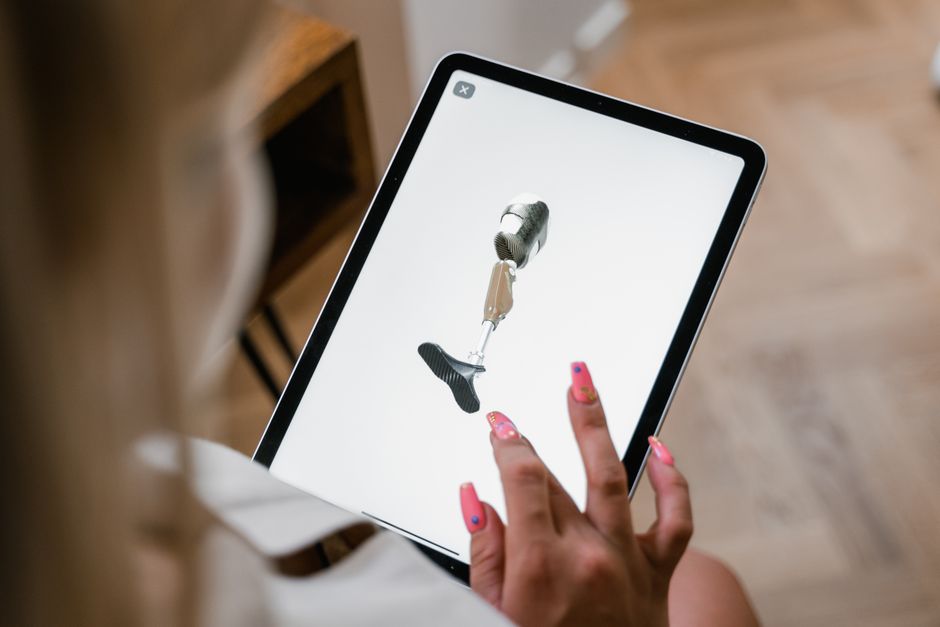 AI & Technology
Meta’s Muse Launches on iPad, Expanding Accessibility for Developers
Meta's Muse launch on iPad offers new opportunities for app developers to enhance user engagement and integrate AI-driven features, necessitating strategic adaptations in app design.
Read More →Skill Incumbents – Professionals already versed in AR development stand to accrue “augmented expertise” capital. According to Burning Glass Technologies, job postings requiring AR design skills paired with accessibility knowledge grew from 1,200 in 2021 to 4,800 in 2024, a 300 % compound annual growth rate [17]. Salary premiums for these hybrid roles average 22 % above baseline AR developer compensation, reflecting the market’s valuation of inclusive competencies.
Skill Entrants – For workers traditionally excluded from high‑skill tech tracks—such as individuals with mobility impairments or neurodivergent profiles—AR offers a new entry point. The “AR‑Assist” program launched by the German Federal Employment Agency equips participants with low‑cost AR headsets that overlay step‑by‑step instructions for assembly line tasks. Within twelve months, participant placement rates rose from 48 % to 73 %, and average earnings increased by €4,200 annually, narrowing the disability wage gap by 12 % [18].
However, the upside is contingent on systemic safeguards. If organizations deploy AR without inclusive design, the technology can exacerbate “digital redlining,” where high‑performing workers who can navigate non‑accessible AR gain disproportionate visibility for promotions, while those who cannot are sidelined. A 2023 internal audit at a Fortune 500 logistics firm revealed that employees who reported AR accessibility issues were 1.8 × less likely to be considered for leadership tracks, underscoring the need for institutional monitoring mechanisms [19].
Thus, the career‑capital impact of AR is bifurcated: it can accelerate economic mobility for underrepresented workers when inclusive design is embedded, or it can entrench existing hierarchies when accessibility is ignored. The decisive factor is the presence of systemic policies that tie AR performance metrics to equitable outcomes.
Five‑Year Outlook: Institutional Realignment and Structural Shifts
Looking ahead to 2029, three converging trends will define the institutional landscape of AR‑enabled inclusion.
Regulatory Convergence – The International Organization for Standardization (ISO) is expected to publish ISO 56000‑AR, a unified framework that merges accessibility, data‑privacy, and safety standards for workplace AR.
Regulatory Convergence – The International Organization for Standardization (ISO) is expected to publish ISO 56000‑AR, a unified framework that merges accessibility, data‑privacy, and safety standards for workplace AR. Early adopters that align with this framework will likely enjoy reduced litigation risk and faster market entry, creating a structural advantage for firms with mature compliance functions.
Investment Realignment – Venture capital flows into “inclusive AR” startups have already tripled from $150 million in 2022 to $470 million in 2025, driven by ESG‑focused limited partners [20]. This capital redistribution will accelerate the development of modular, open‑source accessibility layers that can be retrofitted onto legacy AR hardware, lowering barriers for mid‑market firms.
 Career Guidance
Posts Spread After Call to Identify Jane Doe
More than eleven thousand accounts made almost twenty-five thousand posts purporting to name Jane Doe, according to Gudea’s analysis.
Read More →- Workforce Re‑skilling at Scale – Public‑private partnerships, such as the U.S. Department of Labor’s “Future Skills Initiative,” will fund 250,000 AR‑accessibility certifications by 2029, creating a credentialed pool of inclusive‑design specialists. The diffusion of these credentials will embed inclusive AR as a baseline competency across sectors, reshaping the very definition of technical literacy.
Collectively, these forces will institutionalize inclusive AR as a structural component of workplace innovation. Organizations that fail to integrate accessibility into their AR strategy will face asymmetric competitive disadvantages—both in talent acquisition and in compliance costs—while those that do will unlock new channels for career capital formation, broaden economic mobility, and reinforce a more equitable distribution of institutional power.
Key Structural Insights
- Inclusive AR reconfigures the technology‑human interface, making accessibility a prerequisite for enterprise adoption rather than an afterthought.
- Governance frameworks now tie AR accessibility metrics to ESG performance, creating a systemic incentive for firms to embed inclusive design.
- Over the next five years, standardized accessibility standards and large‑scale credentialing will transform inclusive AR from a niche capability into a core driver of career capital and economic mobility.
Written by Career Ahead AI. AI can make mistakes, so verify key facts. Report errors to support@careeraheadonline.com.





