
Product organizations are moving from team-level sprint cycles to enterprise-wide learning systems that fuse AI, design thinking, and systems theory, reshaping career capital and leadership pathways.
Macro-Scale Adoption of Agile: Saturation and Scaling Friction
Over the past two decades, agile practices have migrated from software enclaves to the broader product ecosystem. The VersionOne State of Agile report indicates that 71% of organizations now claim an agile framework as their default development mode[4]. The diffusion mirrors the diffusion of Total Quality Management in the 1980s, where a once-niche methodology became a corporate orthodoxy before confronting scaling limits.
McKinsey’s 2025 “Beyond Agile” briefing finds that 61% of firms experience friction when extending agile beyond pilot teams, citing governance overload and misaligned incentives[1]. Gartner’s 2024 cultural audit adds that 56% of respondents struggle to reconcile agile rituals with entrenched hierarchical structures[2]. These data points signal a structural inflection: the agile paradigm, originally designed for small, co-located squads, now collides with the macro-level coordination mechanisms of multinational product enterprises.
Compounding the scaling dilemma, 85% of product managers identify artificial intelligence as the most disruptive force shaping product lifecycles[5]. AI-enabled hypothesis testing, real-time usage telemetry, and autonomous feature toggling demand a learning cadence that outpaces the two-week sprint rhythm. The macro context, therefore, is a convergence of mature agile saturation, scaling roadblocks, and emergent AI capabilities that collectively pressure organizations to evolve their learning architectures.
Iterative Core: Agile’s Mechanistic Foundations and Organizational Boundaries

Agile’s methodological core rests on iterative, incremental delivery, continuous feedback loops, and a “minimum viable product” mindset, codified in the 2001 Agile Manifesto[4]. At the team level, these mechanics generate measurable gains in cycle time and defect reduction. However, the focus on team-centric velocity masks cross-functional dependencies that become critical when products span multiple platforms, regulatory regimes, and market segments.
This hybridization reflects a systemic shift from isolated feedback loops to coordinated, multi-layered learning circuits.
Hybrid models—combining scrum sprints with waterfall-style stage gates—have emerged as pragmatic bridges. The “Beyond Agile – Time For Massive Organizational Culture” essay documents how Siemens’ Digital Industries division layered a “Capability Gate” atop scrum cycles, preserving compliance checkpoints while retaining rapid iteration[2]. This hybridization reflects a systemic shift from isolated feedback loops to coordinated, multi-layered learning circuits.
 Entrepreneurship & Business
Europe Adds to Business Regulatory Burden, Speaker Says
The exchange covered deregulation, CBAM, an India-EU trade agreement and trade figures for India’s ties with the EU and the Netherlands.
Read More →Historical parallels are evident in the transition from “just-in-time” manufacturing to “lean enterprise” in the early 2000s. Lean retained the pull-based production principle but embedded it within a broader supply-chain governance framework. Likewise, contemporary product firms are embedding agile’s pull mechanisms within enterprise-wide data governance, risk, and compliance (GRC) scaffolds, thereby extending the iterative engine beyond the team perimeter.
Cascading Cultural Shifts: Systemic Ripples of Agile Maturity
When agile becomes institutional, its cultural imprint ripples through leadership norms, talent pipelines, and performance metrics. McKinsey’s 2025 survey reports that 75% of organizations identify cultural transformation as a significant barrier to agile success[1]. The shift entails moving from command-and-control authority to distributed decision rights, a transition that reconfigures power structures within product hierarchies.
Design thinking, lean startup, and systems thinking are converging with agile to form a multidisciplinary learning matrix. Rework’s “Agile Mindset – 2026 Organizational Transformation Capability Framework” enumerates competencies such as “Systems Thinking,” “Inclusive Leadership,” and “AI Transformation” as core capabilities for senior product leaders[3]. Companies like Spotify have codified “tribe-guild-chapter” networks that institutionalize cross-team knowledge diffusion, effectively turning cultural adaptation into a measurable capability.
Metrics are also undergoing a systemic reorientation. Traditional sprint-centric KPIs—velocity, burn-down, and story points—are being supplemented, and in some cases supplanted, by outcome-oriented indicators: Net Promoter Score (NPS) deltas, employee engagement indices, and revenue-per-feature ratios. The shift mirrors the 1990s adoption of balanced scorecards, where financial metrics were balanced with customer and internal process measures to drive strategic alignment.
Firms such as IBM have launched “Product Learning Hubs” that blend AI certification with design-thinking workshops, creating a pipeline of product professionals equipped for integrated learning ecosystems.
Talent Architecture in the Post-Agile Epoch
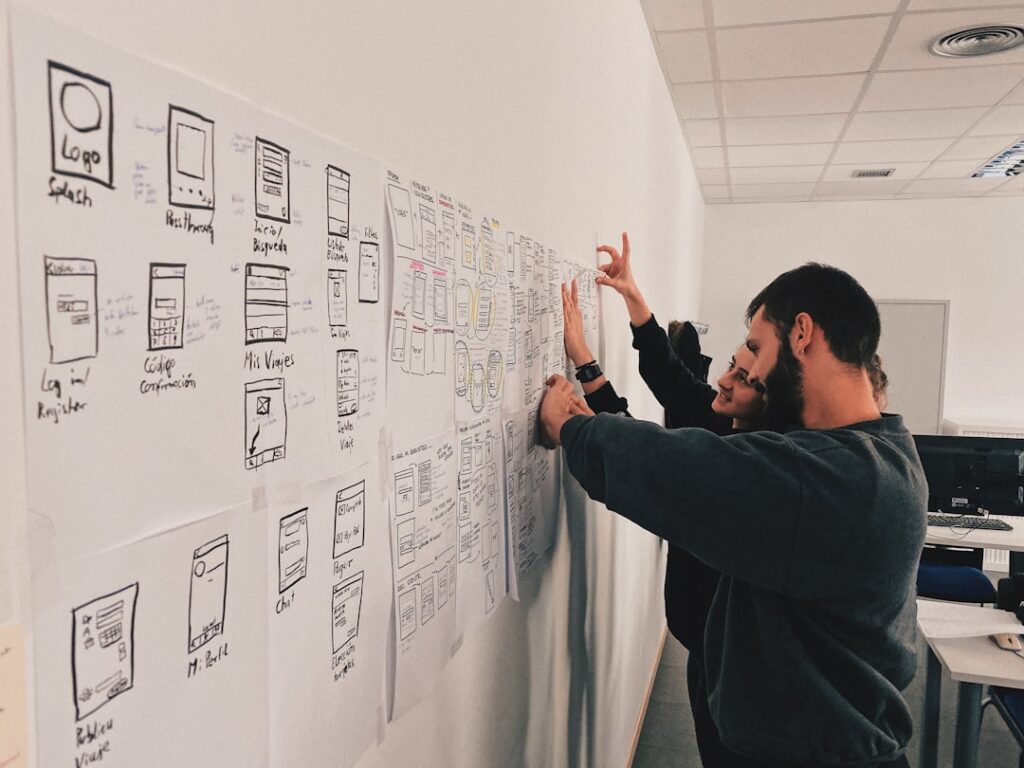
Career capital in product management is increasingly predicated on meta-learning agility—the ability to synthesize insights across data streams, AI models, and human intuition. The AI-driven product lifecycle demands product managers who can interrogate predictive analytics, orchestrate cross-functional experiments, and translate emergent patterns into strategic pivots.
 Entrepreneurship & Business
Use a Business Loan to Fix Cash Flow: Five Decisions
Cash flow is the top challenge for half of small firms. Here is how to choose a loan that fits.
Read More →McKinsey’s talent analytics indicates that 68% of high-performing product leaders possess formal exposure to both data science and behavioral design, a hybrid skill set that outpaces traditional “product owner” profiles[1]. Institutional responses include dual-track career ladders: a “Technical Product Path” emphasizing algorithmic fluency, and a “Strategic Product Path” emphasizing market systems thinking. Firms such as IBM have launched “Product Learning Hubs” that blend AI certification with design-thinking workshops, creating a pipeline of product professionals equipped for integrated learning ecosystems.
The reconfiguration of talent pipelines also reshapes leadership pipelines. The “inclusive leadership” competency highlighted in Rework’s framework underscores the need for leaders who can navigate asymmetric information flows across AI-augmented analytics teams and legacy engineering groups[3]. Consequently, promotion criteria now incorporate learning diffusion scores—quantitative assessments of how effectively a manager propagates best practices across the organization.
Projected Trajectory: Integrated Learning Frameworks 2027-2031
Looking ahead, three structural trends will define product management’s learning architecture over the next five years:
- Enterprise Learning Orchestration Platforms (ELOPs) – By 2029, at least 40% of Fortune 500 product firms will deploy centralized platforms that ingest telemetry, AI-generated hypotheses, and user research, then surface actionable insights to product squads in real time. Early adopters such as Adobe’s “Experience Cloud Learning Engine” demonstrate a 30% reduction in time-to-insight compared with siloed analytics stacks.
- Cross-Domain Competency Networks – Institutionalizing “learning guilds” that cut across product, engineering, data science, and compliance will become a standard governance model. Gartner predicts that 55% of large enterprises will formalize such networks by 2030, embedding them into performance reviews and budget allocations.
- Outcome-Centric Compensation Models – Compensation structures will increasingly tie a portion of variable pay to systemic outcome metrics—customer lifetime value growth, ecosystem integration scores, and AI model accuracy improvements. This aligns individual incentives with the broader learning feedback loop, mitigating the “velocity-only” bias that has historically skewed agile reward systems.
Collectively, these developments will transform the career trajectory of product professionals from linear sprint-mastery ladders to networked learning architects capable of steering organization-wide knowledge flows. The systemic shift will reinforce economic mobility for those who acquire interdisciplinary fluency, while reshaping institutional power toward leaders who can orchestrate asymmetric information across AI, design, and market domains.
Collectively, these developments will transform the career trajectory of product professionals from linear sprint-mastery ladders to networked learning architects capable of steering organization-wide knowledge flows.
Key Structural Insights
> Scaling Friction as a Structural Signal: The plateau in agile adoption rates reflects a systemic mismatch between team-level iteration and enterprise-wide coordination, prompting a shift toward hybrid governance models.
> Learning Matrix Integration: Embedding design thinking, lean startup, and systems thinking into agile creates a multidimensional learning matrix that redefines cultural norms and performance metrics.
> * Meta-Learning as Career Capital: Future product leadership hinges on the ability to synthesize AI-driven analytics with human-centric insights, reshaping talent pipelines and compensation structures.
Sources
Beyond Agile — AgileWays Blog (PDF)
Beyond Agile – Time For Massive Organizational Culture — LinkedIn Pulse
Agile Mindset – 2026 Organizational Transformation Capability Framework — Rework
The Evolution of Agile Through 2026 and Future Trends — Teamhood
Product Management Trends 2026: 10 Future Predictions — Airtable
 Career Guidance
Posts Spread After Call to Identify Jane Doe
More than eleven thousand accounts made almost twenty-five thousand posts purporting to name Jane Doe, according to Gudea’s analysis.
Read More →Written by Career Ahead AI. AI can make mistakes, so verify key facts. Report errors to support@careeraheadonline.com.