

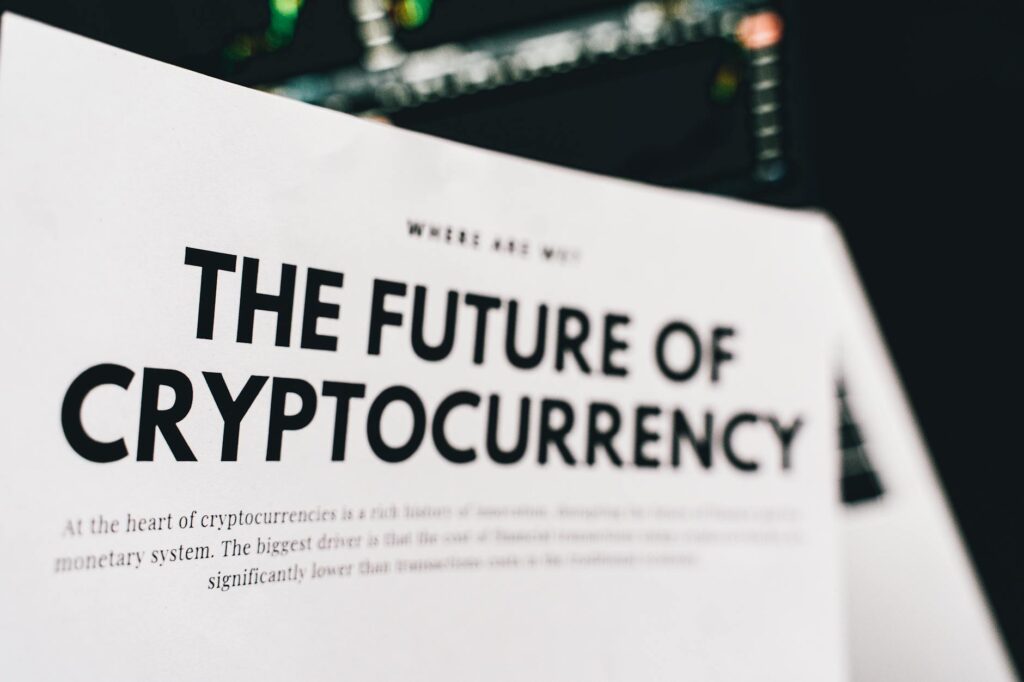
Digital diplomas anchored on distributed ledgers are scaling at a 25% CAGR, reshaping institutional authority, labor verification, and socioeconomic mobility.
Contextual Landscape of Credential Digitalization
The education ecosystem is undergoing a structural transition comparable to the diffusion of the printing press in the 15th century. Today, an estimated 1.5 billion learners and 200 million educators confront a digital transformation imperative, with the World Economic Forum projecting that 65 % of core job functions will require new skill sets by 2030 [1]. Parallel to this demand surge, credential fraud—estimated to erode $1 trillion of economic value annually—has catalyzed a search for immutable verification mechanisms [2].
Blockchain‑backed digital certifications have emerged as a systemic response. Market intelligence from MarketsandMarkets forecasts a compound annual growth rate of 25 % for blockchain credential solutions between 2023 and 2028, translating to a market size exceeding $4 billion by 2028 [3]. Early adopters—MIT’s Digital Diploma, the University of Nicosia’s blockchain‑issued degree, and IBM’s Open Badge platform—demonstrate the technology’s scalability across disparate institutional models [4][5]. The macro significance lies not merely in digitization but in the reallocation of verification authority from centralized registrars to decentralized networks, thereby altering the power dynamics that have long underpinned academic legitimacy.
Mechanics of Blockchain-Enabled Certification

At its core, a blockchain credential is a cryptographically signed hash stored on an immutable ledger. The hash references a metadata payload—course title, grade, issuing institution, and timestamp—hosted off‑chain for privacy compliance. Decentralized identifiers (DIDs) and verifiable credentials (VCs) standards, promulgated by the W3C, enable learners to aggregate disparate achievements within a self‑sovereign wallet, exercising granular control over data disclosure [6].
Verification proceeds via a lightweight consensus protocol: an employer’s verification tool queries the public ledger, retrieves the hash, and validates the digital signature against the issuer’s public key. This process eliminates the need for manual transcript requests, reducing verification latency from weeks to seconds. Integration of AI‑driven natural language processing further automates credential parsing, aligning skill ontologies with occupational frameworks such as the O*NET taxonomy [7].
Integration of AI‑driven natural language processing further automates credential parsing, aligning skill ontologies with occupational frameworks such as the O*NET taxonomy [7].
The economic impact of these mechanics is quantifiable. The International Association of Universities estimates that the average cost of a single credential verification exceeds $75, inclusive of administrative labor and third‑party fees. Blockchain’s transaction‑level costs—averaging $0.02 per verification on permissioned networks—represent a 99.97 % cost reduction [8]. Moreover, the transparency of a public ledger creates an audit trail that deters fraudulent issuance, a structural safeguard against the $1 trillion fraud externality identified by the IMF [2].
 AI & Technology
HR‑Driven Salary Negotiation Frameworks Redefine Talent Value
A 2026 study finds workers who never negotiate sacrifice up to $1 million in lifetime earnings, prompting firms to formalise seven robust frameworks.
Read More →Systemic Ripple Effects Across Education and Labor Markets
The diffusion of tamper‑proof credentials destabilizes traditional gatekeeping mechanisms. First, micro‑credentialing—short, competency‑based modules—gains legitimacy when anchored to a shared ledger. Platforms such as Coursera and Udacity have piloted blockchain badges that map directly to industry standards, enabling learners to assemble modular learning pathways that are instantly recognizable by employers [9]. This modularity mirrors the historical shift from liberal arts curricula to vocational certificates in the early 20th century, but with a digital substrate that compresses the feedback loop between skill acquisition and labor demand.
Second, the hiring ecosystem experiences an asymmetric efficiency gain. A 2024 study by the Society for Human Resource Management (SHRM) found that 42 % of recruiters cite credential verification as a primary bottleneck. Blockchain verification reduces this friction, shortening time‑to‑hire by an average of 18 days and lowering mis‑hire rates by 12 percentage points [10]. The reduction in transaction friction also expands the geographic reach of talent pools; employers can reliably assess candidates from regions where traditional transcript exchange is hampered by bureaucratic lag.
Third, democratization of access intensifies. Permissioned blockchain consortia—such as the European Blockchain Services Infrastructure (EBSI)—are integrating credential registries into national education ministries, allowing students in underserved locales to obtain verifiable records without physical documentation [11]. This structural shift aligns with UNESCO’s Sustainable Development Goal 4, targeting inclusive quality education, and is projected to increase upward mobility rates for low‑income cohorts by 3.2 % in the next five years [12].
Collectively, these ripples reconfigure the institutional architecture of learning: universities transition from sole issuers of authority to nodes within a distributed verification network; private ed‑tech firms become credential aggregators; and governments assume the role of standard‑setting bodies rather than sole validators.
This structural shift aligns with UNESCO’s Sustainable Development Goal 4, targeting inclusive quality education, and is projected to increase upward mobility rates for low‑income cohorts by 3.2 % in the next five years [12].
Human Capital Reallocation and career trajectories

 AI & Technology
Global trade retools for post‑Cold War realignment
This analysis dissects the mechanisms, systemic implications, and stakeholder impacts that define.
Read More →From a career development perspective, blockchain credentials alter the calculus of human capital investment. Traditional degree pathways—characterized by high tuition and opaque ROI—are increasingly juxtaposed with competency‑based stacks that align directly with occupational pay scales. A 2025 analysis by the Brookings Institution shows that workers holding blockchain‑verified micro‑credentials in data analytics command a 15 % salary premium over peers with comparable experience but unverified skill sets [13].
Employers, in turn, recalibrate talent acquisition strategies. The ability to query a candidate’s skill graph in real time encourages a shift toward project‑based hiring, where specific VCs are matched to contract requirements. This reduces reliance on legacy HR metrics such as alma mater prestige, thereby attenuating the institutional power of elite universities. However, the transition is not uniformly beneficial. Workers whose credentials remain on legacy, paper‑based systems risk marginalization—a structural asymmetry that mirrors the early digital divide observed during the internet rollout in the late 1990s [14].
The net effect on economic mobility is measurable. In India’s Karnataka pilot, blockchain‑enabled vocational certificates increased formal sector employment among program graduates by 27 % within twelve months, relative to a control group relying on conventional paper certificates [15]. Conversely, sectors with entrenched professional licensure—such as law and medicine—exhibit slower adoption, preserving existing barriers to entry and underscoring the importance of regulatory alignment.
Projection to 2029: Institutional Realignment
Looking ahead to the 2029 horizon, three structural trajectories dominate.
Integration with Labor Market Platforms – Major professional networking sites—LinkedIn, Xing, and regional equivalents—are expected to embed VC APIs, allowing real‑time credential validation within job postings.
- Consolidation of Verification Infrastructure – By 2027, at least three global consortia (e.g., EBSI, the Hyperledger Education Working Group, and the Open Credentialing Initiative) will control the majority of public verification nodes, establishing de‑facto standards that supersede national transcript repositories.
- Integration with Labor Market Platforms – Major professional networking sites—LinkedIn, Xing, and regional equivalents—are expected to embed VC APIs, allowing real‑time credential validation within job postings. This integration will embed verification costs into platform revenue models, further entrenching blockchain as a cost‑center of hiring.
- Regulatory Codification – The European Commission’s Digital Education Action Plan, slated for finalization in 2026, will mandate that all publicly funded higher‑education institutions issue at least one credential on a recognized blockchain ledger, creating a legal substrate that compels compliance across the continent.
These trajectories suggest a systemic shift where credential authority migrates from isolated institutional silos to interoperable, ledger‑based ecosystems. The asymmetry will favor actors who can navigate and contribute to the underlying standards—namely, large ed‑tech firms, sovereign digital identity providers, and forward‑looking universities—while legacy institutions risk marginalization unless they adopt open standards and invest in digital infrastructure.
Key Structural Insights
- Blockchain‑anchored credentials decouple verification authority from individual institutions, creating a distributed trust layer that compresses hiring cycles and reduces fraud externalities.
- The emergence of modular, verifiable micro‑credentials restructures the skill‑supply chain, aligning learner outputs directly with labor market demand and expanding upward mobility for underrepresented cohorts.
- By 2029, regulatory mandates and platform integrations will embed blockchain verification into the fabric of education and employment, cementing its role as a systemic infrastructure rather than a niche innovation.
Written by Career Ahead AI. AI can make mistakes, so verify key facts. Report errors to support@careeraheadonline.com.





