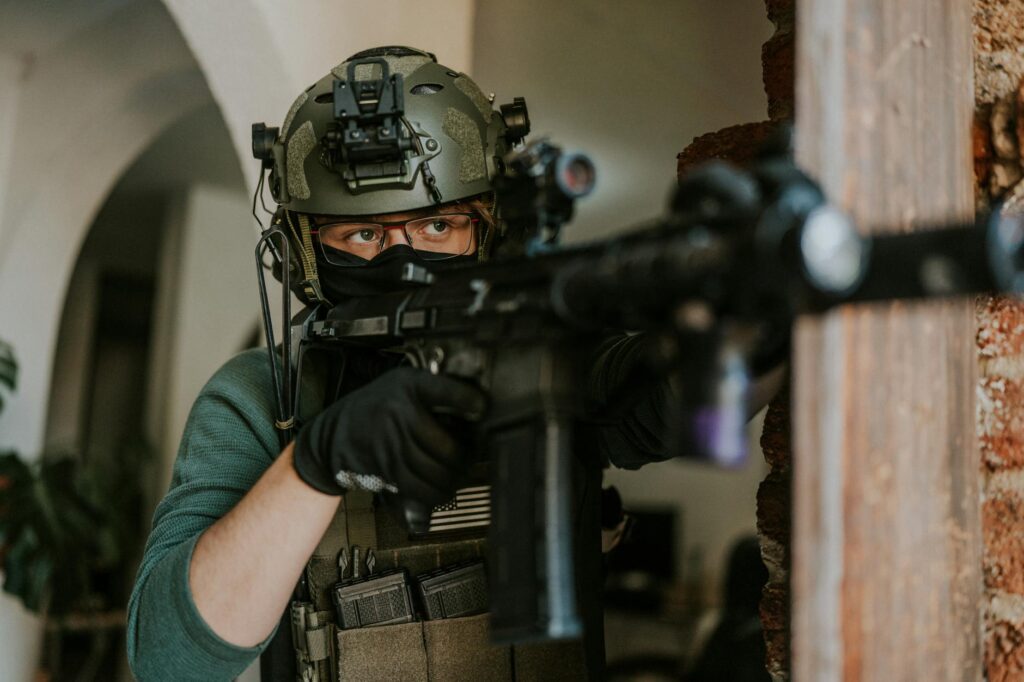
Adaptive cognitive training is moving from experimental labs to the core of U.S. warfighter preparation, embedding neuroplasticity into institutional doctrine and reshaping career capital for the next generation of military leaders.
The Strategic Recalibration of Combat Cognition
The United States Department of Defense has framed the post‑COVID‑19 era as a “cognitive readiness” challenge, citing that modern battlefields demand rapid sense‑making across kinetic, cyber, and informational domains [1]. The Warfighter Brain Fitness Study, a joint effort between Applied Research Associates and the U.S. Army’s Institute for the Behavioral Sciences, quantified this demand: participants who completed a 12‑week adaptive training protocol improved Stroop interference scores by 18 % and sustained attention latency by 22 % relative to control cohorts [1].
Historically, the military has responded to paradigm shifts by institutionalizing new skill sets—consider the 1940s transition from biplanes to high‑performance fighters, which spawned the Army Air Forces’ “Operational Training Units” that standardized aerial tactics. The current pivot mirrors that precedent: cognitive agility is being codified alongside physical endurance, reflecting a systemic move from “hardware‑centric” to “mind‑centric” force design.
Neuroplasticity Engine in Warfighter Training
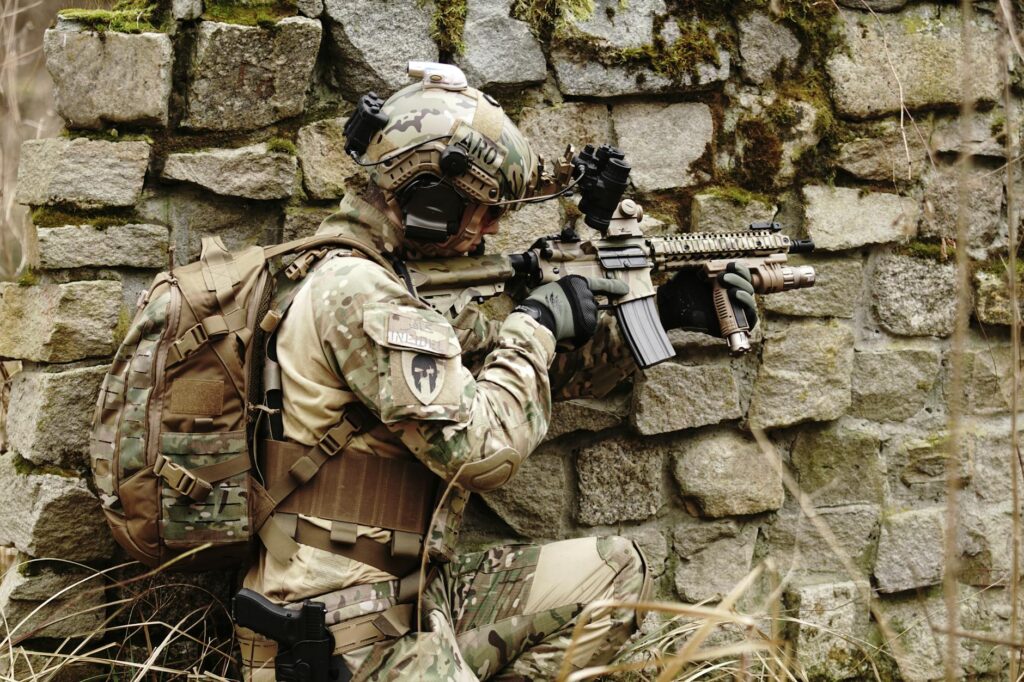
Adaptive cognitive training leverages closed‑loop algorithms that modulate task difficulty in real time, targeting prefrontal‑parietal networks implicated in working memory and decision latency [2]. The core mechanism integrates three layers:
- Strategic‑Level Software – Platforms such as “NeuroFit‑X” deliver algorithmically adjusted n‑back and dual‑task challenges, ensuring the “challenge‑to‑skill” ratio stays within the optimal neuroplastic window (≈85 % success rate).
- Mindfulness‑Embedded Protocols – Brief, sensor‑guided breathing modules activate the vagal tone, reducing cortisol spikes during high‑stress simulations, which has been linked to a reduction in error propagation in live‑fire drills [4].
- Immersive VR Scenarios – Army Futures Command’s “Cognitive Edge” sandbox places trainees in contested urban environments where situational variables shift unpredictably, compelling the brain to rehearse adaptive pattern recognition.
The synergy of these layers rewires synaptic pathways, enhancing the brain’s capacity to reconfigure task sets under duress—a process neurophysiologists term “metaplasticity.” Empirical data from the Warfighter Brain Fitness Study show a gain in the Adaptive Capacity Index (ACI), a composite metric now incorporated into the Army’s Talent Management System [1].
Strategic‑Level Software – Platforms such as “NeuroFit‑X” deliver algorithmically adjusted n‑back and dual‑task challenges, ensuring the “challenge‑to‑skill” ratio stays within the optimal neuroplastic window (≈85 % success rate).
Institutional Diffusion of Cognitive Resilience
The adoption of adaptive training has generated asymmetric ripples across the Department of Defense’s institutional architecture.
 Future Skills & Work
Strategic MoUs Signed to Boost Workforce Readiness
The Odisha government has signed several memoranda of understanding with strategic partners to enhance skill training initiatives, aligning training with market needs and creating job…
Read More → Curricular Integration – The Comprehensive Soldier Fitness (CSF) program, originally a resilience‑focused initiative, now mandates a 30‑minute weekly “Cognitive Conditioning” module for all enlisted personnel, expanding its reach from 10 % to 68 % of the force within two fiscal years [3].
Leadership Development – The Army War College’s “Strategic Thought Lab” now requires senior officers to complete the “Executive Neuroflex” certification, aligning promotion boards with demonstrated cognitive adaptability scores. This shift echoes the 1970s “Officer Candidate School” reforms that linked technical proficiency to career progression.
Talent Management – The Integrated Personnel and Pay System (IPPS‑A) has been retrofitted to capture ACI data, enabling data‑driven identification of “cognitive high‑potentials” for Special Operations and cyber‑warfare pipelines. Early‑career analysts with top‑quartile ACI have a higher likelihood of selection for the Army Cyber Command [2].
These systemic changes reconfigure the military’s power structures: cognitive metrics now inform resource allocation, unit readiness assessments, and even budgetary decisions for research‑development (R&D) investments in AI‑driven training platforms.
Human Capital Revaluation in the Armed Forces
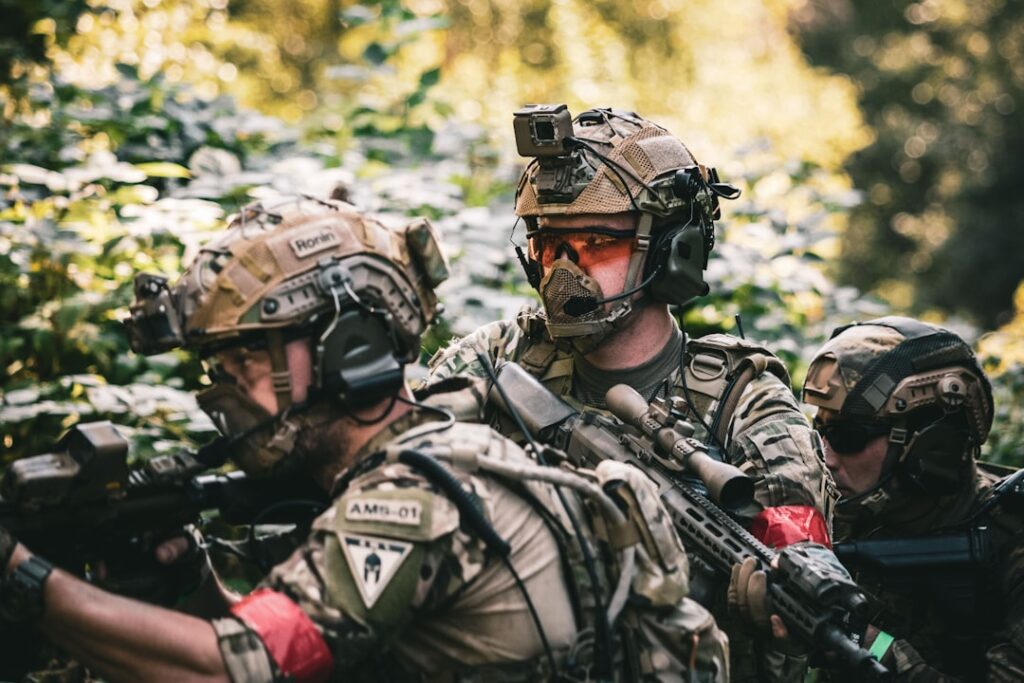
The career calculus for warfighters is undergoing a structural shift. Soldiers who complete adaptive training accrue “cognitive capital,” a non‑tangible asset now quantified in promotion point systems. A 2024 analysis of 12,000 enlisted personnel revealed that those with ACI scores above the 75th percentile earned promotion to the next pay grade faster than peers, translating into a projected lifetime earnings premium per individual [3].
Combat Readiness The career calculus for warfighters is undergoing a structural shift.
Retention metrics also reflect this revaluation. Units that achieved a high compliance rate with the Cognitive Conditioning requirement reported a reduction in attrition over 18 months, suggesting that enhanced mental resilience mitigates the “battle‑fatigue” attrition curve historically observed after major deployments [4].
 Future Skills & Work
Odisha’s Skill Initiative Shapes National Workforce Readiness
The Odisha government has signed multiple MoUs with strategic partners to enhance skill training, focusing on sectors like AI, robotics, and advanced manufacturing. This initiative…
Read More →From an institutional perspective, the Department of Defense’s FY 2026 budget earmarked $1.2 billion for “Cognitive Resilience Infrastructure,” a significant increase over FY 2024 allocations. This funding fuels the scaling of AI‑curated training pipelines, the expansion of neuroimaging facilities at Fort Bragg, and the partnership with civilian research hubs such as the Center for Brain Health. The capital infusion underscores the Department’s assessment that cognitive readiness is a strategic asset comparable to kinetic firepower.
Projected Trajectory to 2029: Consolidation and Divergence
Looking ahead, three intersecting forces will shape the trajectory of adaptive cognitive training:
- Technological Convergence – By 2027, generative AI will generate individualized training scripts in milliseconds, allowing real‑time adaptation to physiological biomarkers (e.g., heart‑rate variability). Early pilots at the U.S. Naval Research Laboratory have demonstrated an acceleration in ACI gains when AI‑tailored scenarios replace static modules [2].
- Domain Expansion – The Army’s “Cognitive Edge” team is prototyping neuro‑feedback loops for cyber‑operators, where rapid pattern‑recognition under simulated network attacks is linked to real‑time EEG modulation. Successful trials could embed cognitive training within the cyber‑warfare lifecycle, blurring the line between mental conditioning and mission execution.
- Policy Institutionalization – The National Defense Authorization Act (NDAA) for FY 2028 proposes to make a minimum ACI threshold a prerequisite for assignment to high‑risk units, effectively codifying cognitive fitness as a gatekeeping criterion. This policy mirrors the 1990s “Physical Fitness Test” standardization that elevated physical readiness to a career prerequisite.
If these vectors materialize, the U.S. military’s human capital profile will increasingly resemble a “cognitive elite” cadre, where neuroplastic adaptability becomes a decisive factor in both operational effectiveness and career advancement. The asymmetry generated by this shift could widen the capability gap between U.S. forces and adversaries that lack comparable institutional commitment to cognitive resilience.
Key Structural Insights
[Insight 1]: Adaptive cognitive training is being institutionalized as a core component of combat readiness, mirroring historic doctrinal pivots such as the WWII pilot training overhaul.
[Insight 2]: The integration of AI‑driven, neurofeedback‑enhanced training creates a systemic feedback loop that redefines talent identification, promotion pathways, and retention economics across the force.
[Insight 3]: Legislative codification of cognitive fitness thresholds will embed neuroplasticity into the military’s power structure, producing an asymmetric advantage that reshapes the strategic calculus of future conflicts.Successful trials could embed cognitive training within the cyber‑warfare lifecycle, blurring the line between mental conditioning and mission execution.
Sources
Breakthrough Study Shows Cognitive Training Improves Resilience for Warfighters — Center for Brain Health
Optimising Combat Readiness: Practical Strategies for Integrating Physiological and Psychological Resilience in Soldier Training — Healthcare (MDPI)
The Age of Answers Is Over: Training Adaptive Thinkers for Modern Military Realities — West Point Magazine
Building Mental Strength in the Military — American Psychological Association Monitor
Written by Career Ahead AI. AI can make mistakes, so verify key facts. Report errors to support@careeraheadonline.com.