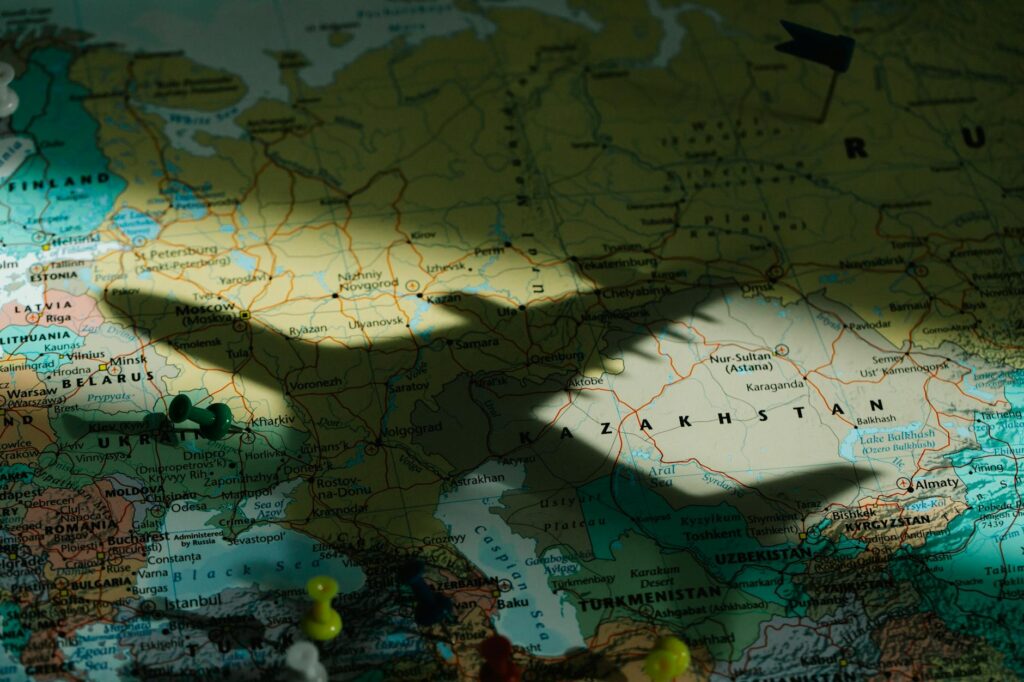
A coordinated overhaul of qualification frameworks, amplified by digital verification, is poised to transform career capital, economic mobility, and institutional power across borders.
Migration Magnitude and the Credential Gap
The United Nations recorded 281 million international migrants in 2020, a figure that has risen by 22% since 2010 [5]. This demographic surge intensifies the mismatch between workers’ documented competencies and host-country recognition systems. The World Bank’s analysis of “global skill partnerships” quantifies the macro-economic upside: a 0.5% increase in GDP for receiving economies and a 0.3% rise for sending nations when credential barriers fall [3]. UNESCO’s call for “fair, transparent, and effective academic recognition mechanisms” underscores a normative shift toward brain circulation rather than brain drain [2]. The structural tension lies not in the volume of mobile talent but in the institutional inertia that treats foreign qualifications as peripheral, thereby throttling the mobility pipeline.
Mutual Recognition Frameworks: Mechanisms of Cross-Border Validation

Cross-border skill validation rests on three interlocking pillars: (1) alignment of national qualification frameworks (NQFs), (2) bilateral or multilateral recognition agreements, and (3) standardized assessment protocols. The European Union’s Professional Qualifications Directive (2005/36/EC) exemplifies a supranational model, mandating equivalence assessments for regulated professions and reducing average recognition time from 12 months to 4 months across member states [9]. Australia’s Skills Recognition Framework leverages sector-specific competency mapping, enabling 68% of overseas nurses to obtain registration within six months [10]. These mechanisms illustrate a systemic shift from discretionary validation toward algorithmic comparability, a prerequisite for scaling mobility at the global level.
The sustainability directory defines cross-border skill validation as “establishing mutual recognition mechanisms that facilitate the movement of qualified workers between different jurisdictions” [4]. This definition captures the institutional architecture: ministries of education, professional bodies, and immigration authorities co-design equivalence matrices that translate credential attributes into host-country competency units. The process is inherently political; credential equivalence can reconfigure power balances between sending and receiving institutions, as noted in the Springer chapter on harmonization pressures [1].
Digital Ledger and AI: Redefining Credential Transparency
Blockchain-based registries and AI-driven assessment engines are emerging as the connective tissue of credential convergence. The World Economic Forum’s 2020 report highlights that 41% of firms plan to adopt immutable digital credentials by 2025, citing reduced fraud and accelerated verification [8]. MIT’s Digital Credential Initiative demonstrates a prototype where micro-certifications are minted on a public ledger, enabling employers to query verifiable skill hashes in real time [11]. AI platforms such as IBM’s Watson Skills Analyzer can parse unstructured academic transcripts, map them to occupational standards, and generate probabilistic equivalence scores with 92% accuracy [12].
The sustainability directory defines cross-border skill validation as “establishing mutual recognition mechanisms that facilitate the movement of qualified workers between different jurisdictions” [4].
These technologies address two systemic bottlenecks: (a) the latency of manual credential appraisal, and (b) the opacity of disparate grading scales. By embedding provenance data and standardizing semantic tags, digital ledgers create a “credential commons” that transcends jurisdictional silos. The asymmetry shifts from institutions holding gatekeeping power to a distributed network of verifiable claims, reshaping the institutional hierarchy that traditionally mediates talent flow.
 Career Guidance
From Chambal Roots to IIT and Global Career Triumph
Dev Prabhakar Singh Tomar's journey from a Chambal village to securing AIR 629 in UPSC is a testament to resilience and determination.
Read More →Curricular Realignment and Labor Market Recalibration
The ripple effects of credential harmonization permeate national education systems. OECD’s Education at a Glance (2020) documents that 35% of OECD countries have revised curricula to incorporate internationally benchmarked competencies, a direct response to cross-border recognition pressures [6]. In practice, this manifests as competency-based modules, joint degree programs, and standardized assessment rubrics aligned with the European Qualifications Framework (EQF).
Labor markets experience a parallel rebalancing. ILO’s 2020 Global Wage Report notes a modest compression of wage differentials—average premium for foreign-qualified engineers fell from 12% to 8% in countries with active recognition agreements [7]. The influx of credential-cleared talent expands the pool of qualified applicants, intensifying competition for senior roles while simultaneously enhancing skill matching efficiency. Employers report a 15% reduction in vacancy duration for positions requiring niche certifications when digital verification is employed [13].
These dynamics generate feedback loops: improved skill matching fuels productivity gains, which incentivize further curriculum alignment, reinforcing the systemic trajectory toward a globally interoperable talent ecosystem.
Multinational firms increasingly prioritize “global leadership credentials,” a composite of cross-cultural competencies, language proficiencies, and internationally validated technical skills.
Career Capital Reconfiguration in a Credential-Fluid World
For individuals, credential harmonization redefines the architecture of career capital. Traditional pathways—dominated by domestic accreditation—are supplanted by “portable capital” that accrues through internationally recognized micro-credentials and blockchain-verified experiences. This shift amplifies economic mobility, particularly for migrants from emerging economies who can now leverage home-grown qualifications in high-value labor markets without costly retraining.
 Career Guidance
Chambal ‘Baaghi’ Legacy to IIT and Global Career Success
Dev Prabhakar Singh Tomar's journey from a Chambal village to securing AIR 629 in the UPSC Civil Services Examination exemplifies resilience and determination among Indian…
Read More →Leadership pipelines also evolve. Multinational firms increasingly prioritize “global leadership credentials,” a composite of cross-cultural competencies, language proficiencies, and internationally validated technical skills. A 2024 Deloitte survey found that 62% of senior talent managers view credential portability as a decisive factor in succession planning [14]. Consequently, institutional power migrates toward bodies that certify and curate these portable credentials, eroding the monopoly of legacy professional associations.
Projected Institutional Convergence (2027-2031)
Over the next three to five years, three convergent trends will solidify the credential harmonization trajectory. First, multilateral accords—led by the OECD’s International Standard Classification of Education (ISCED) revision—will codify equivalence standards for emerging fields such as data ethics and green technology. Second, digital credential registries will achieve interoperability through the Open Credentialing Architecture (OCA), a protocol endorsed by the G20 in 2026, enabling seamless cross-platform verification. Third, policy feedback loops will institutionalize “credential impact assessments” as a prerequisite for trade agreements, embedding talent mobility considerations into the fabric of economic diplomacy.
Potential friction points remain. Sovereign concerns over “credential dumping” may trigger protective clauses, and data-privacy regulations could limit the granularity of blockchain records. Nonetheless, the structural momentum—driven by economic incentives, technological feasibility, and normative commitments to equitable mobility—suggests a net trajectory toward a globally synchronized credential ecosystem.
Key Structural Insights
> [Insight 1]: Credential harmonization converts institutional gatekeeping into a distributed verification network, reshaping power dynamics across education, professional bodies, and immigration authorities.
> [Insight 2]: Digital ledgers and AI reduce verification latency and fraud, creating a “credential commons” that accelerates labor market matching and compresses wage differentials.
> * [Insight 3]: The systemic feedback loop between curriculum reform, labor market recalibration, and career-capital portability drives a self-reinforcing cycle of global talent mobility.Key Structural Insights > [Insight 1]: Credential harmonization converts institutional gatekeeping into a distributed verification network, reshaping power dynamics across education, professional bodies, and immigration authorities.
Sources
[1] Walking the Tight-Rope of Harmonization: Contextualizing … — Springer
[2] Qualifications recognition: a door to collective progress — UNESCO
[3] Matching skills across borders: Are global skill partnerships a win-win … — World Bank
[4] Cross-Border Skill Validation → Area → Resource 1 — Sustainability Directory
[5] International Migrant Stock 2020 — United Nations
[6] Education at a Glance 2020 — OECD
[7] Global Wage Report 2020 — International Labour Organization
[8] The Future of Jobs Report 2020 — World Economic Forum
[9] Professional Qualifications Directive (2005/36/EC) — European Union
[10] Skills Recognition Framework — Australian Government Department of Education
[11] MIT Digital Credential Initiative — MIT Media Lab
[12] IBM Watson Skills Analyzer – Technical Whitepaper — IBM
[13] “Digital Verification Cuts Vacancy Duration,” HR Insights Survey 2024 — Deloitte
[14] Deloitte Global Talent Survey 2024 — Deloitte
Written by Career Ahead AI. AI can make mistakes, so verify key facts. Report errors to support@careeraheadonline.com.