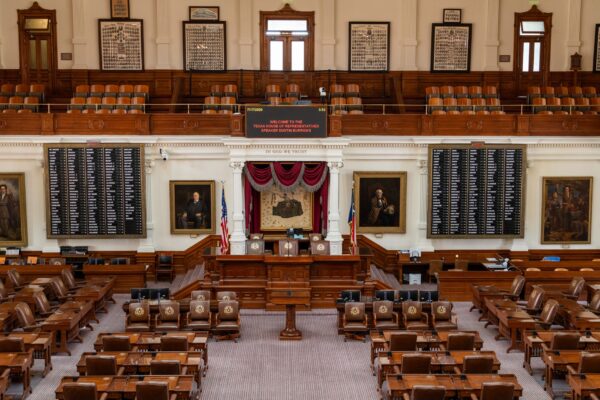
Voters’ acute concerns over the rising cost of living fuelled a political upheaval that has put Democrats on course for their biggest swing since Watergate.
Democrats’ congressional gains centre the affordability message
Democrats are projected to hold the largest House majority in nearly four decades, alongside their biggest Senate edge since 2008. Those gains give the party a stronger position in Congress, but the numbers alone do not settle what it can pass. The political case for action centres on household costs: the party has framed affordability as a priority, while its room to turn that message into policy depends on the rules and powers governing Congress.¹
The affordability message is explicit. One statement says Americans want Washington to bring down the cost of living; another says Democrats promised to fight for an affordable America. The claims establish the stated priority, without setting out a minimum-wage proposal or a plan to address the gender wage gap. Those workplace topics are not specified in the available policy details, which instead point to the limits and pressure points surrounding broader economic action.¹
Those workplace topics are not specified in the available policy details, which instead point to the limits and pressure points surrounding broader economic action.¹
Senate rules constrain action on national issues
Gas prices present one route for pressing the administration, but the proposed route depends on foreign policy: reining them in requires an understanding with Iran that reopens the Strait of Hormuz. Congress has a distinct constitutional role in war, as it is the only branch entitled to start one. On legislation, Democrats do not have the 60 Senate votes needed to prevent a filibuster. That threshold limits which bills can advance without support beyond their own side.¹
 Government & Policy
Democrats Sweep Midterms, Republicans Lose Both Chambers
Oil fell as much as 9% on Wednesday, while the IMF forecast global headline inflation of 4.7% this year.
Read More →Tariffs offer another point of dispute. The Supreme Court struck down Trump’s “national security” tariffs because they exceeded presidential authority, after which the administration reimposed many of them under a different statute. The sequence shows that a court ruling against one legal basis did not end the tariffs. Any congressional pressure around them must contend with the administration’s use of a separate law, rather than treating the ruling as a complete reversal.¹
Immigration policy is harder to affect through budget pressure: Trump’s war on immigration is fully funded and can carry on unimpeded. The broader fiscal picture also narrows the scope for new spending. The budget deficit is running at 6% of gross domestic product, while Democrats lack the votes to override presidential vetoes. A bill can therefore face both a funding constraint and a separate obstacle if the president rejects it.¹

Economic risks add pressure but narrow policy room
The economy is described as being driven almost exclusively by a fast-moving artificial-intelligence investment boom. The Nasdaq has fallen by more than 10% in the last month. Goldman Sachs estimates that large AI hyperscalers raised almost $200bn in bond markets so far this year, while AI-related firms raised nearly $500bn in debt so far in 2026. The concern is that a burst AI bubble could bring an economic downturn worse than the Great Recession sparked by the 2008 housing bubble.¹
The government is also described as hamstrung by $40tn in debt and interest rates near 20-year highs. That combination compounds the pressure on policymakers already facing a large deficit and limited legislative power. It sets a tight fiscal backdrop for any affordability response: the figures describe existing constraints, rather than a new spending plan or a specific workplace measure.¹
Justin Wolfers, an economist at the University of Michigan who runs Platypus Economics, observes that neither unemployment nor inflation is bad enough to justify Americans’ extreme pessimism about the economy. Eduardo Porter is a journalist focused on economics and politics and writes the newsletter Being There on Substack. Their credentials identify two voices in economic and political discussion; the claims about Senate rules, tariffs and fiscal limits define the practical constraints described here.¹
 Government & Policy
GST Council Limits Arrest Powers, Raises Prosecution Threshold
The move to eliminate arrest powers is a major shift in the approach to GST enforcement. Previously, GST officers had the authority to arrest individuals…
Read More →It sets a tight fiscal backdrop for any affordability response: the figures describe existing constraints, rather than a new spending plan or a specific workplace measure.¹
Plan for AI-Linked Volatility
If your career sits in or near AI-driven sectors, treat the current boom as fragile. The Nasdaq has fallen more than 10% in a month, while AI-related firms have raised nearly $500bn in debt this year. A burst bubble could bring a downturn worse than the Great Recession. Diversify your skill set beyond AI-specific roles and keep an emergency fund sized for a prolonged slump.¹
For pay negotiations, note that the government faces $40tn in debt and interest rates near 20-year highs, with a 6% deficit. That limits new spending, so public-sector raises may stay tight. In private roles, leverage the AI boom for higher cash compensation now, but negotiate for portable skills or equity that survives a downturn.¹
Sources
Written by Career Ahead AI. AI can make mistakes, so verify key facts. Report errors to support@careeraheadonline.com