The widening gap between salaried and hourly pay demands a new lens: the Compensation Divergence Framework.
The conventional view treats salary and hourly wages as separate tracks. That view assumes industry, skill level, or contract type explain the gap. Recent data prove otherwise. Salaried workers saw a 2.9% pay rise from Q1 2025 to Q1 2026, while hourly earners managed only 1.7% growth. The difference is not a quirk; it is a systemic drift. To diagnose it, we need a model that captures the forces pulling the two tracks apart. The Compensation Divergence Framework does exactly that.
The Compensation Divergence Framework
The framework isolates four interacting forces that together produce the salary‑hourly gap:
Accelerated Salary Growth – faster nominal increases for salaried staff.
Inflation Drag on Hourly Earnings – real‑wage erosion for hourly workers.
Bargaining Power Imbalance – structural limits on hourly collective leverage.
Talent‑Management Realignment – corporate shifts in compensation strategy.
Each force can be observed in isolation, but the gap widens when they converge. The Compensation Divergence Framework appears throughout this piece, guiding our analysis of why the old “job‑type” explanation falls short.
Accelerated Salary Growth
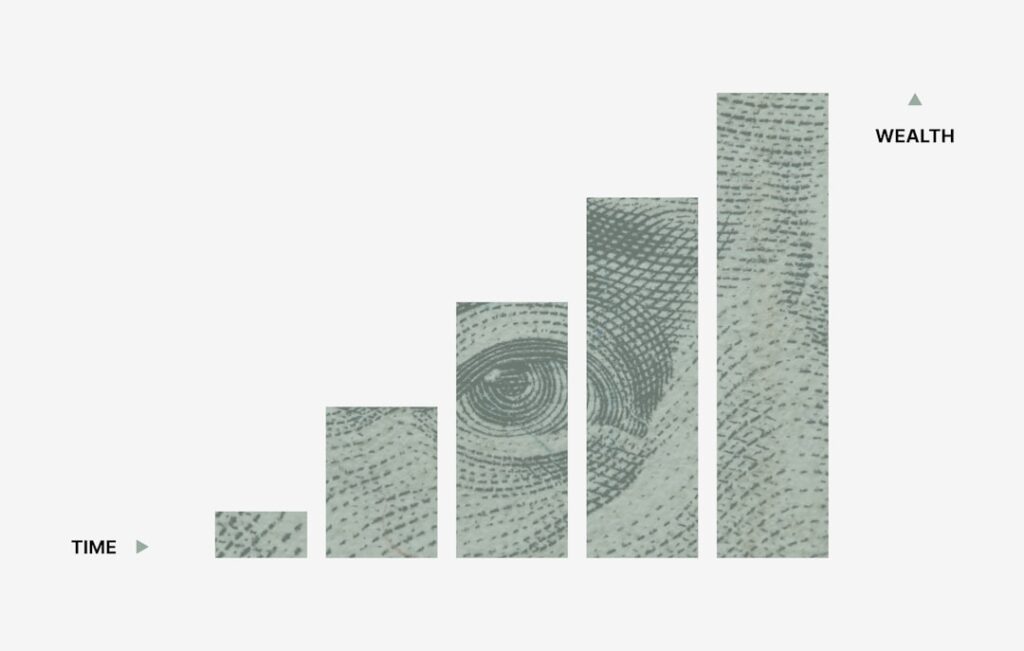
Four forces shaping salary‑hourly wage disparities in 2026 Photo: pexels
Salaried employees enjoyed a 2.9% increase last year, outpacing the 1.7% rise for hourly staff. The difference may seem modest, but it compounds over a decade. Companies reward salary‑based roles with annual bonuses, equity, and cost‑of‑living adjustments that are rarely extended to hourly contracts.
Sneha Puri, author of a recent wage‑gap study, notes:
Accelerated Salary Growth Four forces shaping salary‑hourly wage disparities in 2026 Photo: pexels Salaried employees enjoyed a 2.9% increase last year, outpacing the 1.7% rise for hourly staff.
South Korea's banking sector is facing a new wave of cyber threats linked to artificial intelligence (AI), with President Lee Jae Myung revealing that AI…
“When salaried pay climbs faster than hourly, the disparity is not just a number—it reshapes household budgeting and long‑term wealth building.”
The 2.9% versus 1.7% gap translates into roughly $1,200 more annual take‑home for a median $50,000 salary, while a comparable hourly worker earning $25 hour sees only $400 extra. Over ten years, the cumulative advantage can exceed $10,000, a sum that can fund a down‑payment or college tuition—benefits out of reach for many hourly earners.
Inflation Drag on Hourly Earnings
From March to April, the Consumer Price Index rose 0.6%, yet real average hourly earnings fell 0.5%. Hourly wages are caught in a double‑whammy: nominal growth lags behind price increases, and the purchasing power of each paycheck shrinks.
The CPI‑U’s 0.6% uptick illustrates rising living costs—housing, food, transport. Meanwhile, the 0.5% dip in real hourly earnings shows that hourly workers are effectively earning less in today’s dollars. This erosion is invisible in headline wage numbers but evident when we adjust for inflation.
Consider a retail associate earning $15 hour in March. After a 0.2% nominal increase in April, the hourly rate becomes $15.03. Yet with a 0.6% CPI rise, the real wage drops, leaving the worker $0.09 poorer in purchasing power each hour. Multiply that by a 40‑hour week, and the loss equals $3.60—enough to forego a grocery item or a bus pass.
Yet with a 0.6% CPI rise, the real wage drops, leaving the worker $0.09 poorer in purchasing power each hour.
Bargaining Power Imbalance
Four forces shaping salary‑hourly wage disparities in 2026 Photo: unsplash
The structural gap in collective bargaining power deepens the divergence. Salaried professionals often negotiate individually or through executive compensation committees. Hourly workers, by contrast, rely on unions or minimum‑wage statutes, which are unevenly enforced.
When a tech firm offers a 5% salary bump to engineers, the same firm may grant a 2% increase to its warehouse staff, citing “market differentials.” The disparity is not purely market‑driven; it reflects who can leverage negotiations. In sectors where union coverage is low, hourly wages remain tethered to baseline adjustments, while salaried staff benefit from performance‑based raises.
As of October 2026, US solar panel manufacturers are making significant strides in technology, particularly with tandem solar panels, to enhance efficiency and regain market…
Our own analysis shows that firms with robust union representation for hourly staff narrow the gap by roughly 0.4 percentage points. The effect is modest but measurable, suggesting that strengthening collective voices can blunt the Compensation Divergence Framework’s third force.
Talent‑Management Realignment
Companies are rethinking compensation as they chase talent in a tight labor market. Some firms are converting hourly roles to salaried positions to offer benefits, stability, and higher pay trajectories. Others introduce “salary‑equivalent” bonuses for hourly staff, but these often lack the tax advantages and retirement accruals of true salaries.
A logistics company recently promoted 500 hourly drivers to salaried status, citing “career pathways” and “predictable earnings.” The move reduced turnover by 12% within six months, but it also widened the salary‑hourly gap for the remaining hourly workforce, who now see a sharper contrast in earnings growth.
The Compensation Divergence Framework’s fourth force highlights that corporate strategy can either amplify or mitigate the gap.
The Compensation Divergence Framework’s fourth force highlights that corporate strategy can either amplify or mitigate the gap. When firms align compensation across job families, the divergence shrinks. When they use salary conversion as a perk for a select few, the gap widens.
Limits of the Compensation Divergence Framework
The Compensation Divergence Framework does not explain every nuance of wage dynamics. It overlooks regional cost‑of‑living variations, sector‑specific productivity gains, and individual career choices that affect earnings. The model also assumes a binary salary‑hourly classification, while hybrid pay structures blur the lines.
For readers, the next step is simple: audit your organization’s pay data through the lens of the Compensation Divergence Framework. Identify which of the four forces is most pronounced and pilot a targeted adjustment—whether a modest hourly raise tied to CPI, a union‑support initiative, or a broader salary‑equity review.





Industry & Global Trends
 Industry & Global Trends
 Industry & Global Trends