No products in the cart.

Four things we’d need to put data centers in space | Career Outlook
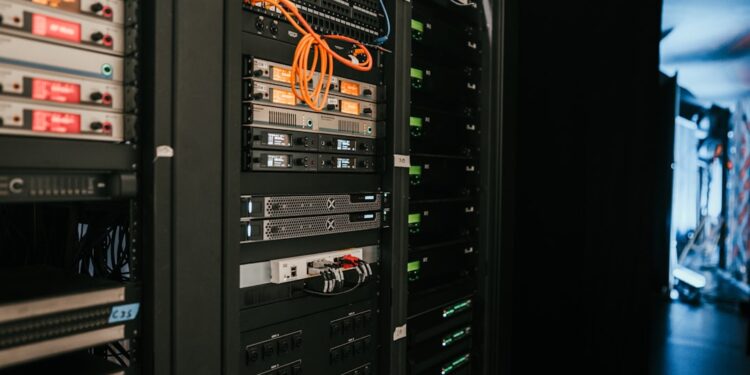
As reliance on digital infrastructure grows, the demand for data centers is skyrocketing. Some tech giants propose a radical solution: moving data centers into space. This article explores the feasibility, challenges, and implications of this ambitious plan.

As reliance on digital infrastructure grows, the demand for data centers is skyrocketing. Traditional data centers consume vast amounts of energy and water, raising concerns about their environmental impact. Recently, some tech giants have proposed a radical solution: moving data centers into space. This idea, championed by companies like SpaceX and Amazon, promises to alleviate the burden on Earth’s resources while enabling advanced computing capabilities. But is it feasible? What are the challenges and implications of this ambitious plan?
The concept of space-based data centers is not just a futuristic dream. In January, SpaceX filed an application with the U.S. Federal Communications Commission to launch up to one million data centers into orbit. This initiative aims to support the growing demands of artificial intelligence without exacerbating environmental crises on Earth. Companies like Amazon and Google are also exploring similar ventures, indicating a shift in how we think about data management and infrastructure.
Proponents argue that placing data centers in space could solve several pressing issues. For one, space offers an almost limitless supply of solar energy, which could power these facilities without straining terrestrial energy grids. Additionally, the cold vacuum of space could help dissipate the heat generated by high-performance computing systems, a significant challenge for ground-based data centers. With the cost of space launches decreasing, the idea of orbiting data centers is becoming more plausible.
Technological Challenges: Cooling and Radiation
Despite the potential benefits, significant technological hurdles must be overcome to make space-based data centers a reality. One of the primary concerns is heat management. Data centers generate substantial heat, and in the vacuum of space, traditional cooling methods are ineffective. Engineers must develop innovative systems to transfer heat away from the equipment efficiently. As Lilly Eichinger, CEO of Satellives, notes, “Thermal management and cooling in space is generally a huge problem.”
Another challenge is the impact of radiation on electronic components. Space is filled with cosmic particles that can damage sensitive electronics, leading to data corruption and hardware failures. Traditional space-hardened chips are expensive and lag behind the latest technology. However, advancements in chip design, such as those from Nvidia, are beginning to address these issues by incorporating radiation resilience into consumer-grade devices. Yet, the need for robust memory and storage solutions remains a critical concern.
Yet, the need for robust memory and storage solutions remains a critical concern.
You may also like
 Entrepreneurship & Business
Nscale Hires Meta’s Justin Osofsky to Be COO Ahead of IPO
Nscale has appointed Justin Osofsky as COO, leveraging his extensive experience from Meta to enhance operational efficiency ahead of its IPO. This strategic hiring reflects…
Read More →Moreover, the logistics of building and maintaining data centers in space pose additional complications. Unlike terrestrial facilities, which can be serviced and upgraded relatively easily, space-based operations may require robotic systems for maintenance or even human intervention. The feasibility of such maintenance operations in the harsh environment of space is still uncertain.
Lastly, the issue of space debris cannot be overlooked. The increasing number of satellites and potential data centers could exacerbate the already crowded orbital environment. Greg Vialle, founder of Lunexus Space, emphasizes the need for effective communication between satellites to avoid collisions, highlighting the complexities of managing a large-scale orbital infrastructure.
Economic Considerations: Costs and Market Dynamics
The economic viability of space-based data centers is another critical factor in this discussion. The cost of launching hardware into space has decreased significantly, thanks to innovations from companies like SpaceX. Their Falcon 9 rocket and the forthcoming Starship promise to make space launches more affordable. However, the initial investment required to establish and operate data centers in orbit remains substantial.
For space-based data centers to be economically feasible, they must provide a clear return on investment. This involves not only the cost of launching and assembling the infrastructure but also the ongoing operational expenses. Companies must consider whether the potential savings in energy and resources on Earth justify the high costs associated with space operations.
Moreover, the competitive landscape for data processing is evolving. As companies like Amazon and Google explore orbital computing, traditional data centers may face increased pressure to innovate and reduce their environmental impact. This competition could drive advancements in both terrestrial and space-based technologies, ultimately benefiting consumers.
In addition, the growing demand for AI and machine learning applications creates a significant market opportunity for space-based data centers.
You may also like
 Entrepreneurship & Business
Amazon Launches Ultra-Fast Delivery in 120+ Indian Cities
Amazon has expanded its ultra-fast delivery service, Amazon Now, to over 120 cities in India, doubling its reach in just two weeks. This growth signifies…
Read More →In addition, the growing demand for AI and machine learning applications creates a significant market opportunity for space-based data centers. As these technologies become more prevalent, the need for high-performance computing infrastructure will only increase. If companies can successfully demonstrate the advantages of space-based data centers, it could lead to a paradigm shift in how we think about data processing.
Environmental Impact: A Complex Equation
Moving data centers to space could significantly reduce their environmental impact. Traditional data centers are notorious for their heavy energy consumption and water usage, contributing to resource depletion and climate change. In contrast, solar-powered space-based facilities could operate without these constraints, potentially offering a more sustainable solution.
However, the environmental implications of launching hardware into space must also be considered. Each launch contributes to carbon emissions and other environmental concerns. The overall lifecycle impact of space-based data centers needs careful evaluation. As technology advances, companies must strive to minimize the ecological footprint of both their terrestrial and orbital operations.
For young professionals and students interested in technology and engineering, the development of space-based data centers represents an exciting frontier.

Ultimately, the success of space-based data centers will depend on collaboration among stakeholders, including governments, private companies, and researchers. A unified approach will be essential to address the complex challenges of this ambitious endeavor. As noted by MIT Technology Review, the tech industry is moving toward large-scale computing in space, with companies like Amazon and Google also exploring similar ventures, indicating a shift in how we think about data management and infrastructure.
For young professionals and students interested in technology and engineering, the development of space-based data centers represents an exciting frontier. As the demand for innovative solutions grows, so too does the need for skilled workers in this field. Those who can adapt to the evolving landscape of technology and contribute to this ambitious vision will find ample opportunities in the years to come.
You may also like
 Entrepreneurship & Business
Last Chance to Apply for a Side Event at Founder Summit 2026
The Founder Summit will take place from November 1 to November 7, 2026. It will gather key figures in the tech community, including founders, investors,…
Read More →