
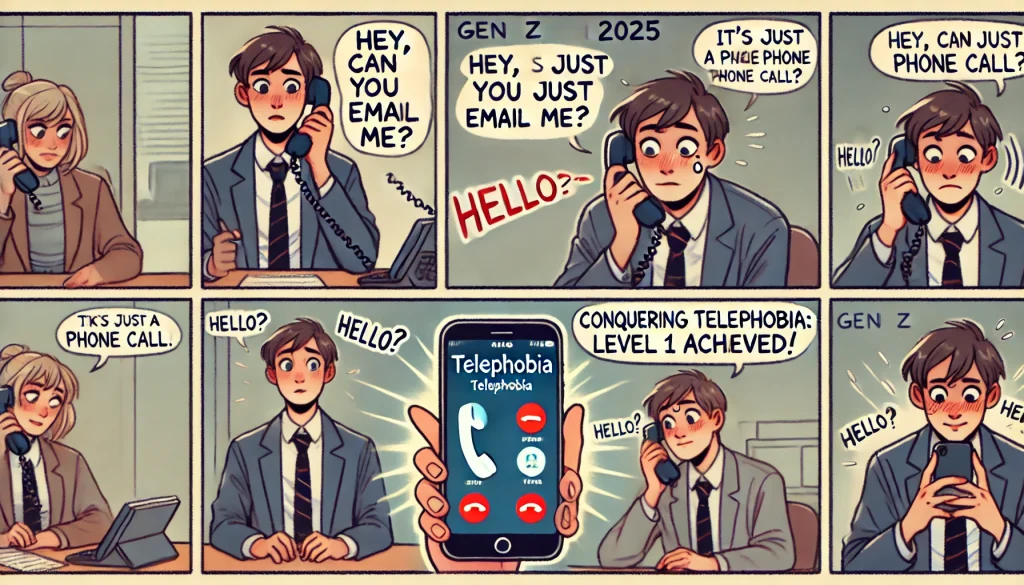
A phone rings, and for many Gen Zers, it’s not a call to action—it’s a call to panic. In 2024, 70% of 18- to 34-year-olds preferred texting over talking, with 23% never answering calls, according to a Uswitch survey of 2,000 U.K. adults. This anxiety, dubbed telephobia, has become so pervasive that Nottingham College in the U.K. now offers seminars to help students aged 16-18 and older conquer it. For Gen Z in India, where 1 million engineering graduates enter the job market annually (India Skills Report 2024), this fear could stall career growth at a critical juncture. As communication norms evolve, here’s how telephobia is reshaping Gen Z’s professional landscape—and how they can overcome it in 2025.
The Rise of Telephobia: A Generational Divide
Telephobia, defined by Nottingham College careers advisor Liz Baxter as “a fear or anxiety around making and receiving telephone calls,” is a growing phenomenon among Gen Z (born 1997-2012). Baxter notes that 75% of her students—typically 16- to 18-year-olds in classes of 25-30—admit to phone anxiety, largely because they’ve “simply not had the opportunity” to practice calls. Instead, they favor texting, voice notes, and social media, with 48% of 18- to 24-year-olds preferring the latter for communication (Uswitch 2024). Over half of this age group think an unexpected call means bad news, a sentiment echoed by 56% of Gen Z, according to the Daily Galaxy, a U.S.-based science and technology news outlet known for aggregating cultural trends (2025).
The roots of telephobia are multifaceted. Gen Z has grown up with smartphones as multi-functional devices, prioritizing text-based communication for control and privacy. The Covid-19 pandemic exacerbated this, isolating young people for two years and stunting their social skills, as Baxter points out. The University of Massachusetts Amherst links telephobia to social anxiety, affecting 15 million U.S. adults, with physical symptoms like elevated heart rate or perspiration (2024). Stephanie Wijkstrom, CEO of the Counseling and Wellness Center of Pittsburgh, recommends deep breathing and gradual exposure to manage it, noting that AI and virtual assistants are reducing the need for calls by directing customers to websites.
India’s Context: Telephobia in a High-Stakes Market
In India, telephobia adds a layer of complexity to an already competitive job market. With 1 million engineering graduates entering the workforce each year (India Skills Report 2024), phone interviews are often a first step for roles in IT and BFSI (Banking, Financial Services, and Insurance) sectors, which lead in hybrid work adoption. Yet, 60% of Indian Gen Z workers in entry-level IT roles find phone communication daunting due to lack of practice, per the Economic Times in 2024. This fear can hinder networking—crucial since 70% of jobs come through connections (Jobvite 2024)—and limit opportunities in a market where 85% of employers prefer referrals (NACE 2024).
The Professional Cost: A Barrier to Career Growth Globally, telephobia is impacting Gen Z’s career prospects.
 Career Guidance
Posts Spread After Call to Identify Jane Doe
More than eleven thousand accounts made almost twenty-five thousand posts purporting to name Jane Doe, according to Gudea’s analysis.
Read More →The rise of digital entrepreneurship in India, fueled by platforms like Shark Tank India, has seen 15% of Gen Z start side hustles in 2024 (Economic Times 2024). However, telephobia can stall their ability to pitch to investors or clients over the phone, a skill still valued in traditional business settings. The India Skills Report 2024 notes that while digital communication skills are strong—Gen Z excels in online contexts like gaming, as Baxter observes—phone-based communication remains a gap, particularly in smaller firms where hybrid work and modern tools lag.
The Professional Cost: A Barrier to Career Growth
Globally, telephobia is impacting Gen Z’s career prospects. Baxter highlights that many students fail telephone interviews, a common pre-screening step for jobs. Employers report Gen Z candidates ignoring recruitment calls, forcing companies to shift to email or messaging platforms (Daily Galaxy 2025). George Heritage, a client services manager at Express Recruitment, notes that phone anxiety affects businesses, as young people struggle with professional communication. Some companies, like Casey Halloran’s online travel agency, are investing in coaching and incentives to help young employees overcome this fear.
In India, the stakes are higher. The IT sector, a major employer, saw hiring slow by 15% in 2024 due to automation (Economic Times 2024), making every interview count. A missed call or a fumbled phone interview can mean losing out on roles paying $85,000 annually for AI and cybersecurity analysts (Glassdoor 2025). Networking events tied to platforms like Shark Tank India offer opportunities to connect with mentors, but phone anxiety can prevent Gen Z from following up, limiting their exposure to the 70% of jobs filled through personal connections.
AI’s Role: A Double-Edged Sword
The rise of AI is reshaping communication, offering both challenges and solutions for telephobia. On one hand, AI-powered tools like virtual assistants and chatbots are reducing the need for phone calls, as Wijkstrom notes. In 2024, 77% of employers globally were upskilling workers to adapt to AI (World Economic Forum 2025), with companies increasingly directing customers to websites or messaging apps. In India, IT firms like TCS and Infosys have adopted AI chatbots for customer service, cutting call volumes by 30% in 2024 (Economic Times 2024). This shift can exacerbate telephobia by further limiting Gen Z’s exposure to phone-based communication.
On the other hand, AI offers solutions. AI-driven apps like Calm and Headspace provide guided breathing exercises to manage call anxiety, while platforms like Coursera offer courses in professional communication, including phone etiquette. In India, AI startups like Yellow.ai are developing virtual assistants that simulate phone conversations for practice, helping Gen Z build confidence. These tools can bridge the gap, but they also highlight a broader trend: as AI takes over routine communication, Gen Z must master both digital and traditional skills to stay competitive.
Solutions: Global and Local Strategies
Nottingham College’s telephobia seminars offer a practical fix. Students role-play scenarios like calling a doctor or reporting sick, sitting back-to-back to mimic real calls, using scripts to build confidence. Baxter reports that one session boosts pupils’ confidence by demystifying phone calls. She teaches breathing exercises—deep inhales, holding, and slow exhales—to manage anxiety, and reframes calls positively: they might bring good news, like a job offer. Students are also empowered to take control, knowing they can end unwanted calls.
 Career Guidance
How to Switch Industries Mid-Career Without Starting Over
Bridge roles can reduce risk, while targeted skills and industry-specific applications help you make the case for a new field.
Read More →In 2024, 77% of employers globally were upskilling workers to adapt to AI (World Economic Forum 2025), with companies increasingly directing customers to websites or messaging apps.
In India, several initiatives are addressing telephobia. The National Education Policy 2020 provides free communication courses on SWAYAM, covering phone etiquette and professional skills, with over 2 million enrollments in 2024 (Ministry of Education 2024). Indian colleges like IIT Delhi and IIM Bangalore have introduced soft skills workshops, including phone confidence training, as part of their placement programs, with 80% of participants reporting improved interview performance (Times of India 2024). Companies like Wipro and HCL are also stepping in, offering telephobia workshops for entry-level hires, with HCL reporting a 25% increase in phone-based task completion among trainees in 2024 (Business Standard 2024).
A Path Forward for 2025
Telephobia doesn’t have to be a career killer. Start with low-stakes calls, like booking an appointment, and use AI apps like Calm for breathing techniques to stay calm. In India, join networking events through platforms like Shark Tank India to practice real-world communication—15% of Gen Z are already launching side hustles, and phone skills can set you apart. Leverage SWAYAM’s free courses or IIT Delhi’s soft skills workshops to build confidence. Globally, the shift to AI-driven communication means digital skills are crucial—Coursera’s courses can help you stay ahead.
Your voice matters, whether it’s over the phone or online. Don’t let a ringing phone hold you back—answer the call to your future.