

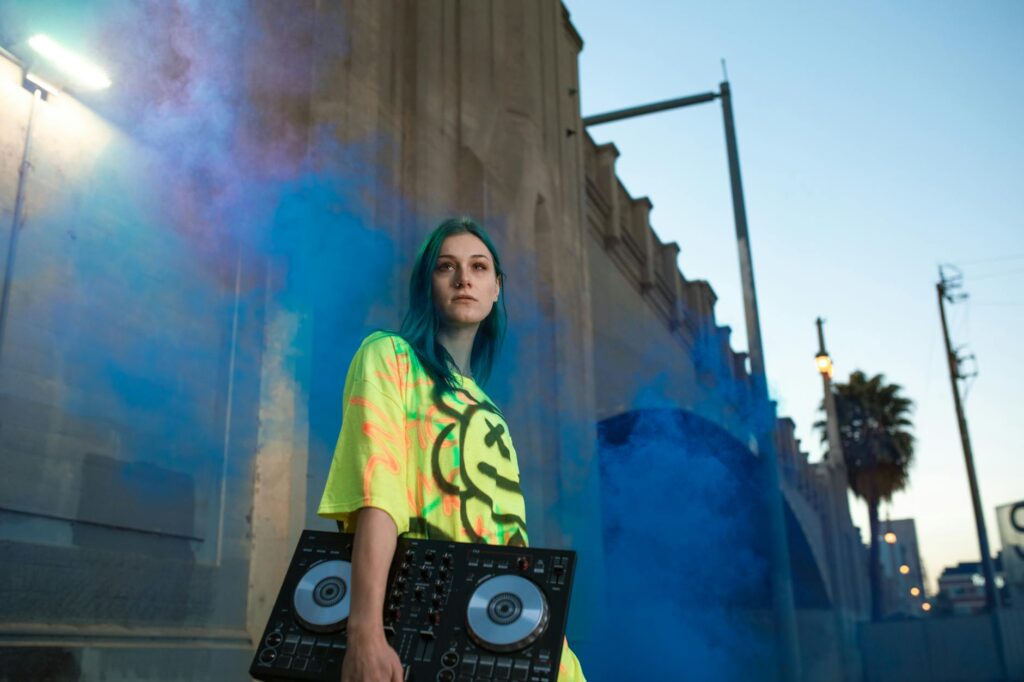
The rise of algorithmic playlists has been eclipsed by a growing reliance on peer‑driven curation, reshaping revenue flows, talent pipelines, and institutional power in the music ecosystem.
—
Contextualizing the Turn‑over in Music Consumption
In 2025, streaming accounted for 80% of global music‑industry revenue, with 75% of Generation Z listeners citing a streaming service as their primary access point [1]. Yet the same cohort reports a paradox: 60% still turn to human‑curated playlists—whether assembled by TikTok creators, campus radio DJs, or niche community curators—to discover new tracks [2]. This duality signals a structural rebalancing, where algorithmic recommendation engines, once the sole gatekeepers of exposure, are ceding influence to socially embedded curatorial networks. The shift reverberates beyond taste, intersecting with career capital formation, economic mobility for creators, and the distribution of institutional power across the industry.
—
Core Mechanism: Democratized Access Meets Social Curation
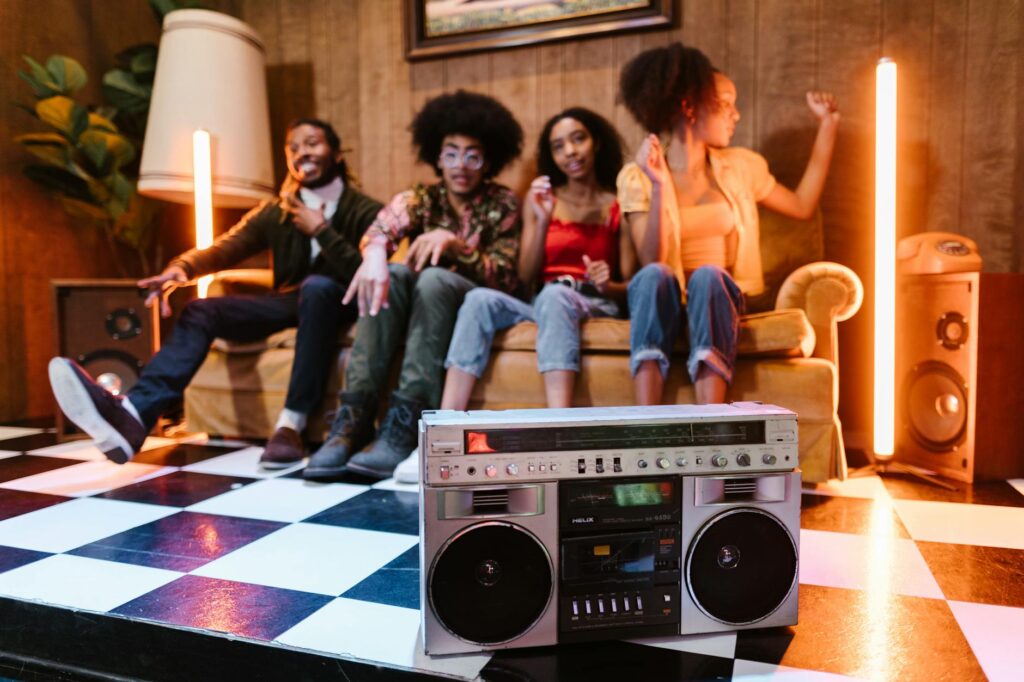
Mobile‑Centric Streaming as the Baseline Infrastructure
Smartphone penetration among Gen Z reaches 90%, making mobile devices the default conduit for music consumption [1]. This ubiquitous access lowers entry barriers for both listeners and creators, compressing the time from release to audience reach to under 24 hours for viral tracks. The platform architecture—high‑bandwidth streaming, low‑cost distribution, and real‑time analytics—constitutes the technical substrate upon which new discovery pathways emerge.
Social Media as the Primary Discovery Engine
Seventy percent of Gen Z respondents identify social media as their main source for new music [4]. TikTok, Instagram Reels, and Discord servers host micro‑communities that generate “soundtracks” for niche subcultures. Unlike algorithmic playlists that prioritize historical listening patterns, these human‑curated streams amplify content based on social endorsement, meme potential, and contextual relevance. For instance, the 2024 breakout of indie pop duo Sunlit on TikTok’s “#SunlitSummer” challenge translated a 3‑second clip into 12 million streams within two weeks, illustrating the asymmetric amplification power of peer‑driven curation.
Independent Production and the DIY Ethos The democratization of production tools—affordable DAWs, sample libraries, and cloud‑based mastering services—has expanded the pool of viable artists.
Independent Production and the DIY Ethos
The democratization of production tools—affordable DAWs, sample libraries, and cloud‑based mastering services—has expanded the pool of viable artists. Fifty percent of Gen Z listeners report a preference for supporting independent musicians over label‑backed acts [3]. This preference aligns with a broader cultural valuation of authenticity, positioning human curation as a trust signal that validates artistic intent beyond algorithmic probability scores.
Collectively, these mechanisms constitute a feedback loop: mobile streaming provides the data substrate; social platforms translate that data into socially resonant narratives; independent creators leverage both to bypass traditional gatekeepers. The system reconfigures the “discovery function” from a purely predictive model to a hybrid of algorithmic recommendation and human endorsement.
 Career Guidance
How to Switch Industries Mid-Career Without Starting Over
Bridge roles can reduce risk, while targeted skills and industry-specific applications help you make the case for a new field.
Read More →—
Systemic Ripples: Revenue Realignment and Institutional Reconfiguration
Decline of Album‑Centric Economics
Album sales fell 20% in 2025 relative to the prior year, reflecting a consumption pattern that privileges single tracks and curated playlists over full‑length releases [2]. Record labels, historically structured around album cycles, are reallocating A&R budgets toward “single‑first” strategies, where multiple releases are staggered throughout the year to sustain algorithmic relevance while still courting human curators for playlist placement.
Streaming Dominance and Revenue Distribution
Streaming now delivers 80% of industry revenue, yet the payout architecture remains skewed. Human‑curated playlists on platforms like Spotify’s “RapCaviar” or Apple Music’s “Indie Spotlight” command higher per‑stream rates due to negotiated placement fees and higher listener engagement [1]. This creates a bifurcated revenue stream: algorithmic feeds generate volume, while human curation yields premium exposure—a structural asymmetry that incentivizes artists to cultivate relationships with influential curators.
Erosion of Traditional Gatekeepers
Sixty percent of Gen Z listeners deem record labels and terrestrial radio “no longer necessary” for music discovery [4]. This perception is reinforced by the rise of “artist‑first” platforms such as Bandcamp and SoundCloud, which embed social features allowing fans to directly fund releases. The institutional power once concentrated in label A&R departments is diffusing to a network of micro‑influencers, playlist curators, and community moderators who collectively shape the cultural agenda.
Leadership and Talent Development
The new discovery paradigm demands a hybrid skill set: artists must now act as content marketers, community managers, and data analysts. Leadership within artist collectives increasingly emerges from members who can navigate both algorithmic optimization (metadata tagging, release timing) and human curation (relationship building with TikTok creators, live‑stream collaborations). This shift redefines career capital, where social capital—network access to curators—becomes as valuable as traditional musical proficiency.
Leadership and Talent Development The new discovery paradigm demands a hybrid skill set: artists must now act as content marketers, community managers, and data analysts.
—
Human Capital Impact: Winners, Losers, and the Mobility Gradient
Artists Who Leverage Human Curation
 Career Guidance
How to Prepare for a Job Interview with Ethics in Mind
A paper on job interview ethics links preparation and conduct to a candidate’s value. It offers no criteria for take-home tasks.
Read More →Case in point: Clairo, an independent singer‑songwriter, transitioned from a self‑released EP to a major label contract after her track “Bags” gained traction on a curated Discord server for lo‑fi hip‑hop fans. The server’s 120,000 members contributed to a 4.5× increase in streaming volume, translating into a $1.2 million advance—demonstrating how human‑curated channels can accelerate economic mobility for creators outside the label pipeline.
Independent Labels as Intermediaries
Mid‑size independent labels (e.g., Domino, Secretly Group) have adapted by establishing “curation teams” that liaise with TikTok creators and niche playlist curators. These teams function as institutional bridges, converting algorithmic data into culturally resonant narratives. By doing so, they preserve a role for institutional power while aligning with Gen Z’s preference for authenticity.
Marginalized Creators and Structural Barriers
Despite the democratizing veneer, access to high‑visibility curators remains uneven. Creators from underrepresented communities report lower inclusion in prominent playlists, a disparity linked to network opacity and algorithmic bias in metadata tagging [2]. Consequently, the shift does not uniformly enhance economic mobility; it reconfigures the gatekeeping apparatus rather than eliminating it.
Career Capital for Industry Professionals
Music‑industry executives are pivoting toward “curation strategy” as a core competency. Leadership development programs at major firms now include modules on influencer negotiation, community analytics, and cross‑platform storytelling. Professionals who master these skills accrue heightened career capital, positioning themselves as indispensable architects of the new discovery ecosystem.
—
> * Career Capital Redefined: Success increasingly depends on an artist’s or executive’s ability to marshal social networks, negotiate curatorial placements, and translate data insights into culturally resonant narratives.
Outlook: Structural Trajectory Through 2029
Looking ahead, three intersecting trends will define the next five years:
- Hybrid Recommendation Engines – Platforms will integrate social‑signal weighting into algorithmic models, formally recognizing human curation as a data point. This will institutionalize the current informal balance, granting curators measurable influence over recommendation outcomes.
- Revenue Diversification via Direct‑Fan Monetization – As human curation fuels deeper fan engagement, artists will increasingly monetize through subscription‑based fan clubs, NFT‑linked releases, and live‑stream ticketing, reducing reliance on streaming royalties.
- Regulatory Scrutiny of Curatorial Transparency – Policymakers in the EU and US are evaluating disclosure requirements for paid playlist placements. Greater transparency could recalibrate the power dynamics between curators, labels, and independent artists, potentially widening economic mobility for those lacking traditional industry backing.
In this environment, career trajectories will hinge on the ability to navigate both algorithmic infrastructure and socially embedded curation networks. Institutions that embed curatorial liaison roles within their structures will retain relevance, while those clinging solely to legacy A&R models risk obsolescence.
 Entrepreneurship & Business
Storm Boelo Brings Wind, Rain and Travel Disruption to UK
Power outages, airport cancellations, ferry crossings and flooded roads added to the storm's effects across the UK.
Read More →—
Key Structural Insights
> Hybrid Discovery Architecture: The convergence of algorithmic recommendation and human‑curated networks creates a dual‑layered discovery system that reshapes revenue distribution and talent pipelines.
> Reallocation of Institutional Power: Traditional gatekeepers are losing monopoly over exposure; influence now resides with micro‑curators, prompting labels to adopt partnership models that embed social capital into their operational DNA.
> * Career Capital Redefined: Success increasingly depends on an artist’s or executive’s ability to marshal social networks, negotiate curatorial placements, and translate data insights into culturally resonant narratives.
Written by Career Ahead AI. AI can make mistakes, so verify key facts. Report errors to support@careeraheadonline.com.





